



Kaizen Teams

Dropdown

Table of Contents

Time to read

·

12

Published on

·

June 6, 2025

Last updated on

·

August 18, 2026

Jorge Corral, VP of Partnerships at Kaizen Softworks

Jorge Corral

Loves meeting new people

VP of Partnerships & Alliances

AI

AI

Events

Events

IoT Tech Expo 2025: AI, Data & the Future of Connected Tech

Published on

·

August 18, 2026

Last updated on

·

August 18, 2026

Time to read

·

12

Jorge Corral, VP of Partnerships at Kaizen Softworks

Jorge Corral

VP of Partnerships & Alliances

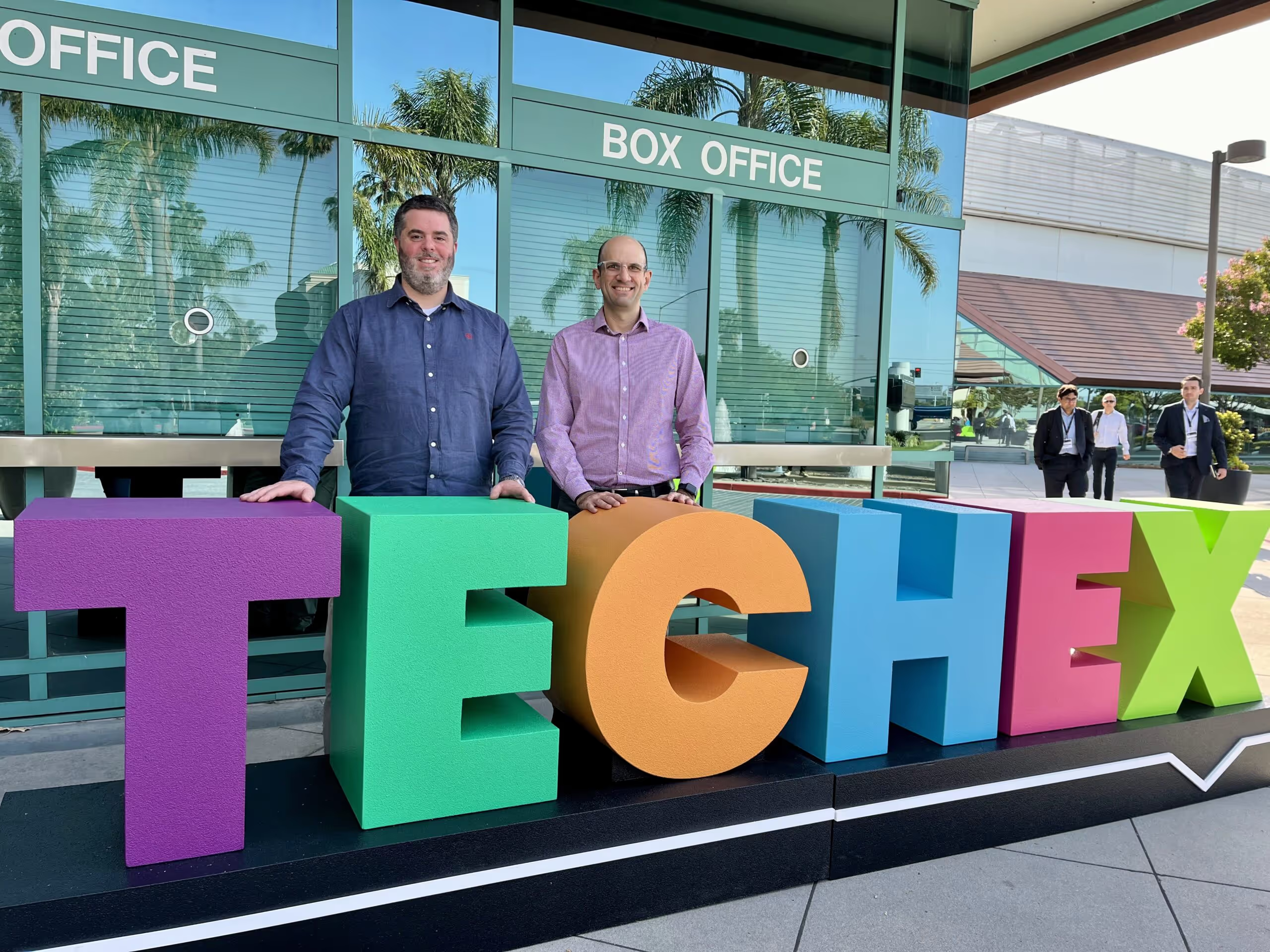
Reporting from Santa Clara, the IoT Tech Expo North America returned on June 4–5, 2025, at the Convention Center, bringing together a rich mix of IoT, AI, Big Data, Cybersecurity, Edge Computing, and Digital Transformation under one big roof. While organizers projected over 8,000 attendees, I’d estimate it was closer to 5,000–6,000.

A Showcase of IoT Ecosystem

Walking the expansive expo floor, you could clearly see the four key pillars of IoT represented across hundreds of booths:

  • Hardware: sensors, gateways, and edge devices
  • Firmware: embedded systems and device software
  • Communications: connectivity standards like 5G, LoRaWAN, and others
  • Software: platforms that process, analyze, and secure the data

Industrial IoT & Industry 4.0 Took Center Stage

We focused heavily on the Industrial IoT & Industry 4.0 track. Sustainability, automation, and smart factories dominated the discussion.

 Highlight: PepsiCo’s Real-World IIoT Case

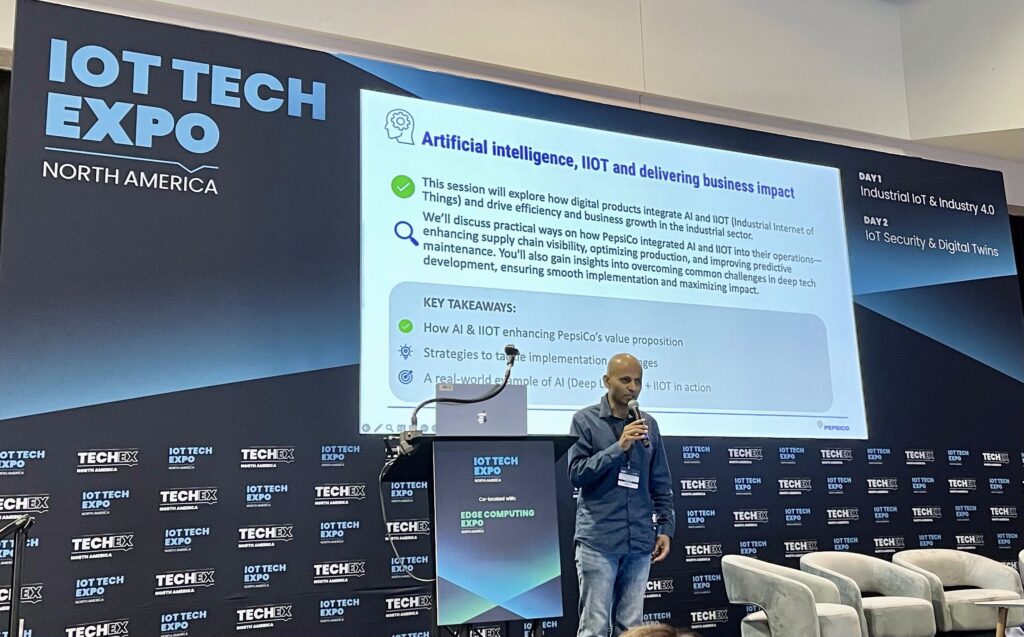
IoT Tech Expo North America 2025: A session on Artificial intelligence, IIOT, and delivering business impact

In a standout session titled "AI, IIoT and Delivering Business Impact," Prashanth Srinivasan, Head of Architecture at PepsiCo, gave a deep-dive into how they applied IoT and AI to increase chip packaging throughput by 7% at their Vallejo, Mexico plant.

It was a highly technical talk, but the business takeaway was crystal clear: when done right, AI + IoT = real operational impact.

Highlight Talk: IoT at PepsiCo

In this session led by Prashanth Srinivasan, Head of Architect at PepsiCo, called "AI, IIoT and Delivering Business Impact." He walked us through a highly technical, yet incredibly relatable, case study. He detailed how PepsiCo leveraged AI + IoT to increase chip packaging throughput by a remarkable 7% at their Vallejo, Mexico facility. It was a concrete example of how these technologies translate directly into tangible business impact.

The Power of Modular “Building Blocks”

Another standout presentation came from Tom Clements, VP of Sales, in “Powering the Connected World in IoT.” He emphasized the critical need for IoT Best Practice Building Blocks, stressing that successful IoT solutions must be:

  • Modular and componentized: Think Lego bricks, not monolithic structures. Componentized systems allow for easier scaling and updating.
  • Built for timely data ingestion: Getting the right data, at the right time, is non-negotiable. You can’t act on what you don’t know in time.
  • Backed by strong identity and device management: Security and control start at the device level.
  • Capable of detecting failures down to a single device, anywhere in the world, in real-time: Because when things break, you need to know immediately where and why.

AI + IoT = The Real Synergy

Another session that stuck with me featured Martin Whitlock, CTO of Telenor IoT, hosted by Sudha Jamthe, tech futurist and Principal at the Business School of AI. They made a compelling case for AIoT, the intersection of AI and IoT, as the future of connected systems.

Their core insight:

IoT produces the data; AI gives it meaning. Together, they’re reshaping everything from predictive maintenance to supply chain optimization.

Personal Takeaways & Observations

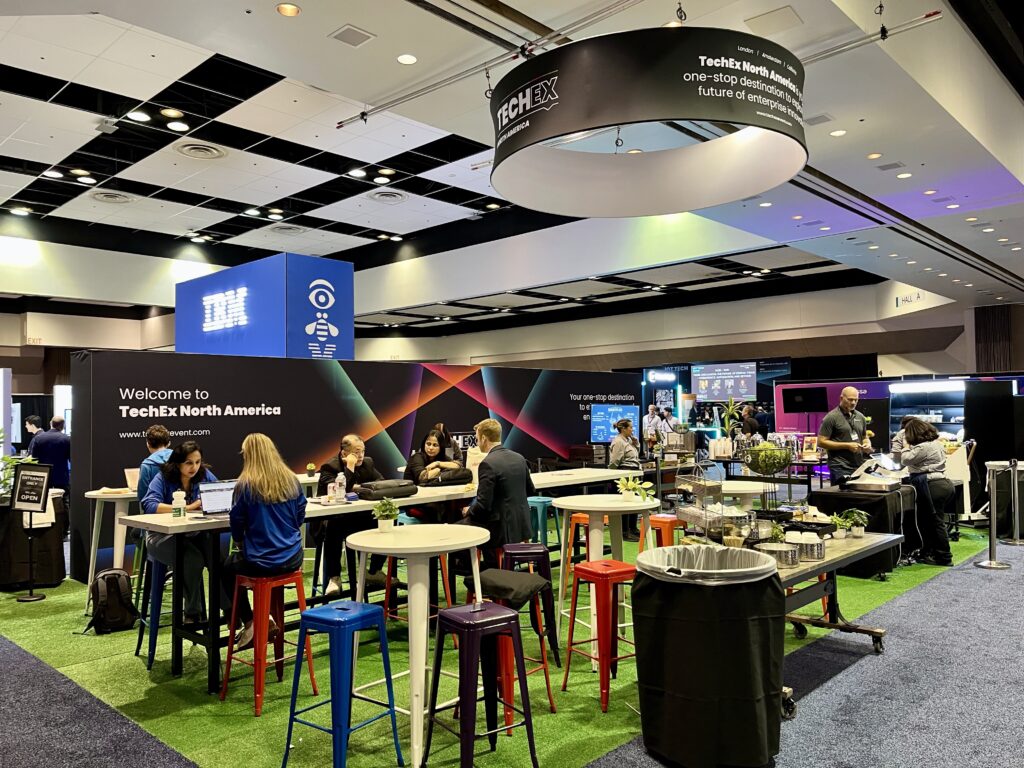
Audience seated in a large conference room at IoT Tech Expo North America 2025 in Santa Clara, watching a presentation on a wide screen that highlights how AI and IoT drive innovation together.
  • Scale is real: Hundreds of booths, thousands of attendees (photographs just can’t capture it all.)
  • Booths mirror the full IoT lifecycle: Saw everything from sensor design to cloud analytics.
  • Industrial IoT is the leader: especially in manufacturing, logistics, and utilities.
  • AI isn’t optional: Every platform now integrates AI. Without it, it’s hard to compete.
  • Security and trust aren’t afterthoughts: Certifications and device identity popped up in nearly every session.


Reporting from Santa Clara, the IoT Tech Expo North America returned on June 4–5, 2025, at the Convention Center, bringing together a rich mix of IoT, AI, Big Data, Cybersecurity, Edge Computing, and Digital Transformation under one big roof. While organizers projected over 8,000 attendees, I’d estimate it was closer to 5,000–6,000.

A Showcase of IoT Ecosystem

Walking the expansive expo floor, you could clearly see the four key pillars of IoT represented across hundreds of booths:

  • Hardware: sensors, gateways, and edge devices
  • Firmware: embedded systems and device software
  • Communications: connectivity standards like 5G, LoRaWAN, and others
  • Software: platforms that process, analyze, and secure the data

Industrial IoT & Industry 4.0 Took Center Stage

We focused heavily on the Industrial IoT & Industry 4.0 track. Sustainability, automation, and smart factories dominated the discussion.

 Highlight: PepsiCo’s Real-World IIoT Case

IoT Tech Expo North America 2025: A session on Artificial intelligence, IIOT, and delivering business impact

In a standout session titled "AI, IIoT and Delivering Business Impact," Prashanth Srinivasan, Head of Architecture at PepsiCo, gave a deep-dive into how they applied IoT and AI to increase chip packaging throughput by 7% at their Vallejo, Mexico plant.

It was a highly technical talk, but the business takeaway was crystal clear: when done right, AI + IoT = real operational impact.

Highlight Talk: IoT at PepsiCo

In this session led by Prashanth Srinivasan, Head of Architect at PepsiCo, called "AI, IIoT and Delivering Business Impact." He walked us through a highly technical, yet incredibly relatable, case study. He detailed how PepsiCo leveraged AI + IoT to increase chip packaging throughput by a remarkable 7% at their Vallejo, Mexico facility. It was a concrete example of how these technologies translate directly into tangible business impact.

The Power of Modular “Building Blocks”

Another standout presentation came from Tom Clements, VP of Sales, in “Powering the Connected World in IoT.” He emphasized the critical need for IoT Best Practice Building Blocks, stressing that successful IoT solutions must be:

  • Modular and componentized: Think Lego bricks, not monolithic structures. Componentized systems allow for easier scaling and updating.
  • Built for timely data ingestion: Getting the right data, at the right time, is non-negotiable. You can’t act on what you don’t know in time.
  • Backed by strong identity and device management: Security and control start at the device level.
  • Capable of detecting failures down to a single device, anywhere in the world, in real-time: Because when things break, you need to know immediately where and why.

AI + IoT = The Real Synergy

Another session that stuck with me featured Martin Whitlock, CTO of Telenor IoT, hosted by Sudha Jamthe, tech futurist and Principal at the Business School of AI. They made a compelling case for AIoT, the intersection of AI and IoT, as the future of connected systems.

Their core insight:

IoT produces the data; AI gives it meaning. Together, they’re reshaping everything from predictive maintenance to supply chain optimization.

Personal Takeaways & Observations

Audience seated in a large conference room at IoT Tech Expo North America 2025 in Santa Clara, watching a presentation on a wide screen that highlights how AI and IoT drive innovation together.
  • Scale is real: Hundreds of booths, thousands of attendees (photographs just can’t capture it all.)
  • Booths mirror the full IoT lifecycle: Saw everything from sensor design to cloud analytics.
  • Industrial IoT is the leader: especially in manufacturing, logistics, and utilities.
  • AI isn’t optional: Every platform now integrates AI. Without it, it’s hard to compete.
  • Security and trust aren’t afterthoughts: Certifications and device identity popped up in nearly every session.


Related Articles

View all articles

·

Aug 14, 2026

Running Synthetic Users Into Claude Code

A synthetic user research framework, turned into a Claude Code plugin that runs automated UX tests with AI agents, step by step.

12 read time

Read more

A synthetic user is a constrained AI decision agent defined by twelve fields, from functional role and context to assumptions and abandonment rules.

In the previous post I built an early, working implementation, and the next question was whether the same rules could hold up in a repeatable, automated test.

This post is that next step: how I turned the framework into a Claude Code plugin, and the technical decisions behind adapting methods designed for people into something an AI can execute without cheating.

Why “find the usability issues” is not enough

Give a model a URL and ask it to “find the usability issues.” It works halfway. And the “halfway” is the interesting part, It gives you a generic list, correct in the abstract, useless in practice.

A usability issue matters because of who encounters it and under what conditions.

Using an app from bed is not the same as using it on a factory floor. Urgency changes, lighting changes, attention changes, previous knowledge changes. The same confusing button can be irrelevant to a power user and an abandonment point for an operator wearing gloves.

The whole design comes from that observation: the AI does not evaluate the interface. It acts as a specific person in front of the interface.

The person brings the context with them. And the context turns a list of defects into a list of priorities.

Anatomy of a simulation

An orchestrator controls the browser through Playwright MCP. It reads each screen as an accessibility snapshot: text, roles, states, no guessing pixels. Then it acts on specific elements.

The decision on each screen is made by an isolated subagent, which returns a JSON for each step:

{

  "action": "...",

  "clarityLevel": "High|Medium|Low",

  "doubtDetected": true,

  "reason": "...",

  "abandoned": false,

  "estimatedTimeSeconds": 40,

  "emotionalState": "...",

  "memory": "..."

}

Two rules make this look more like a person and less like an oracle.

1. The evaluator never sees the end.

The evaluator receives one screen at a time, without knowing how many are left or what comes next in the flow.

If the interface leaves room for a mistake, the synthetic user makes the mistake. It clicks where a person would click, not where it is convenient to click in order to complete the test. This is where the framework’s forbidden assumptions live. The agent cannot assume backend logic or mentally complete what the screen does not show.

2. Emotion is memory, not decoration.

The memory field travels from one step to the next. The emotional state is inherited and accumulates. A frustration +1 persists. This detects something that is structurally invisible to any test that evaluates screens separately.

Screen five does not necessarily fail because of screen five. It fails because the user gets there with accumulated frustration.

Evaluated alone, that screen passes. Evaluated by someone carrying three doubts and one broken promise, it triggers abandonment. In the first post, I wrote that doubt is not failure. It is the signal that reveals structural friction.

Emotional memory is that idea turned into architecture.

Eight subagents, one job each

Each subagent gets a clean context. It knows the minimum required to do its job.

That ignorance is deliberate.

The agent acting as the user does not know what the orchestrator knows. It cannot compensate for bad design with knowledge a real person would not have.

Subagent

What it does

Subagent What it does
synthetic-screen-evaluator Acts as the user on one screen and returns the JSON for that step
synthetic-flow-synthesizer Reads the complete run and writes the report. It never simulates again
synthetic-profile-generator Generates a complete profile from an approved spec, choosing from a controlled vocabulary
synthetic-autopilot-synthesizer Consolidates N runs and classifies findings by convergence across users
heuristic-persona-generator Creates the 3 persona raters based on the business being evaluated
heuristic-expert-evaluator Detects violations of the 10 heuristics using forced enumeration
heuristic-persona-rater Scores each finding from the experience of ONE persona. It runs ×3
heuristic-report-synthesizer Builds the final report using the already computed numbers

Adapting a human test: the heuristic evaluation

A textbook heuristic evaluation uses three to five human evaluators because each human finds different problems.

My first experiment was literal, and it went meh.

I iterated until I reached two synthetic detection runs with different agents, coverage was extremely high, but it exposed another problem: an unmanageable list. Dozens of valid issues, very few important ones.

The final design separates those two jobs.

1. An expert finds violations.

Based on Nielsen’s literature, an expert goes through each screen and is forced to produce a verdict for every heuristic: 

  • Violation
  • Clean
  • Not observable

Each verdict includes textual evidence from the snapshot, forced enumeration breaks the habit of reporting only the things that stand out.

2. Three synthetic personas decide what matters based on what they bring with them: context, emotions, urgency, and constraints.

Three synthetic personas are generated according to the business being evaluated: 

  • power user
  • average user
  • low digital literacy

They score the findings without seeing the expert’s conclusions. The same issue can matter very differently depending on what each persona brings to it.

The formula is business impact × usability impact, with agreement between personas as the tiebreaker.

This keeps issue detection and user impact as separate jobs: the expert identifies the violations, and the personas help determine which ones deserve attention first.

Three modes, and a tool for building users

The plugin currently has three modes.

simulation-run (custom)

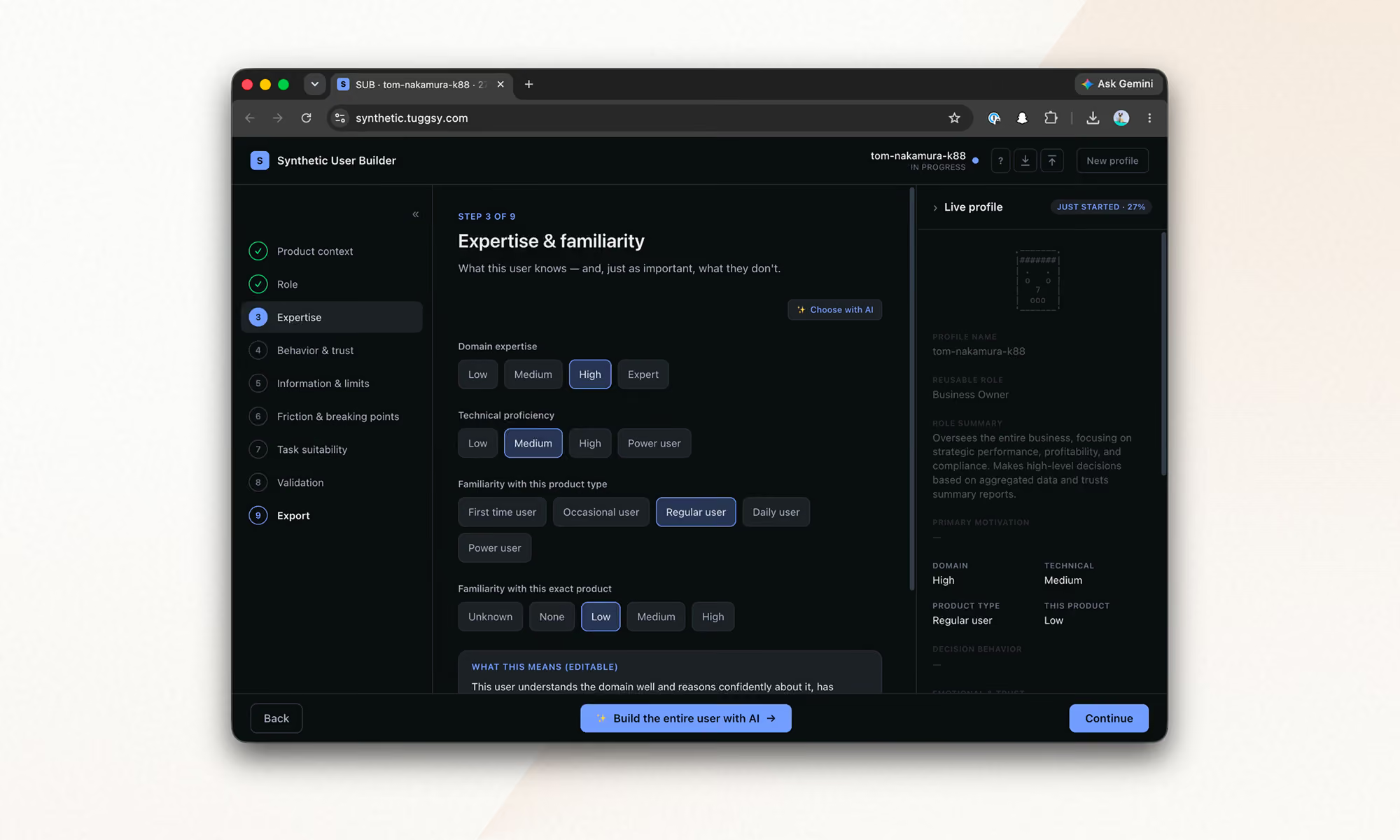
You build a profile field by field in the Synthetic User Builder, the tool I built to materialize the framework.
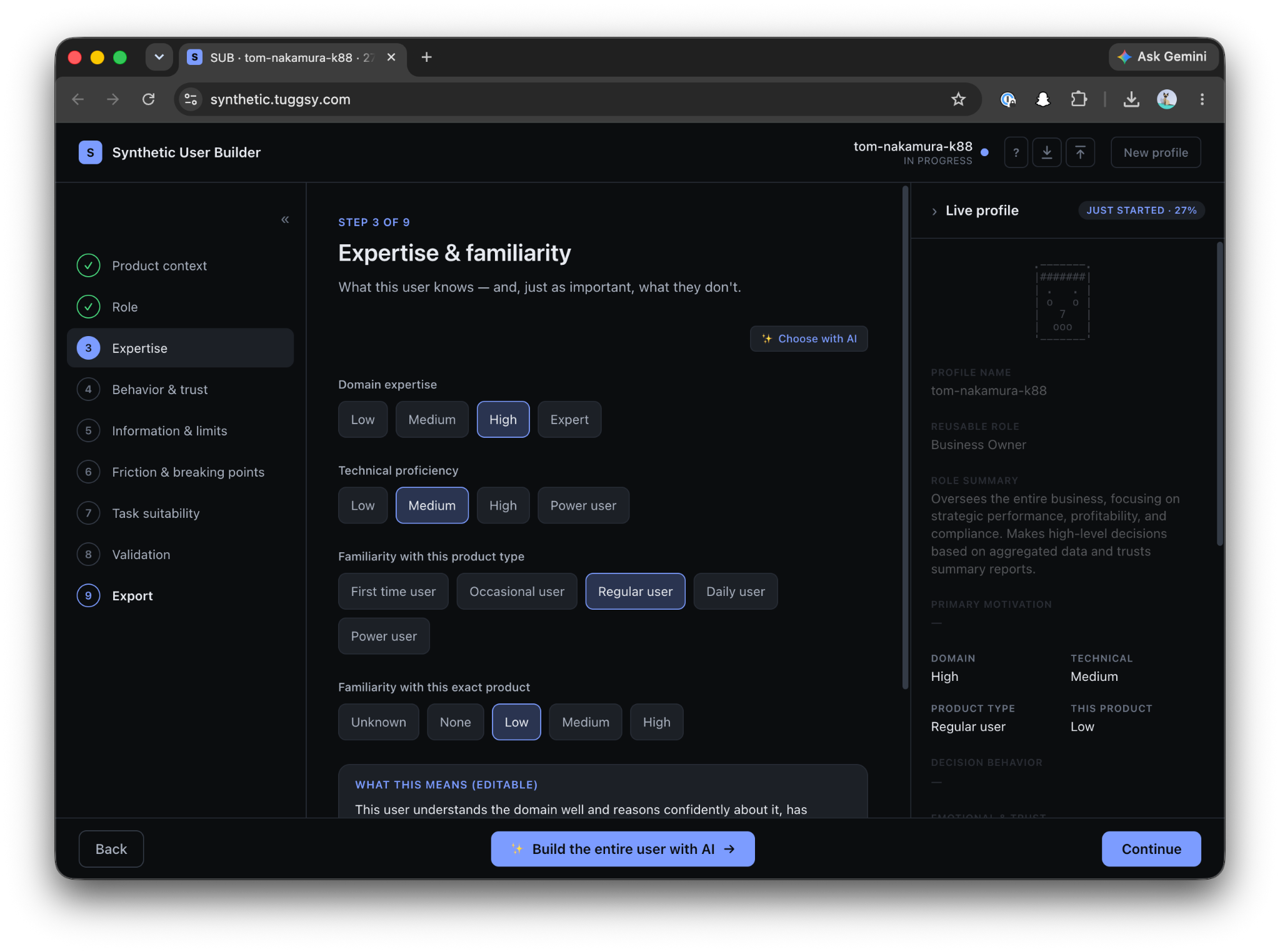
First come the attributes: 

  • Role in relation to the product
  • Boundaries
  • Initial emotional state
  • Context
  • Forbidden assumption

Only after that, and separately, comes the task.

The profile describes how someone decides, never what they have to do. That is why the same profile can be reused across tests.

simulation-auto (inferred)

You only give it the URL.

It researches the business, infers the typical roles, proposes users with tasks, and you adjust that proposal in natural language before anything runs.

heuristic-test (inspection)

The heuristic test described above, for one screen, one flow, or the entire site.

Everything run becomes a file

Every run leaves Markdown artifacts inside the project:

user-simulation-tests/

├── simulation/

│   ├── profiles/    ← users: the .md used for simulation + a .builder.json

│   │                   that can be imported back into the Builder and edited manually

│   └── results/     ← one report per run + the consolidated report from auto mode

└── heuristic/

    ├── personas/    ← the 3 raters + business research, reused across runs

    └── results/     ← reports with the prioritized findings table

Simulation reports include the full step by step flow, the emotional arc, risks, and a single “Fix this first.”

The consolidated report classifies findings by convergence: did one user suffer from this, or did all of them?

The decision to keep everything as accumulating .md files is strategic.

These are different runs, using different lenses, that can be analyzed together later, crossing heuristic violations with simulated emotions answers something no individual test gives us:

Of everything that is wrong, what actually matters?

Models and costs

What worked for me for the synthesis subagents:

  • For reports, consolidation, and the heuristic expert, the best available model makes sense. That is where the judgment lives.
  • For the screen evaluator, a medium and fast model is enough. There are many short, constrained calls, and the profile already restricts the decision.
  • The raters are the lightest case.

A complete run consumes between 100k and 400k tokens, depending on the model and mode, in around 20 minutes.

That is the cost of a test that previously required coordinating the schedules of three professionals, and that can now run against every iteration of the product.

See it in action

Here's a complete run against our site, kzsoftworks.com: a skeptical "Business Leader" profile, five live browser steps, and a full Markdown audit in under three minutes that names the exact moment the executive persona lost trust.

It is still early, but it already runs

Every rule in the framework became an architectural constraint: clean context, one screen at a time, emotional memory, forbidden assumptions.

The plugin is open source: github.com/PabloManzoni/user-simulation.

Three commands, and the inferred mode only needs your URL.

If you try it and your synthetic user abandons on screen three, you already know what it means:

It is not failure. It is the signal.
·

Aug 14, 2026

Generative UI: How to keep the experience under control

Generative UI can adapt interfaces to each user, but it adds risks around reliability, latency, cost, security, and accessibility. Learn the architecture that keeps those risks under control.

12 read time

Read more

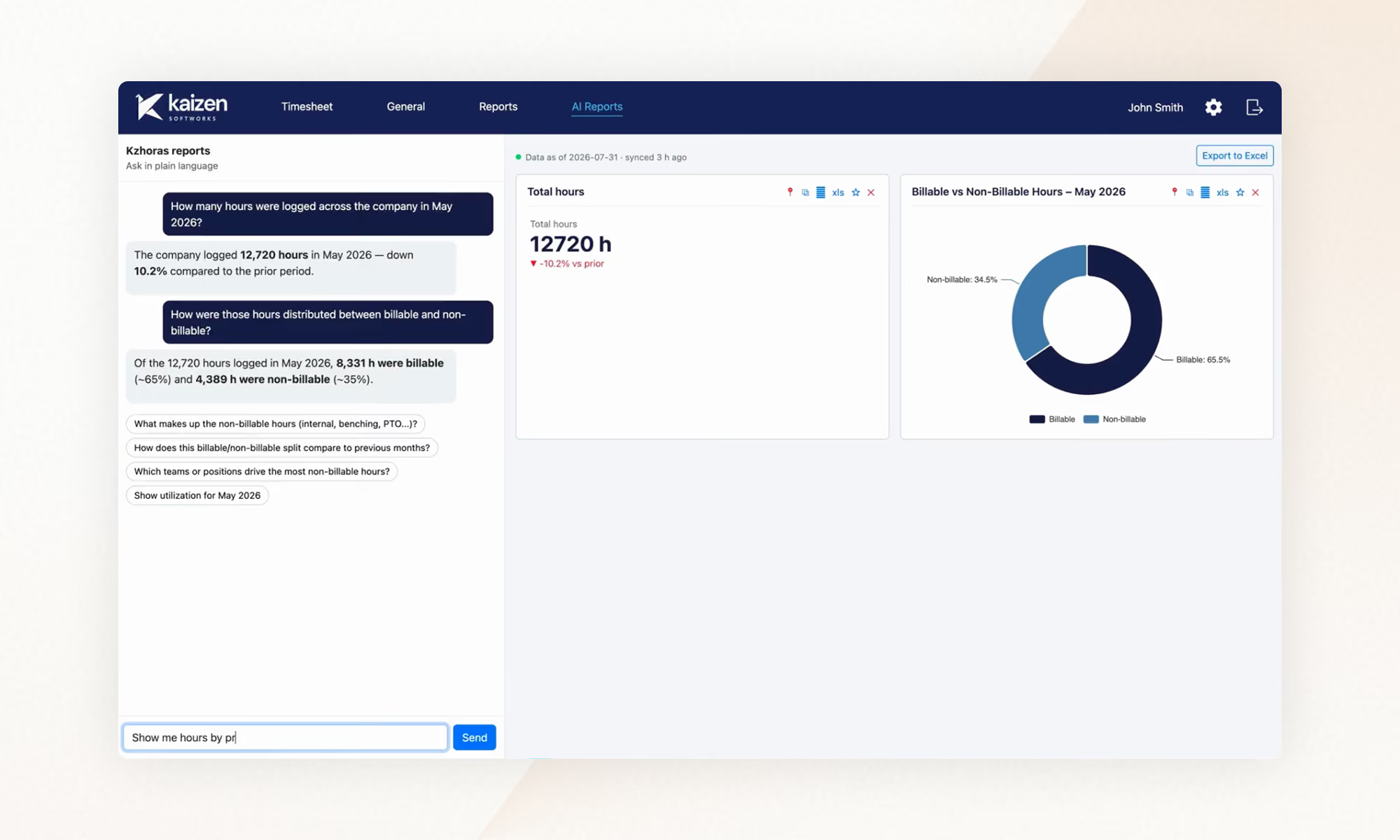
Generative UI assembles the interface around what each user is trying to do, instead of showing everyone the same fixed screen. That flexibility comes with real considerations: keeping the experience consistent, secure, and easy to support once it's live. This post covers what generative UI is worth building for, what it costs, and how teams keep it under control.

Generative UI works best when the experience is dynamic, but the system behind it stays tightly controlled.

Start by defining which parts of the interface can change, which cannot, and what must be validated before anything reaches the user.

TL;DR

  • Interfaces can adapt to user context, support more variations without designing every screen by hand, and reduce unnecessary steps in a workflow.
  • The trade-offs include inconsistent experiences, unreliable or unsafe output, added latency and infrastructure cost, and harder analytics and debugging.
  • Better prompting can reduce unwanted behavior, but it cannot guarantee reliability, security, or consistency. Those controls need to exist around the model: a stable interface shell, a closed component catalog, validation of model output, session-level logging, and model routing with fallback options.
  • Every control introduces a trade-off. No architecture maximizes flexibility, reliability, privacy, performance, and cost at the same time.

What does generative UI make possible?

Interfaces that adapt to context

The interface can adapt to what a person is trying to do instead of relying only on a persona defined at design time. Steps can reorder or disappear based on intent. It can change how much information it shows and what it emphasizes. Copy can adapt to the user's locale and context instead of relying on literal translation.

More interface variations with less custom development

A small set of components can support many variations without designing each screen separately. The system can also support workflows the team did not design as individual screens, as long as the required components and actions already exist.

Fewer steps between intent and action

The interface can hide controls a task does not need, reducing the number of steps required to complete it. Generative UI can also help teams test different ways of presenting the same task. Whether that improves completion or conversion depends on the workflow.

What can go wrong with generative UI?

Experience consistency risks

When layouts change between users or sessions, they can break muscle memory and make support harder. They can also drift from the design system or disrupt accessibility patterns that depend on consistent structure.

Reliability and security risks

The system should not trust model output by default. A model can render a button that does nothing, display fabricated data in a component, or produce a state the team never tested. Prompt injection can push it toward components, content, or actions the system should not allow. Weak controls can expose sensitive data or allow actions and interface states the product should block.

Performance and infrastructure risks

A generative interface also inherits the model layer's latency, cost, and availability risks. Waiting on an LLM to generate a layout adds delay before a page renders. Each generation uses processing resources, and hosted models usually add usage-based cost. Relying on one provider also exposes your product to outages, API changes, price increases, and deprecations.

Analytics and debugging risks

Standard analytics often assume a fixed set of screens. Heatmaps and funnels become harder to compare when users see different layouts. Reproducing a bug also gets harder when you cannot reopen the exact screen the user saw.

How do you control these risks?

Prompts can reduce unwanted behavior, but they cannot enforce which components the system may render or which actions it may allow. Those limits need to be enforced in the architecture around the model.

What parts of a generative interface should remain fixed?

Keep global navigation, account and security controls, primary actions, critical transaction controls, and accessibility-critical structure fixed. Let the model modify only the content and controls that benefit from adaptation.

Fixed navigation preserves familiar interaction patterns. A stable structure also makes accessibility testing, branding, and support more predictable.

How do you stop generative UI from creating broken interfaces?

Do not let the model generate arbitrary UI code. Have it return structured configuration instead. The schema should specify the component, its data, and its position. Validate that output against a closed catalog before rendering it.

The model should not write HTML, CSS, or JavaScript or choose anything outside that catalog. This reduces invalid layouts and unsupported combinations. This is the declarative approach we covered in Part 1.

How should teams test and secure generative UI?

Treat model output as untrusted input. Validate it against the schema and component allowlist, sanitize content, and keep authorization outside the model.

Add content security policies and prompt-injection defenses based on what the model can access and what actions it can trigger. Pay particular attention to user-provided content, privileged actions, sensitive data, and external tools.

Limit valid component combinations, then use visual regression and property-based tests to exercise unexpected inputs and edge cases.

Minimize sensitive data sent to the model. Mask or anonymize it before generation when the task does not require the original values.

How do you monitor a UI that looks different for every user?

Record enough context to reconstruct each generated interface. That includes detected intent, model version, generated configuration, rendered components, task completion, and errors, all tied to the session.

That record lets teams segment analytics by generated experience and reconstruct what a user saw during a specific session.

How do you control latency, cost, and outages?

Cache reusable results where freshness and privacy allow. Show a skeleton layout immediately and stream the rest in. Route simpler requests to smaller or local models, and reserve larger ones for complex requests. Put providers behind the same integration layer so you can switch models or fall back to a static experience during an outage.

What it controls Risks it mitigates
Stable interface shell Keeps navigation, account controls, and primary actions fixed Muscle memory loss, brand drift, accessibility gaps, support friction
Component-based UI Model outputs configuration, not code UI hallucinations, broken layouts, brand inconsistency, testing complexity
Untrusted-input handling Schema validation, allowlists, sanitization, sensitive-data controls Prompt injection, unsafe states, fabricated actions, privacy exposure
Session-level logging Records intent, generated configuration, rendered components, and outcome Fragmented analytics, hard-to-reproduce bugs, support friction
Model routing and fallback Caching, streaming, model routing, provider switching Latency, model cost, provider downtime, difficulty switching providers

What do these controls cost you?

Keeping more of the interface fixed protects consistency but limits personalization. Limiting combinations makes the system easier to test but reduces how much it can vary. Caching lowers cost, but cached output can go stale.

Running models locally can reduce how much sensitive data leaves your infrastructure, but it adds systems your team has to operate and maintain. Detailed session logs can make support easier, but they also create storage, retention, and privacy requirements.

No architecture maximizes flexibility, reliability, privacy, performance, and cost at once. You need to decide which trade-offs matter most for each workflow and design around them.

llms.txt