





·
Aug 28, 2026
Everything to know about Catalyst 26: dates, price, who attends, both keynote recaps, and when the next Catalyst event is.

12 read time
Catalyst 26 was Partnership Leaders' fifth annual conference for partnership, ecosystem, and go-to-market professionals. It took place August 25 and 26, 2026, at the Marriott Hotel at the Brooklyn Bridge in New York, with more than 1,000 attendees and 70-plus speakers from companies including Anthropic, OpenAI, Google, Microsoft, IBM, BCG, and Siemens.
Who Catalyst events are for
Catalyst brought together people building and running partner programs across SaaS, AI, consulting, systems integration, agencies, and major cloud platforms.
Attendees included executives leading partnership organizations, and people working directly in alliances, partner sales, marketing, operations, strategy, and enablement.
What Catalyst 26 is like
You can look at the agenda before a conference and have a pretty good idea of what you'll find. Being there is different.
This year's theme was "Navigating Frontier Ecosystems". Anthropic's Head of Partnerships and one of OpenAI's partner program leads appeared on the same agenda as people from Oracle, Siemens, IBM, and BCG, companies that have run formal partner programs for two decades.
That mix was one of the most interesting parts of the conference. Newer AI companies were discussing partner tiers, co-selling, and joint delivery alongside companies where those models have been part of their business for years.
What Catalyst 26 covered
Catalyst 26 split its sessions into eight pillars:
- Advancing Organizational Maturity: turning partnerships into something measured and repeatable instead of one founder doing favors for another.
- Become a Strategic Partner: getting partnerships involved when product and business decisions are made, not told about them afterward.
- Frontier Partner Experience: adapting partner programs as AI changes how companies build and integrate products.
- Path to CPO: career sessions for people aiming to lead partnerships at the executive level.
- Co-Build: two companies building something together.
- Co-Market: two companies running a campaign together.
- Co-Sell: two sales teams working the same deal.
- Co-Serve: two companies delivering the same engagement to a client.
Catalyst 26 sessions
Day 1 Keynote
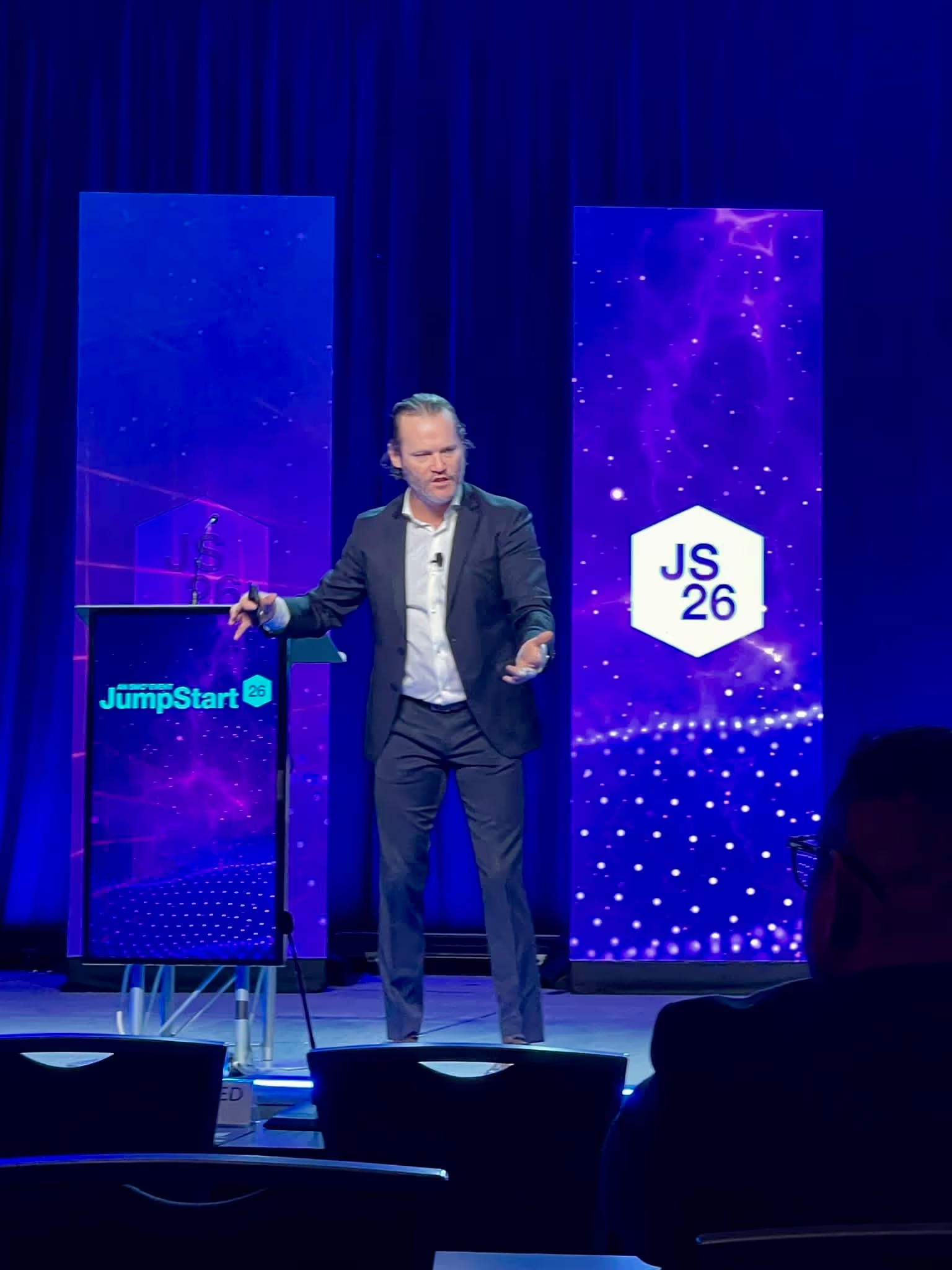
The Day 1 keynote brought together Partnership Leaders’ CEO Asher Mathew, Tribe AI’s Co-founder & CEO Jaclyn Rice Nelson, Anthropic’s Head of Partnerships Phil Samenuk, and Boomi’s Chairman & CEO Steve Lucas.
Their discussion focused on how companies are relying on partners to build, sell, and deliver products across AI, cloud, and enterprise software. A few points stood out:
- More companies have dedicated partner teams now, which means a generic, one-size-fits-all partner program doesn't cut it anymore. Partners show up when the program fits how they work.
- New AI products and cloud services are shipping so fast that a partner program can't just get set once and left alone. Incentives, support, and how you work together need regular updates.
- Partnerships also came up as a way to access data a company couldn’t reach on its own, whether that meant getting access to it, combining it, or putting it to use.
- AI doesn't change the basics of a good partnership. Account planning, clear ownership, and relationships built over time still matter most.
Day 2 Keynote
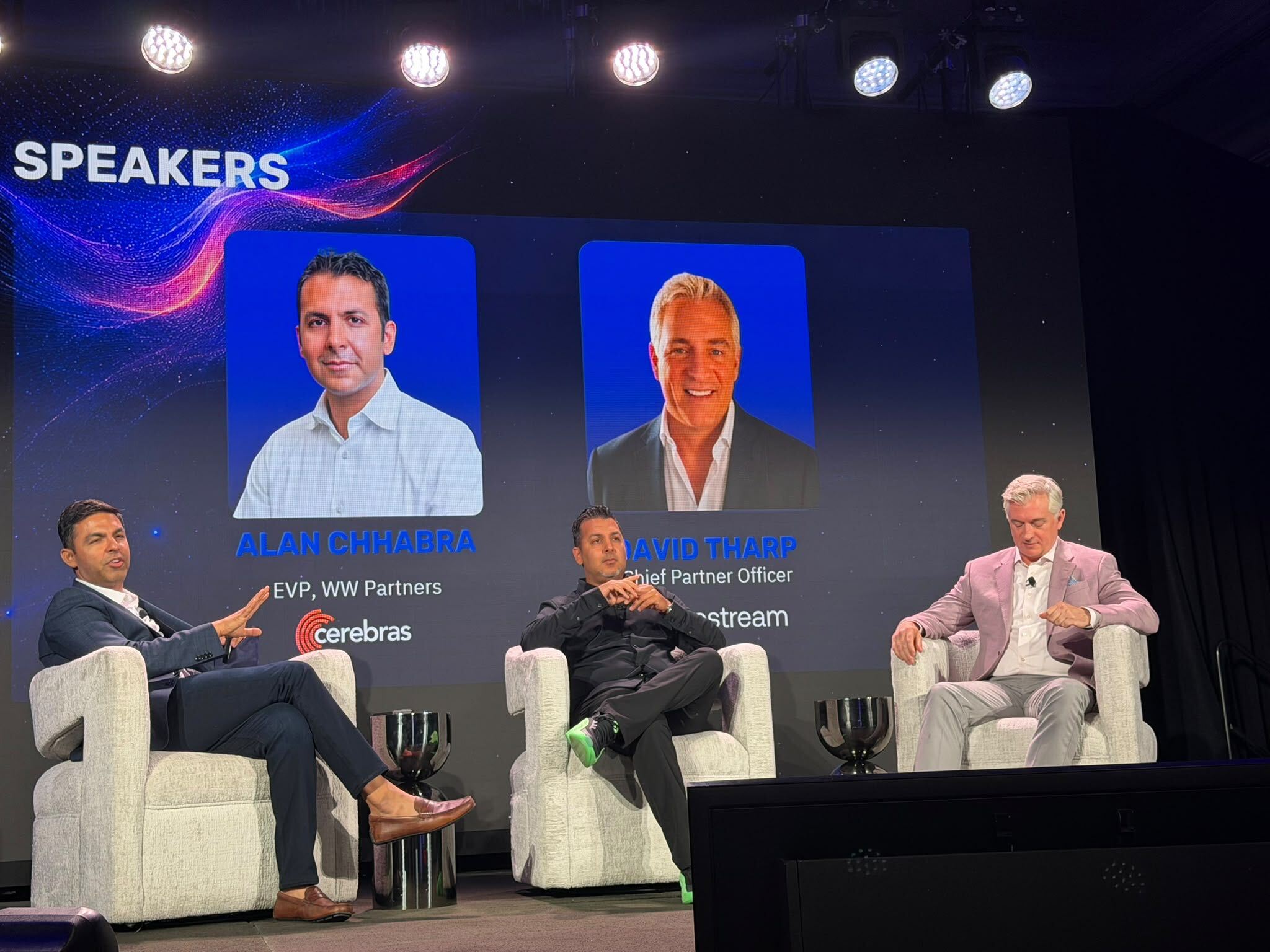
The Day 2 keynote featured Ramp’s Lead Economist Ara Kharazian, Eliza’s Founder Brian Benedict, Siemens’ EVP Global Partner Ecosystem Dion Smith, and Oracle’s SVP, Partner Sales & Operations Strategy Leah Yomtovian.
A few points stood out:
- The spending data told a slower story than expected: AI adoption is mostly going toward productivity gains and task automation, not some overnight shift.
- Siemens is in the middle of folding more than 68,000 partners and roughly 200 separate programs into a single global one, mainly to make it easier to coordinate across IT and operational technology.
- Oracle's approach is a running "listening tour": every partner gets the same baseline benefits, then incentives and credits get layered based on the type of partner and how they work with Oracle.
- There was also talk of a newer kind of service team: bring in engineers, turn AI requirements into working products, and reuse delivery methods that already work instead of starting from scratch each time.
Next Catalyst events
The date and location of Catalyst 27 hasn’t been announced yet. In the meantime, you can check out the half-day Catalyst Summits in different cities:
- October 20, 2026 - Seattle
- October 27, 2026 - Chicago
- October 2026 - Los Angeles
- December 2026 - Singapore
Check Partnership Leaders’ events page for updates.