Silicon Slopes: a Hub for Tech Entrepreneurship You Need to Know About
Published on
·
February 23, 2026
Last updated on
·
February 16, 2026
Time to read
·
12
Valentina Ibinete
Marketing Lead
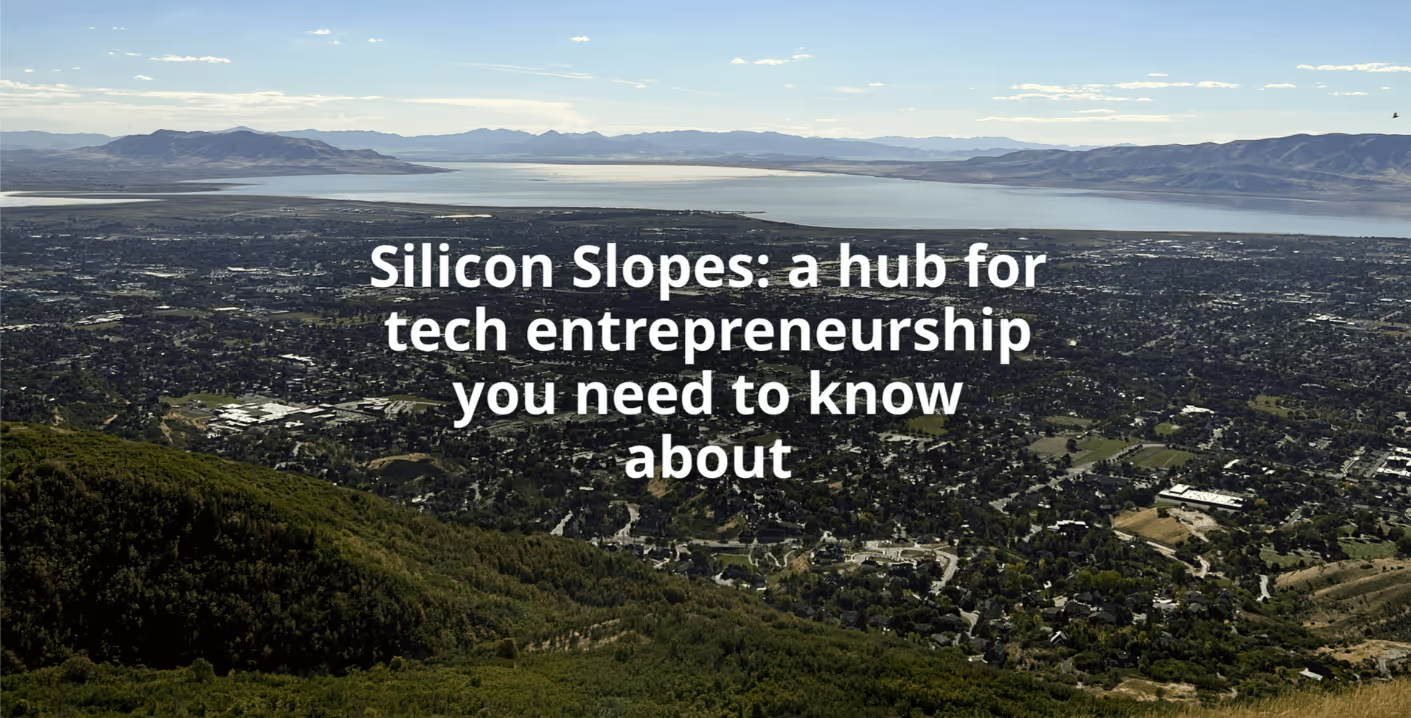
Utah is not just known for their snowboarding and Mormon lifestyle. Technology and entrepreneurship are booming in the State, especially in the area known as Silicon Slopes.
This area that goes from Salt Lake City to Provo has become one of the most diverse tech hubs in the U.S. The nickname combines the region’s tie to technology and Silicon Valley, with the mountains found all over the place.
The area also has a long history of entrepreneurship and is home to a well-known cluster of IT, software development and hardware manufacturing tech companies such as Adobe, Ancestry.com, SanDisk, Overstock, Vivint, eBay, and more.
From September 24th to October 1st, Daniel Castro and myself visited Silicon Slopes, with the aim of getting to know better the Utah entrepreneurial ecosystem on-site.
Keep reading if you’re interested in our top three impressions of this booming technological hub.
Technological history: it’s not just for Silicon Valley
Utah is a state known for many things: its beautiful scenery, its large Mormon population, and skiing facilities. But what you may not know is that Utah has a rich history of tech innovation that goes back well before the days of Facebook and Google.
The state is home to some of the most impressive technological achievements in history, including the first electronic television transmission in 1927, which was operated by Philo Farnsworth—a man who also invented the first all-electronic TV set.
Utah is also home to the spawning of Atari, which we all know and love for its retro gaming systems (and modern ones too). Nolan Bushnell, the company’s iconic founder, was born in Clearfield, Utah, and studied at The University of Utah before moving to Sunnyvale, California and founding Atari.
The state has also been home to a number of early tech companies and founders that have had an impact on the technology industry as a whole and attracted more businesses to the area such as:
Evans & Sutherland, which was founded there in 1968 by David Evans and Ivan Sutherland as the world's first computer graphics company (in operation for over four decades supplying advanced computer graphics technologies to the market);
John Warnock, a co-founder of Adobe Systems;
Alan Ashton, co-founder of WordPerfect;
David C. Evans, founder and first chairman of the University of Utah School of Computing;
James H. Clark, founder of Silicon Graphics, Inc; and
Edwin Catmull, co-founder of Pixar.
The first wave of the tech scene in Utah began in 1979 when two companies, WordPerfect and Novell, were founded. Novell was a software development company that produced programs to network computers together so they could share peripheral devices like printers and hard drives. As desktop computers became more affordable, Novell captured a large segment of the market with its NetWare program. At their height in the early 1990s, Novell controlled 65% of the market for network operating systems in the high-tech industry.
A second wave of tech companies came along in the 1990s with the founding of Omnitureby Josh James and Jeff Taylor. During that same period, Utah became known on the world stage after hosting the 2002 Winter Olympics—and it's been riding that wave ever since! The 2009 acquisition of Omniture by Adobe for $1.8 billion led Adobe to establish a permanent presence in Utah.
In more recent years, Utah has spawned a number of unicorns. From SaaS unicorns like Route (which made Forbes’ 2021 list of Next Billion-Dollar Startups) to e-commerce giants like Overstock, dozens of tech influencers are either headquartered or have satellite offices in Silicon Slopes.
Many companies take advantage of Utah’s pro-business climate and Silicon Slopes’ innovative culture include:
Adobe
Ancestry.com
Domo
EA Sports
eBay
Pluralsight
SanDisk
Vivint
Workfront
Zions Bank
SLC Main St; Temple Square; Silicon Slopes area
Diverse community
One of the most interesting aspects about this new hub is its diversity. The area has welcomed a diverse group of people and companies to its laid-back, welcoming vibe—and they've responded in kind. Young families are flocking here to find affordable housing, good public schools, and the ability to build their own small businesses or work for larger ones.
Utah has a lot going for it when it comes to creating a thriving business ecosystem: a streamlined tax code; tax incentives; an educated workforce; and a strong emphasis on entrepreneurship and innovation.
But there’s more than just business happening in the area. Silicon Slopes has also made tremendous progress toward becoming more open to entrepreneurs of every background—particularly underrepresented minorities such as women—, and seeks to take a leading role in the region’s diversity, equity, and inclusion initiatives.
Diversity isn't just an issue of recruitment, it's an issue of culture. Companies at Silicon Slopes are making an effort not just to look for more diverse employees; they're looking for highly talented people who can help them reshape the culture. And this means every person at every level of a company—from the boardroom to the mail room—has a responsibility to make things better by being themselves and speaking up when they see something that needs changing.
After all, diversity is more than just a buzzword—it's a catalyst for innovation!
Commitment to the local community
Silicon Slopes is not just a bunch of tech companies. They're a community.
The area has retained its small-town community feeling while still being a hub for growth. Something that we particularly notice when talking to different partners and companies, is the commitment and contribution to the local community:
It is home to a huge number of ambitious young graduates from the University of Utah and Brigham Young University. And as the area is still growing, there's plenty of talent to go around, which means companies can hire them young and promote internally to build the kind of team that can drive success.
It is highly valued that companies have a real commitment to focus on empowering people: investing in their learning path, fostering a collaborative work culture, and a people-focused mindset.
Money or just business services are not what motivates close partnerships between companies, but the most important thing is the validation of trust and alignment in values focused on collaboration.
The contribution to the community and the social impact that a company/person can generate is very important: charity volunteering, coaching sessions, workshops, among other initiatives are highly praised
One of the best things about the tech scene in Silicon Slopes is that there are plenty of events for startups, like Silicon Slopes Summit and Pitch Competition that are a great way for entrepreneurs to bring new ideas in an ever-changing business environment. I recommend attending to as many of these as you can, especially when you’re first getting started. New businesses face different challenges and through these platforms you can share your ideas, learn and grow through top business leaders too. When you’re passionate about what you do, it’s clever to feed off of the energy of other people.
And best of all, you learn more from other innovators. The collaboration and information exchange eliminates the feelings of isolation that a lot of startup founders feel. This is a concept known as "connecting with your tribe," and it’s something that more entrepreneurs need to embrace.
Whether you want to start a business in tech or anything else for that matter, making a name for yourself means that networking is the key to success. Instead of focusing on how many people there are in the same field as you (which can be very discouraging) try looking at how many successful entrepreneurs there are who have found success in their field.
It seems like everyone here has a vested interest in making sure people and businesses grow—and why wouldn't they? It's not only good for morale (which means more productivity), but it also makes a sense of belonging to the community stronger.
Final thoughts
Silicon Slopes serves as an interesting example of a tech cluster that is growing in size, scope and influence. It has already seen great change, and there is a lot more to come in the coming years, becoming one of the most prevalent startup hubs in the country with its innovative tech companies.
While still most well-known for their ties to the larger Valley, it is their own growing community that should inspire us all. It seems to be a region where people love living in, and they support and celebrate the vibrant business community that contributes to it.
This shows how a group of like-minded people can push into the future together and form a new hub of technology. Silicon Slopes is an exciting place in Utah and in tech, period.
Utah is not just known for their snowboarding and Mormon lifestyle. Technology and entrepreneurship are booming in the State, especially in the area known as Silicon Slopes.
This area that goes from Salt Lake City to Provo has become one of the most diverse tech hubs in the U.S. The nickname combines the region’s tie to technology and Silicon Valley, with the mountains found all over the place.
The area also has a long history of entrepreneurship and is home to a well-known cluster of IT, software development and hardware manufacturing tech companies such as Adobe, Ancestry.com, SanDisk, Overstock, Vivint, eBay, and more.
From September 24th to October 1st, Daniel Castro and myself visited Silicon Slopes, with the aim of getting to know better the Utah entrepreneurial ecosystem on-site.
Keep reading if you’re interested in our top three impressions of this booming technological hub.
Technological history: it’s not just for Silicon Valley
Utah is a state known for many things: its beautiful scenery, its large Mormon population, and skiing facilities. But what you may not know is that Utah has a rich history of tech innovation that goes back well before the days of Facebook and Google.
The state is home to some of the most impressive technological achievements in history, including the first electronic television transmission in 1927, which was operated by Philo Farnsworth—a man who also invented the first all-electronic TV set.
Utah is also home to the spawning of Atari, which we all know and love for its retro gaming systems (and modern ones too). Nolan Bushnell, the company’s iconic founder, was born in Clearfield, Utah, and studied at The University of Utah before moving to Sunnyvale, California and founding Atari.
The state has also been home to a number of early tech companies and founders that have had an impact on the technology industry as a whole and attracted more businesses to the area such as:
Evans & Sutherland, which was founded there in 1968 by David Evans and Ivan Sutherland as the world's first computer graphics company (in operation for over four decades supplying advanced computer graphics technologies to the market);
John Warnock, a co-founder of Adobe Systems;
Alan Ashton, co-founder of WordPerfect;
David C. Evans, founder and first chairman of the University of Utah School of Computing;
James H. Clark, founder of Silicon Graphics, Inc; and
Edwin Catmull, co-founder of Pixar.
The first wave of the tech scene in Utah began in 1979 when two companies, WordPerfect and Novell, were founded. Novell was a software development company that produced programs to network computers together so they could share peripheral devices like printers and hard drives. As desktop computers became more affordable, Novell captured a large segment of the market with its NetWare program. At their height in the early 1990s, Novell controlled 65% of the market for network operating systems in the high-tech industry.
A second wave of tech companies came along in the 1990s with the founding of Omnitureby Josh James and Jeff Taylor. During that same period, Utah became known on the world stage after hosting the 2002 Winter Olympics—and it's been riding that wave ever since! The 2009 acquisition of Omniture by Adobe for $1.8 billion led Adobe to establish a permanent presence in Utah.
In more recent years, Utah has spawned a number of unicorns. From SaaS unicorns like Route (which made Forbes’ 2021 list of Next Billion-Dollar Startups) to e-commerce giants like Overstock, dozens of tech influencers are either headquartered or have satellite offices in Silicon Slopes.
Many companies take advantage of Utah’s pro-business climate and Silicon Slopes’ innovative culture include:
Adobe
Ancestry.com
Domo
EA Sports
eBay
Pluralsight
SanDisk
Vivint
Workfront
Zions Bank
SLC Main St; Temple Square; Silicon Slopes area
Diverse community
One of the most interesting aspects about this new hub is its diversity. The area has welcomed a diverse group of people and companies to its laid-back, welcoming vibe—and they've responded in kind. Young families are flocking here to find affordable housing, good public schools, and the ability to build their own small businesses or work for larger ones.
Utah has a lot going for it when it comes to creating a thriving business ecosystem: a streamlined tax code; tax incentives; an educated workforce; and a strong emphasis on entrepreneurship and innovation.
But there’s more than just business happening in the area. Silicon Slopes has also made tremendous progress toward becoming more open to entrepreneurs of every background—particularly underrepresented minorities such as women—, and seeks to take a leading role in the region’s diversity, equity, and inclusion initiatives.
Diversity isn't just an issue of recruitment, it's an issue of culture. Companies at Silicon Slopes are making an effort not just to look for more diverse employees; they're looking for highly talented people who can help them reshape the culture. And this means every person at every level of a company—from the boardroom to the mail room—has a responsibility to make things better by being themselves and speaking up when they see something that needs changing.
After all, diversity is more than just a buzzword—it's a catalyst for innovation!
Commitment to the local community
Silicon Slopes is not just a bunch of tech companies. They're a community.
The area has retained its small-town community feeling while still being a hub for growth. Something that we particularly notice when talking to different partners and companies, is the commitment and contribution to the local community:
It is home to a huge number of ambitious young graduates from the University of Utah and Brigham Young University. And as the area is still growing, there's plenty of talent to go around, which means companies can hire them young and promote internally to build the kind of team that can drive success.
It is highly valued that companies have a real commitment to focus on empowering people: investing in their learning path, fostering a collaborative work culture, and a people-focused mindset.
Money or just business services are not what motivates close partnerships between companies, but the most important thing is the validation of trust and alignment in values focused on collaboration.
The contribution to the community and the social impact that a company/person can generate is very important: charity volunteering, coaching sessions, workshops, among other initiatives are highly praised
One of the best things about the tech scene in Silicon Slopes is that there are plenty of events for startups, like Silicon Slopes Summit and Pitch Competition that are a great way for entrepreneurs to bring new ideas in an ever-changing business environment. I recommend attending to as many of these as you can, especially when you’re first getting started. New businesses face different challenges and through these platforms you can share your ideas, learn and grow through top business leaders too. When you’re passionate about what you do, it’s clever to feed off of the energy of other people.
And best of all, you learn more from other innovators. The collaboration and information exchange eliminates the feelings of isolation that a lot of startup founders feel. This is a concept known as "connecting with your tribe," and it’s something that more entrepreneurs need to embrace.
Whether you want to start a business in tech or anything else for that matter, making a name for yourself means that networking is the key to success. Instead of focusing on how many people there are in the same field as you (which can be very discouraging) try looking at how many successful entrepreneurs there are who have found success in their field.
It seems like everyone here has a vested interest in making sure people and businesses grow—and why wouldn't they? It's not only good for morale (which means more productivity), but it also makes a sense of belonging to the community stronger.
Final thoughts
Silicon Slopes serves as an interesting example of a tech cluster that is growing in size, scope and influence. It has already seen great change, and there is a lot more to come in the coming years, becoming one of the most prevalent startup hubs in the country with its innovative tech companies.
While still most well-known for their ties to the larger Valley, it is their own growing community that should inspire us all. It seems to be a region where people love living in, and they support and celebrate the vibrant business community that contributes to it.
This shows how a group of like-minded people can push into the future together and form a new hub of technology. Silicon Slopes is an exciting place in Utah and in tech, period.
A while ago we noticed something pretty common: everyone wanted to share more knowledge internally, but nobody wanted another heavy corporate ritual.
Internal talks usually start with good intentions and slowly disappear. They take time, preparation, and energy. And at some point people start feeling like they need to be experts before presenting anything.
So we tried the opposite.
15 minute talks.
Small topics.
Low pressure.
And one important rule: every session had to leave something useful behind. A tool, a workflow, an idea, a shortcut, a new way to approach a problem. Something people could actually use after the talk ended.
We didn’t want theory that went nowhere.
Somehow, that ended up working much better than we expected.
The idea was to reduce friction
Screenshot of the shared topic pool
Tiny Knowledge Bytes is intentionally simple:
anyone can suggest topics
anyone can end up presenting
you don’t need to master the topic
talks can come from experiments, client problems, tools or random discoveries
sessions should leave something practical behind
if nobody volunteers, the system picks someone for us
The goal was making knowledge sharing feel lightweight instead of exhausting.
Some of the best talks start with:
“I tried this yesterday and it was weird.”
The topic pool started growing on its own
Over time, topics started coming from everywhere.
Sometimes someone took a course and used a Tiny Knowledge Byte as a way to give something back to the team. Other times, a client problem triggered research into new tools, workflows or AI approaches.
A lot of sessions start from curiosity or necessity more than planning.
And honestly, the mix is part of what makes it interesting.
Sometimes a UX session drifts into Computer Vision. Sometimes someone technical shares a visual workflow that half the design team ends up adopting later.
There’s not much curation. It behaves more like a constant exploration system.
Then another problem appeared: choosing who presents
And this is where things became unnecessarily dramatic.
Nobody wanted to be “the person who chooses”. So we started adding absurd layers of randomness until we somehow ended up building a full internal app called 2FS.
Two Factor Sorteo.
Yes, it’s real.
The wheel proposes. The oracle decides.
The logic is simple.
First, a wheel picks someone.
Then a Magic 8 Ball decides whether destiny approves the selection.
If the oracle rejects the person, the process starts again.
That’s it.
The app accidentally became part of the learning loop too
Apps developed for the Tiny Knowledge Bytes.
2FS originally started as an excuse to experiment with:
Claude Code
Claude Design
design systems
editorial interfaces
motion and microinteractions
Eventually those same explorations turned into future Tiny Knowledge Bytes.
The tool we used to select speakers started generating new topics itself.
The system started feeding itself
One of the most interesting side effects is that people started building things outside their usual role because of previous Tiny Knowledge Bytes.
2FS itself is a good example. A designer saw sessions about Claude tooling and AI workflows and thought:
“Maybe I can actually build this.”
What started as a ridiculous speaker selection tool became a real product experiment involving Claude Code, interface systems and interaction design.
Then it came back into the Tiny Knowledge Bytes circuit as a new talk.
That loop became surprisingly valuable:
someone learns something,
tries it,
builds something with it,
and eventually inspires someone else to do the same.
What ended up mattering most
Final Oracle Certificate.
Over time we realized knowledge sharing works much better when:
it doesn’t require huge preparation
it’s allowed to be imperfect
it mixes different disciplines
it leaves something practical behind
and somehow involves a mystical wheel connected to a Magic 8 Ball
At that point, it stops feeling like another internal obligation and starts feeling like something people genuinely want to keep alive.
Just this month, I built a full design system in about 20 hours.
What used to take weeks, sometimes months, is now dramatically faster. So… what actually changed? And more importantly: what didn’t?
Design systems take time. On complex platforms, they can take hundreds of hours.
We were working with a large and complex product where inconsistencies had started to pile up. Different modules had evolved in isolation, teams were making independent decisions, and there were no shared guidelines. The answer was clear: we needed a design system.
AI tools were just starting to emerge back then. They were mostly useful for simple tasks as they tended to hallucinate when things got complex. Developers had started using them earlier than designers, MCP didn't exist yet, and Figma plugins were the best automation we had.
But the context has changed. Fast.
The Manual Era
We did what most teams did. We stopped, and we built it. Manually.
Picture two designers, a mountain of inconsistencies, and no map. We had to cross-reference information manually, digging through the code, detecting what could be merged, agreeing on naming conventions, deciding how to name components. Hours and hours of discussion until we finally landed on a solution.
In the end, we got there. A cleaner system, faster workflows, and for the first time, both teams speaking the same visual language. Hard-won, but it worked.
But now every month a new AI model seems to be released. Design is finally catching up with what developers faced about two years ago. New tools arose, and with that, the scope of our work as designers completely changed.
The Human Factor
For an internal project, I used our Kaizen site as a reference, combined with documentation from industry leaders as a guideline.
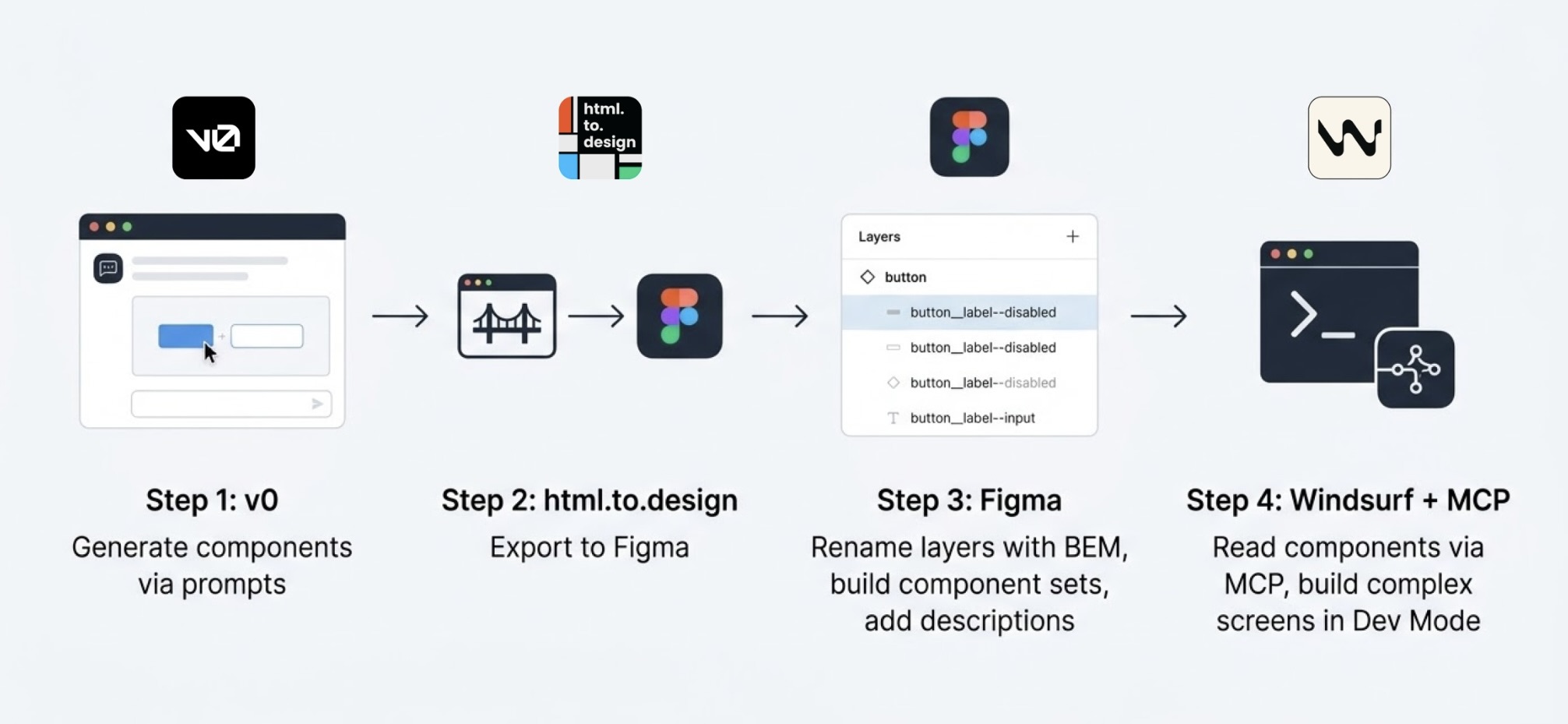
I started in v0, which is essentially a chat interface where you can generate UI components through prompts. I fed it the colors, typographies, and a reference image, and from there it was a back-and-forth: the AI generated, I reacted, adjusted, and pushed until the output matched what I had in my head. And just like that, I started prompting my way through a Design System.
Once a component was ready, I used the html.to.design plugin to bring it into Figma (yes, plugins are still alive!). Think of it as a bridge: the plugin exports designs directly from the browser into a Figma file.
Inside Figma, the intervention was more hands-on. First, I checked that everything was visually consistent with what was defined in v0: colors, typography, styles. Then I used Figma's built-in AI to rename all the component layers using BEM convention (something that would have taken a significant amount of time to do so manually).
BEM, which stands for Block Element Modifier, is a widely adopted naming convention in CSS. It structures layer names hierarchically and predictably, for example: button__label--disabled.
Using it keeps the code clean, readable, and consistent, especially when you're working alongside a developer who needs to understand what came out the other side.
Beyond naming, I also made sure the layer structure would generate the right properties when building component sets in Figma, so that all the variants would be correctly exposed and usable. My team also pointed out that adding descriptions to components and variants was key as context for any agent using them through an MCP.
The last step was connecting everything to Windsurf via MCP. With a frame selected in Dev Mode, Windsurf could read the Figma file and use the components to build more complex screens.
We worked closely with a developer throughout this phase. Not just for the technical knowledge, but because having someone who reads code fluently meant catching things we wouldn't have spotted otherwise. The design role here was direction and supervision: making sure the AI used the components correctly and didn't invent solutions where context was missing.
Every step of the process had a human decision behind it.
An Unexpected Discovery
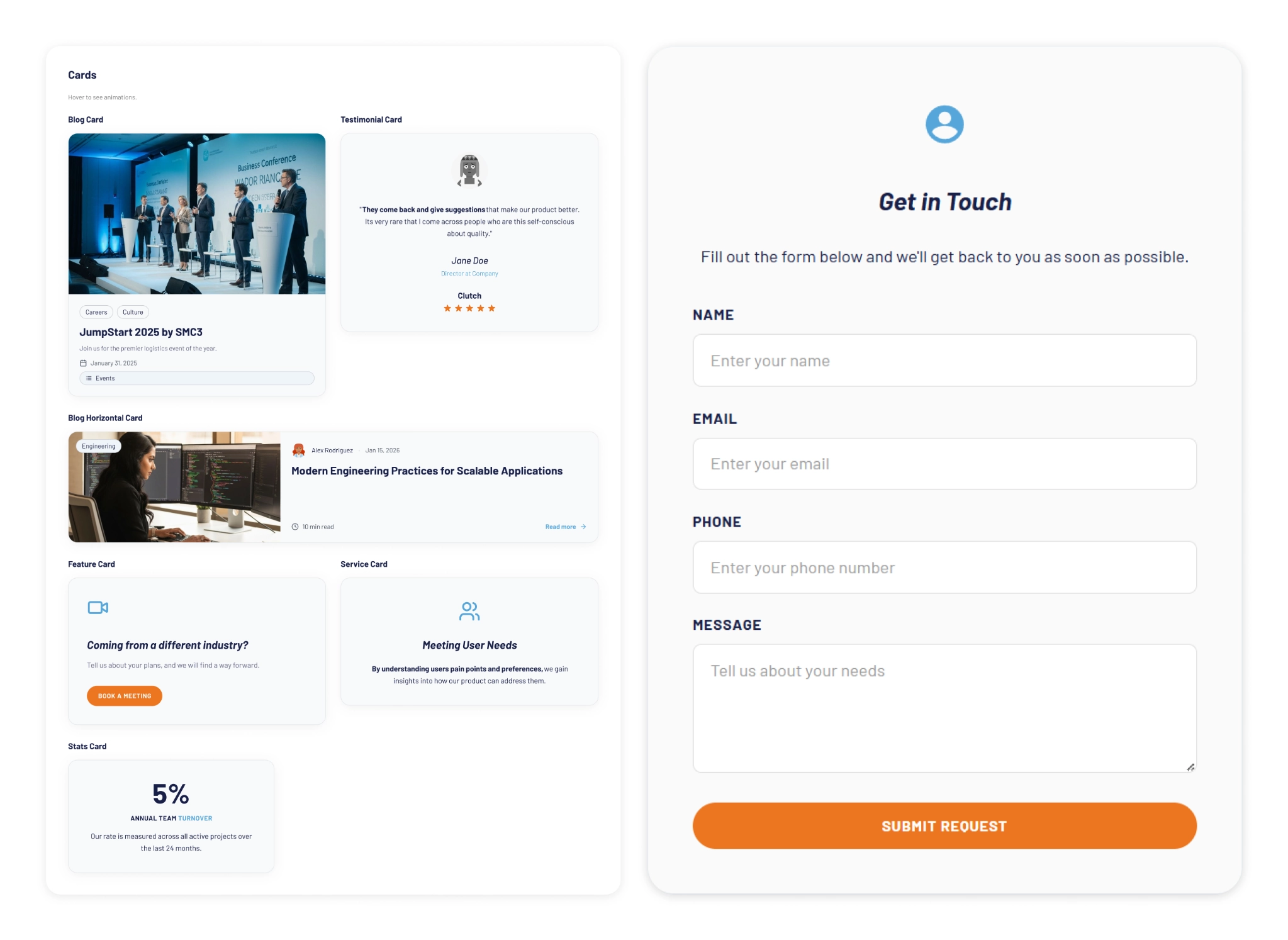
At one point, before we had any of the naming conventions figured out, I selected a frame and asked Windsurf to build a form using the components inside it, styled to match a specific card. The developer next to me was skeptical until he saw the result, and then he was just as surprised as I was.
What we realized is that the MCP wasn't reading layer names to understand context. It was reading everything inside the frame, even the loose text sitting alongside the components. Good naming is still worth doing. But the MCP doesn't need it to understand what it's looking at.
Learning to Talk to an AI
The more specific and contained your prompt, the better the outcome. We started with the most atomic component: the button, and worked outward from there. Each approved component became context for the next one, so the system gradually picked up the visual language we were building.
At some point I got ambitious and asked for five cards in a single prompt: blog card, service card, testimonial card, stats card, feature card… structures, states and all. The AI delivered.
Visually, everything looked fine. Then the developer looked at the code and pointed out that all five cards were independent components instead of variants of one. For a design system, that breaks everything.
One correction prompt fixed it. But it was a good reminder: the AI does exactly what you ask, not what you mean. And fixing it after the fact can cost more than getting it right from the start.
Some Things Learned Along the Way
Precision is key. Natural language is fine when you're asking for a cooking recipe, but when referring to a component, if you say things like "create" instead of "add", you'll probably end up with a whole new set of components instead of additional variants of an existing one.
The "Frame" is the context: MCPs can read everything inside the frame you select. This is a game-changer. It means the "naming conventions" debate might be shifting. If the AI understands the context visually and structurally, will we still spend hours discussing nomenclature in 2027?
No matter what happens, you can always roll back in less than 5 minutes and start over.
Work closely with a developer: they can help you understand MCPs and clear up any code-related doubts. Once you start to grasp their logic, you'll learn very quickly how to prompt in ways that AI actually understands.
There's nothing to lose by asking the AI to follow a specific naming convention for the code. It keeps everything clean and readable, and it takes no extra effort.
The AI covers roughly 80% of the work (generation, variations, exploration...), but the remaining 20% is where quality lives, and that part is not delegable. The AI executes. The judgment is still yours. And if you skip the review, you're not saving time: you'll spend it later.
Context matters more than tooling. What you don't define, the AI will invent. Small components may be resolved well, but large interfaces require more definition from the start. A well-defined system scales. An undefined one generates inconsistencies faster than you can fix them.
Figma is no longer the mandatory starting point. It's useful as a visual reference, a QA space, or a consolidation layer. But the AI doesn't need it. We still do.
There's no single right workflow yet. What you do depends on the project. We're in a transition moment where the tools change faster than the standards. The best thing you can do right now is experiment.
What AI Still Can’t Replace
Through all of this, a few things became very clear. These are the parts that didn’t change:
Knowing when something looks off. The AI generates, but it doesn't notice when the result doesn't feel right. That eye is yours.
Direction and supervision. The AI used the components we gave it, but without someone supervising it, it invents solutions where there is no context to work from.
The definition of done is still a human call, whether it's a conversation with a PO, a stakeholder, or just the designer's criteria. There's no prompt for that.
The context: knowing why certain decisions matter, what a component should communicate, what the user will actually feel. Business knowledge, stakeholder dynamics, unwritten rules, empathy for the end user. These take years to build and live in the people doing the work, not in the tools they use.
My Two Cents
The tools changed, and that gave me the chills, but throughout this experience I found that the designer's role is more alive than ever.
What once took a team weeks can now be prototyped in hours. That’s not a threat; it’s an invitation to get curious.
I'm still figuring a lot of this out, and I suspect most of us are. There's no right workflow yet, and honestly, that's fine. We are in a transition where tools change faster than standards. The best thing you can do is experiment. Don't wait for a "definitive" workflow, it might be obsolete by next month.
Go ahead, try prompting your way through a component. You might be surprised how fast the system starts to take shape.