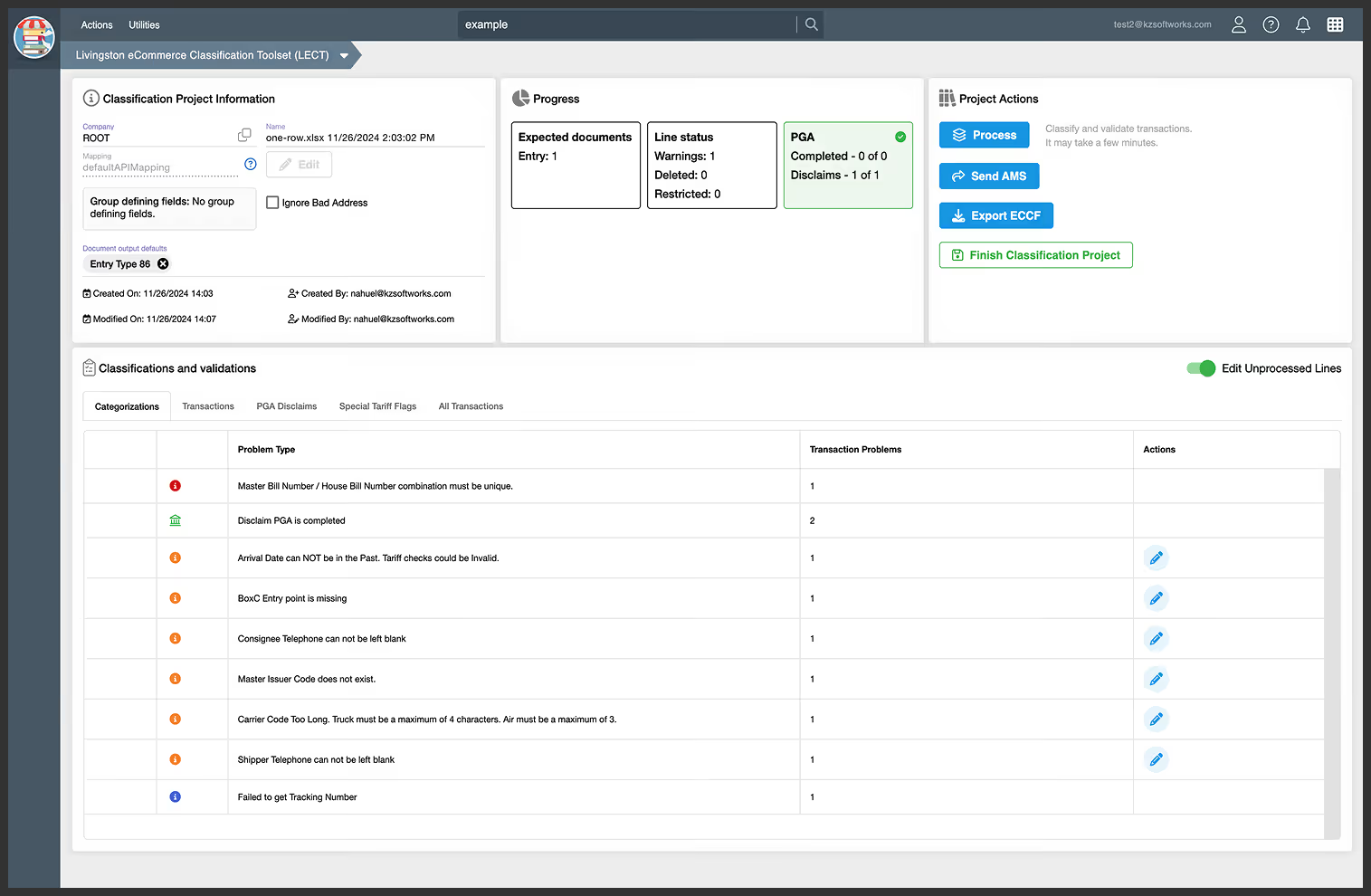

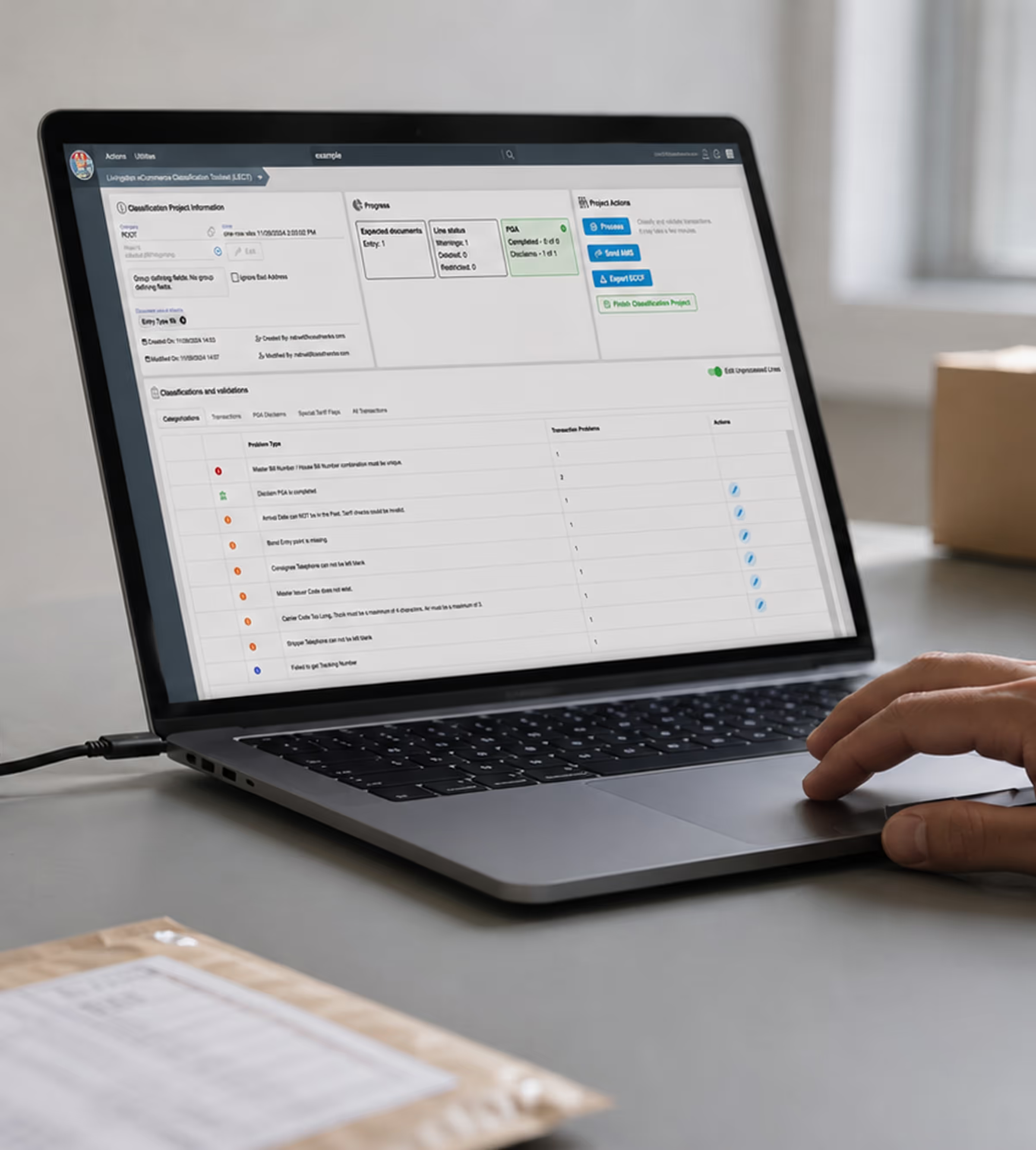

Web-based customs compliance platform used to validate bulk e-commerce shipment data for U.S. Customs submissions.
Our work

Tailored data analytics tool

Automating data validation for customs compliance

A web-based tool built to help Livingston process bulk e-commerce imports, validate shipment data, and prepare ready-to-file submissions for U.S. Customs.

100%

Automated validation checks

50%

Reduction in processing time

1 Month

From prototype to deployment

Overview

About our partnership

Livingston International is a Canadian customs broker and a leader in global trade management, customs compliance and freight solutions.

We started working directly with Livingston in 2021, after years of working with SmartBorder, which Livingston acquired. Since then, we’ve supported integration, modernization, and new product initiatives, including during Livingston’s acquisition by Purolator.

2021

Partnership started, still active today.

34

Kaizen engineers and designers currently working.

3

Active logistics projects

CONTEXT

E-commerce regulations opened a new business line.

Section 321 and Entry Type 86 created a faster customs path for low-value goods entering the U.S. Instead of going through a traditional import flow, qualifying purchases could be cleared through a simplified process.

That opened a new opportunity for Livingston: support the customs clearance of high volumes of e-commerce purchases coming into the U.S.

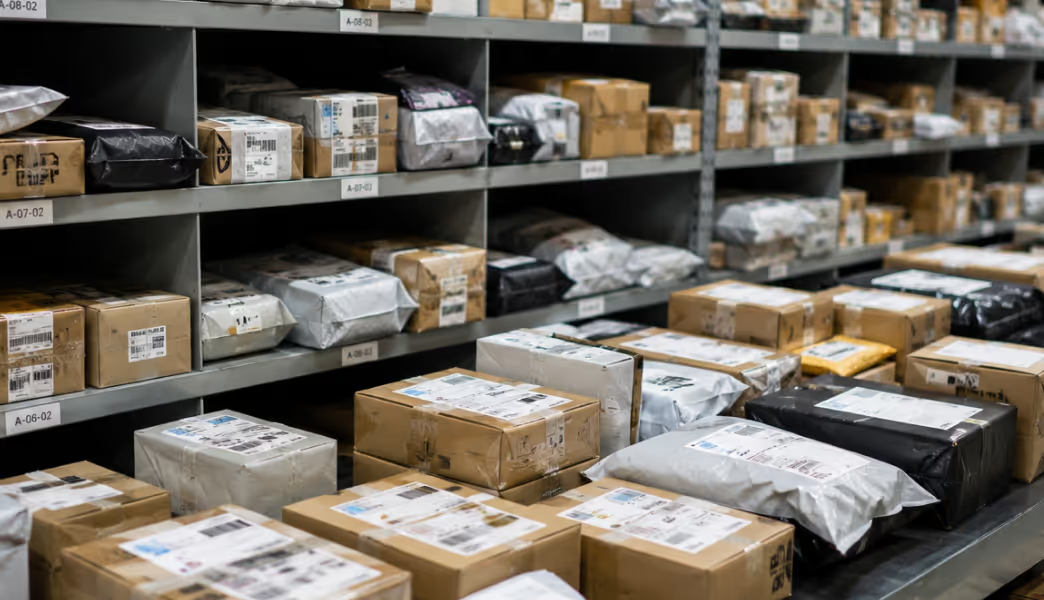
E-commerce parcels representing individual buyers importing goods under Section 321 and Entry Type 86 customs rules.

Individual Buyers

People buying goods from abroad, under $800 per person, per day.

Warehouse shelves with parcels representing Livingston’s e-commerce team preparing shipment data for customs submission.

Livingston E-Commerce

The team preparing parcel data for customs submission.

Customs documentation review process for imported goods entering the United States.

U.S. Customs Agency

The agency reviewing declarations to allow goods into the country.

Challenges

High-volume customs data needed to become ready-to-file

High-volume e-commerce parcels and shipment records requiring classification, validation, and customs preparation.

Too many shipments to process

Livingston needed to process thousands of individual parcel records.
Operators needed to move bulk data through classification, validation, and customs preparation.
Manual review alone would not scale for high-volume e-commerce importers.
Operator reviewing shipment documents and customer data to identify missing or incorrect customs information.

Customer data was inconsistent

Shipment data came from customers in different formats.
Required fields were often missing, incomplete, or entered incorrectly.
Operators needed a clear way to spot errors and know what to fix first.
Delayed package representing the risk of shipment delays caused by incorrect or incomplete customs data.

Manual review created business risk

The process was business-critical: incorrect data could delay customs clearance.
Operators spent too much time checking and correcting data by hand.
When issues were missed, shipments could get delayed or require additional follow-up.

project Goal

Turn bulk shipment data into customs-ready submissions.

The goal was to create a web-based e-commerce clearance tool, integrated with Livingston’s internal systems, to help teams classify, validate, correct, and format large shipment datasets for U.S. customs submission.

Customs compliance web app turning bulk shipment data into validated, customs-ready submissions.

Our Approach

We built the tool around how e-commerce agents actually process bulk shipment data.

01

Defined the product and business workflow

We started by clarifying the product’s value proposition, target users, business goals, and core workflow. The goal was to support Livingston’s new e-commerce clearance service with a tool operators could use daily without adding unnecessary process complexity.

02

Validated the workflow with a prototype

Our UX team prototyped the core flow: creating classification projects, uploading customer data, reviewing missing information, and understanding what needed attention. That helped validate the product direction before moving into development.

03

Built flexible intake and validation

Import agents could start classification projects through FTP, email, or Excel upload. From there, the system organized, validated, and formatted bulk shipment data, flagged missing information, and categorized issues by risk level and confidence.

04

Added visibility for teams and customers

Customers received automated email and SMS updates with shipment status, while agents had a clearer way to track validation issues and project progress. That reduced manual follow-up and gave both sides better visibility into where shipments stood.

05

Launched and evolved the platform

This tool helped Livingston launch its e-commerce clearance service. After launch, the team expanded from 2 to 8 developers to continue evolving the platform, including work on a customer portal for shipment tracking.

Impact

Faster validation. Cleaner data. Less manual review.

100%

Automated validation checks

Incoming data was automatically checked, flagged, and grouped by priority before operator review.

50%

Reduction in processing time

Automated validation and prioritization helped operators review and prepare shipment data faster.

1 month

From prototype to deployment

Validation moved fast enough to take the product from prototype to deployment in one month.

Testimonial

"If something needs to be changed, the team does it in an hour, and that’s because they’re asking the right questions. We are at a stage now where the quality far exceeds anything that I’ve ever done.”

Brandon Davids, Senior Software Consultant at Livingston International

Brandon Davids

Senior Software Consultant at Livingston International

Related work

Active projects with Livingstonand SmartBorder

See all projects

Logistics office overlooking shipping containers for a legacy systems merge and modernization project.

Consolidating legacy logistics systems without downtime

We merged multiple standalone logistics platforms into a modern web app while keeping legacy systems running throughout the transition.

Explore this project
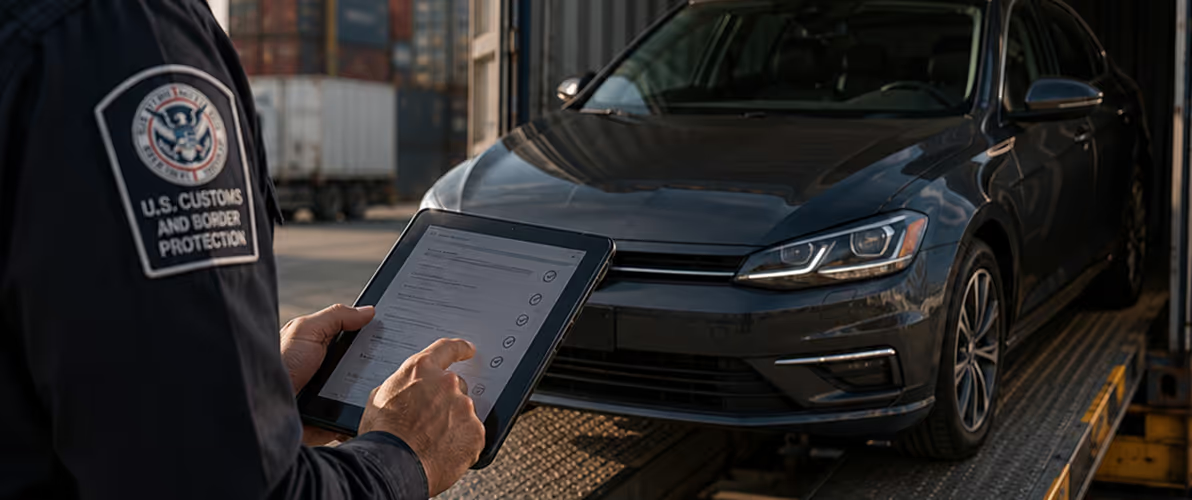
U.S. Customs and Border Protection officer using a tablet near a vehicle for a modernized cross-border exports app.

Modernizing a vehicle exports legacy app

A full-scale technical modernization and rebranding of a business-critical app used to manage cross-border vehicle exports between the U.S. and Canada.

Explore this project

Make critical data easier to see, trust, and act on.

We help teams build systems that validate high-volume data, flag what needs attention, and keep complex workflows moving.

Get in Touch