



Generative UI: what it is, how it works, and when to use it
Generative UI lets AI build the screen each user needs, in real time. What it is, how it works, the trade-offs, and two working demos we built.

12 min read
Read more
Insights, stories, and experiments from our team.
AI
UX Design
Generative UI lets AI build the screen each user needs, in real time. What it is, how it works, the trade-offs, and two working demos we built.

Santiago Chiappa
·

Jul 17, 2026
·
12 min read
Generative UI is a full-stack architecture that lets AI create, modify, and render user interfaces in real time, based on what each user needs at that exact moment. Instead of static, predefined screens, the interface assembles itself on the fly: a bar chart, a table, a comparison card when you're comparing things.
We've been building proofs of concept with it for the past few weeks. Most of what's written about generative UI is either too abstract or too exciting, so this is our attempt at neither: what it is, how it works, where it helps, where it doesn't, and what we learned from two demos we built.
Generative UI is a full-stack architecture: the backend talks to the LLM, decides what the answer should look like, and picks the components, while the frontend renders them and handles how the user interacts with what’s on screen.
Compare that with how interfaces have always worked. A designer decides what goes on each screen, a developer builds it, and every user sees the same thing. Forever, or until the next redesign.
Generative UI flips that. The interface becomes dynamic and personal instead of static and universal. The AI doesn't just answer your question, it designs the screen that answers your question.
Dashboards and reporting are the most common use cases, but they're far from the only one. The same pattern works for dynamic forms, onboarding flows, and customer support, as it takes input just as easily as it presents output. It can even adjust font size, contrast, or layout for users with low vision, color blindness, or cognitive load.
There are three levels of generative UI, from most constrained to most open (Google Cloud, 2026):
Most production systems today use the declarative approach, and that's what this post assumes from here on. The AI isn't writing HTML or CSS freestyle. It selects components, fills in pre-designed widgets, and composes them into the right screen.
Generative UI works by turning a user request into structured data that describes an interface, then rendering that data as real components. The flow looks like this:
To the user, the result feels like magic. Behind the scenes, it's structured data flowing through a well-defined pipeline. We prefer the second description. It's the one you can build on.
Generative UI trades real personalization and faster development for added latency, inference costs, and less predictable layouts. That's the honest version. Here are the details.
None of these are dealbreakers. There are known techniques to mitigate each one.
We built two demos. One with fictional data, one on top of a tool we use every day.
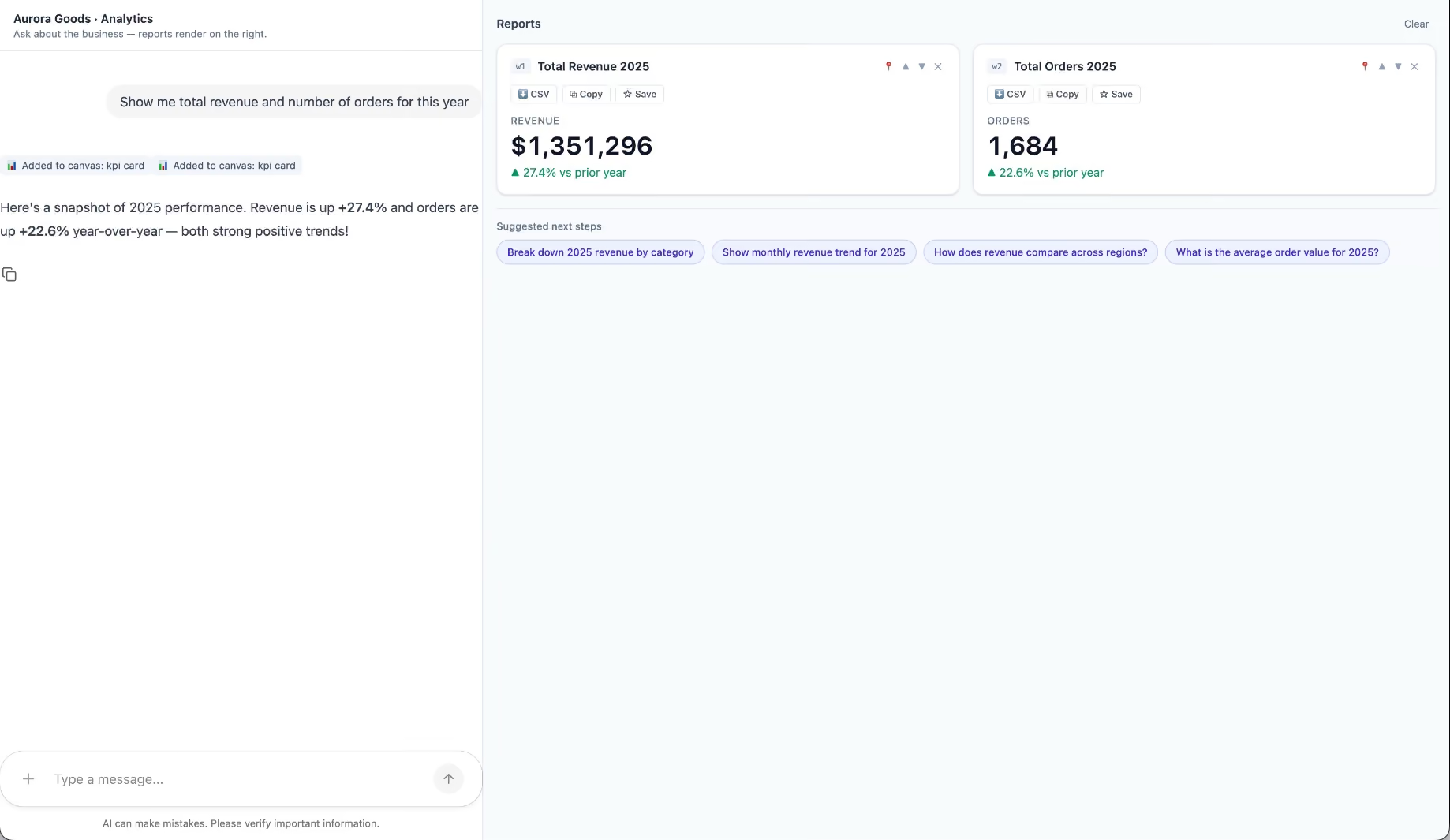
Aurora Goods is a fictional consumer e-commerce platform we created for the demo. The interface is simple: chat on the left, canvas on the right. You ask about the business, the LLM figures out what you need, pulls the data, and renders it visually.
Ask about 2025 sales and it shows the numbers on cards, with a short note on anything relevant. Ask it to break that down by region and it extends the same view instead of starting over, because it understands the second question builds on the first. This part took us a while to get right, and it's what makes the whole thing feel like a conversation rather than a search box.
The canvas isn't output-only either. You can click into any element and drill down: revenue by category, then inside electronics, then which products sold most.
You configure the widgets once. The system combines them and adds relevant commentary on the spot.
The second demo is closer to home: a generative reporting layer on top of the time-tracking tool we use every day at Kaizen. The questions in this demo are questions someone here has actually asked.
Instead of building dozens of hyper-specific reports, a small amount of code now handles virtually unlimited queries. How many hours were logged in May? Which anomalies showed up in April? How do billable and non-billable hours compare across two months? Who worked on a given project last month, and for how long? Each answer arrives as the right visualization: cards, lists, bar charts, plus a short summary that's easy to scan.
Two details won us over. The LLM suggests next steps, so exploring the data becomes a conversation. And when it's not sure, it asks instead of assuming. Ask for the hours of someone named Alex and, since we have more than one Alex on the team, it asks which one before answering.
Generative UI is a complement, not a replacement. Standard interfaces still win for stable, repetitive workflows where consistency matters. Nobody wants their checkout button to be creative. Generative UI wins where the workflow is complex and the questions are unpredictable.
It also changes what design systems are for. Beyond designing components and screens, teams will need to define semantic rules: how the AI should react to uncertainty, which interfaces match which intentions, and the guardrails that keep generated screens functional and safe.
That's a new kind of design work. And it's already starting.
We build working proofs of concept in two weeks. Your data, your workflows, a real thing you can click.
Generative UI lets AI build the screen each user needs, in real time. What it is, how it works, the trade-offs, and two working demos we built.
12 min read
About Us

·
Dec 19, 2023
12 read time
From our humble beginnings in 2014, we've come a long way. Back then, it was just four of us. Today, we're a team of 78 amazing professionals covering everything from engineering and design to marketing, sales, and more.
Then, in 2022, we kicked off a cool adventure—a rebranding! But hey, we didn't go at it alone. We teamed up with branding consultants, and together, our design squad, marketing team, and these awesome consultants worked their magic in this nine-month transformation.
Curious to know the nitty-gritty of our rebranding journey and the shiny new identity we've got? Keep reading, and we'll spill the details!
Our evolution, deeply rooted in the principles of Kaizen, mirrors our commitment to continuous improvement and a workplace culture that thrives on collaboration and team empowerment.
Kaizen, a Japanese term embodying "continuous improvement" or "striving for positive change", is the heartbeat of our philosophy. This concept have their roots in Japan and are widely embraced in business, manufacturing, lean practices, and Total Quality Management (TQM).
At the core of Kaizen is the practice of making small, gradual enhancements— whether in processes, products, or systems—to amplify efficiency, quality, and overall performance over time. Our rebranding journey echoes this ethos, an ode to constant improvement, telling the story of our growth and our commitment to transforming client experiences.
Diving deeper into our rebranding journey, a central mission emerged: to artfully articulate our value proposition and amplify our commitment to continuous improvement. But let's zoom in on what truly sets us apart—the beating heart of Kaizen Softworks: our culture.
Our culture is not just a side note; it's our signature, a genuine game-changer. What makes us different? It's the camaraderie, the shared commitment to growth, and the belief that everyone's voice matters.
In this dynamic workplace, we don't just talk about teamwork; we live it. Team contributions are not only valued; they're celebrated. Our work management structure isn't a top-down hierarchy—it's horizontal, empowering each of us to actively participate in decisions that shape our collective future.
And here's the clincher: our clients aren't just clients; they're partners in our journey. We don't merely deliver projects; we build relationships. It's a partnership approach that extends beyond immediate solutions, creating a collaborative bridge that spans years.
So, as we share our unique culture, we're not just putting it under the spotlight; we're illuminating the very essence that binds us together. Because, after all, our culture isn't just a part of Kaizen Softworks; it's the soul of who we are and the driving force behind everything we do.
So, summing up, our rebrand goals were:
We did a comprehensive evaluation of our existing brand assets and digital presence. We also checked out what's happening in our industry with a competitive landscape analysis. In simple terms, we wanted to get the lay of the land before rolling up our sleeves.
We needed to figure out where we stood, what we were great at, and where there was room for improvement. This groundwork helped us map out a path for our rebranding journey that was both inspiring and doable.
In the next phase, we had chats with team members from different areas. We wanted to hear what they thought about working at Kaizen, what makes them tick, and their unique perspectives on our company. These talks gave us a firsthand view of what brings us together.
The third phase was all about shaping our brand. We used a brand wheel, a visual tool that proved instrumental in refining and arranging the components of our existing brand. While the essence remained true to its origin, the brand wheel allowed us to update and organize key elements such as purpose, values, and personality, resulting in a cohesive brand strategy.
At this point, we realized something big: we're not just a software service provider; we're trusted partners. We're all about helping our clients succeed in business through custom software solutions.
This realization led us to define our brand tagline, "Building Partnerships, Crafting Solutions":
Simultaneously, we established the foundation for our communication strategy – a tone that radiates empathy, approachability, clarity, directness, and fosters the building of robust, trustworthy relationships.
In this stage, we worked on our visual identity. Our logo is special. The origami, with its intricate folds and careful craftsmanship, perfectly symbolizes our dedication to customization. Just like each piece of origami is uniquely crafted through precise folding, we take a similar personalized approach in crafting our solutions and adapting to our clients' unique needs. Our aim isn't just functionality; it's about creating beautifully designed solutions, reflecting the elegance and precision associated with origami artistry.
By embracing origami in our visual identity, we highlight our commitment to personalized, well-crafted software solutions, perfectly aligning with our mission to provide unique digital experiences that make a lasting impact on our clients and their customers.
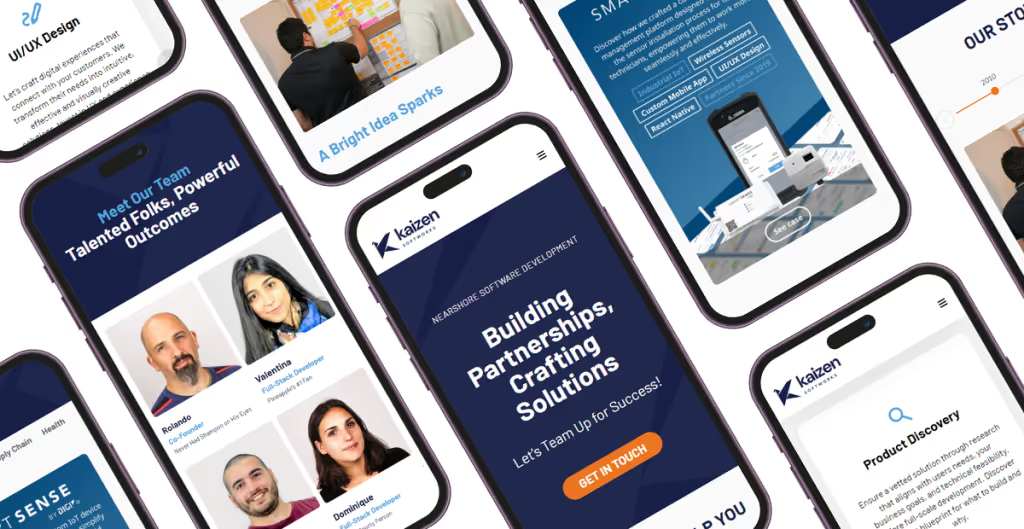
After the visual facelift, we turned our attention to our online home – our website. With our new logo and colors, it needed an upgrade. We wanted it to reflect our fresh brand while providing a smooth and engaging experience for users. Our goal was to showcase our services, our commitment to customization and continuous improvement that defines our culture.
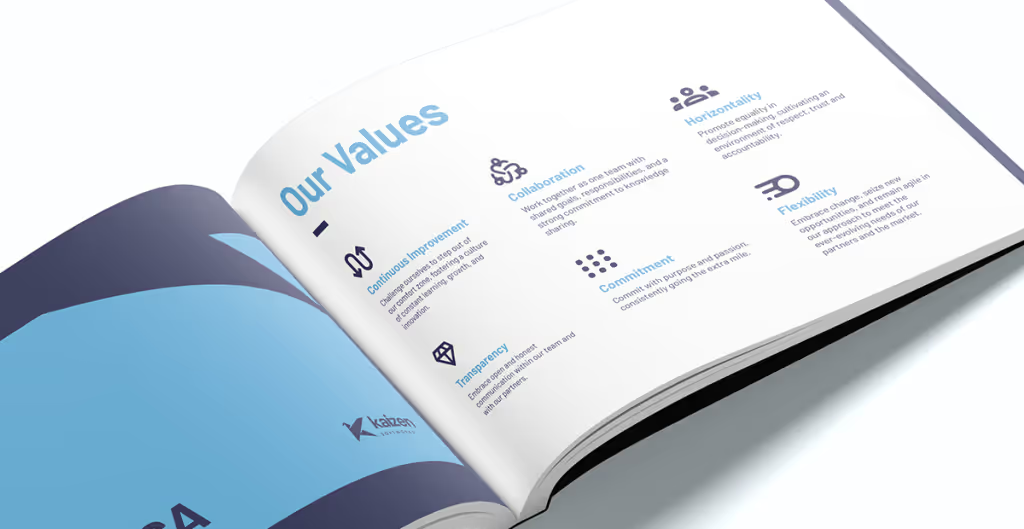
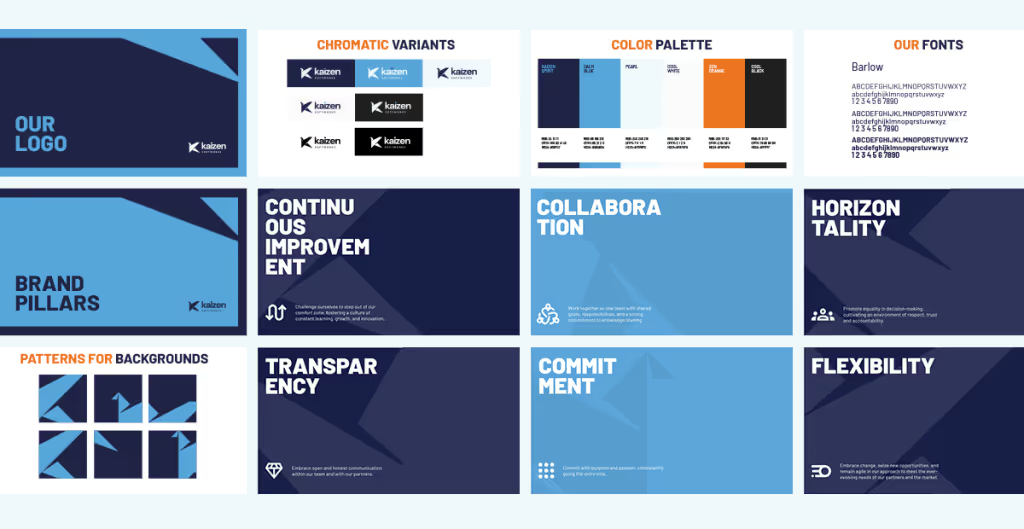
As the final touch, we conclude by releasing a comprehensive Kaizen brand manual. This ensures the uniformity and coherence of all our external messaging.
We extend our sincere gratitude to our dedicated team for their tireless efforts and commitment throughout this transformative process. Additionally, a heartfelt thank you to our valued clients for entrusting us with the opportunity to innovate and grow together.
As our rebranding journey unfolds, we invite you to explore the results of our hard work, creativity, and dedication on our new and improved website. It's the digital gateway to the exciting changes we've made, reflecting the values and vision we hold dear.
Discover how we're crafting digital experiences and forging strong partnerships.

Business
·
Oct 30, 2023
See why Uruguay has become a strong nearshore software development destination, from time zone fit to talent, trust, and cost efficiency.
12 read time
In a previous blog post, we explored the factors that have led Uruguay to transform into an IT hub in Latin America. From its strong connectivity and network infrastructure to its high-quality tech talent, Uruguay has become an attractive destination for global companies like IBM, Microsoft and Oracle, seeking software development services.
In this second part, we will explore why Uruguay is a top Nearshore software development destination.
Uruguay's dedication to transparency it's remarkable. It's the least corrupt country in Latin America, and stands tall at the 18th global spot in the Corruption Perceptions Index (CPI), boasting a remarkable score of 73/100. The CPI draws its strength from an impressive array of data sources, including the World Bank and the World Economic Forum.
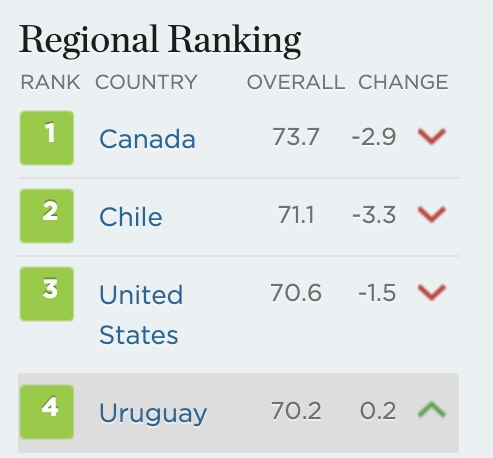
In economic freedom, Uruguay takes the 27th position worldwide and an astonishing 4th place in the Americas. With an economic freedom score of 70.2, it surpasses both global and regional averages. What does this mean for you? An environment that is finely tuned for efficiency, offering not only cost-effective services but also the promise of success.
Uruguay's impeccable reputation for upholding ethical business practices and a deep understanding of client expectations sets the stage for an exceptionally trustworthy and reliable partnership. When you entrust your software projects to a third party, these factors not only minimize risks but also ensure the ethical handling of your business needs.

Uruguay's time zone compatibility is a gift to U.S. clients. Operating on the Uruguay Standard Time (UYT), it's just one hour ahead of the Eastern Time Zone (ET) in the United States.
The advantages of this time zone compatibility are crystal clear:
While Spanish is the official language of Uruguay, the country has a notable level of English proficiency for several reasons:
Data from the EF English Proficiency Index, which ranks countries by their English proficiency, consistently places Uruguay at a relatively high level compared to other Latin American countries. In the 2021 index, Uruguay was ranked 36th out of 100 countries, indicating a moderate-to-high level of English proficiency.
Moreover, the Organization of Ibero-American States for Education, Science, and Culture (OEI) reported in 2020 that approximately 50% of the Uruguayan population possesses some level of English knowledge. This widespread effort to promote English language education underscores Uruguay's commitment to a bilingual future.
Uruguay's dedication to English proficiency, deeply embedded in its educational system and thriving business landscape, offers a bridge of communication and understanding for our U.S. clients. With Uruguay as your nearshore partner, you'll experience not only technical expertise but also a seamless flow of ideas, ensuring the success of your projects.
In the quest for a nearshore partner who understands and aligns with your cultural ethos, Uruguay shines as a beacon of cultural affinity. Here's why it resonates with U.S. clients:
The result? An enriched cultural affinity between Uruguay and Western countries, including the United States. With Uruguay as your nearshore ally, you're not only investing in technical excellence but also in a shared culture of success and understanding.
Uruguay's agile and flexible workforce is primed to be your trusted ally in the pursuit of innovation. Here's why it resonates with U.S. clients:
With Uruguayan professionals, you'll find partners who thrive in the face of challenges, embrace change as an opportunity, and view problems as puzzles waiting to be solved. It's this natural fit with agile methodologies that ensures your software development process is not just efficient but also an innovative journey.
Software Development companies in Uruguay often use the "Time & Materials" cost structure to estimate and bill for their services. This model is synonymous with flexibility and transparency. It operates on a simple premise: clients pay for the time and resources invested in a project, along with the materials or tools used. Here's what this model entails:
Uruguay's cost-efficiency shines through its competitive hourly rates for software development services. The majority of companies in the field charge between $50 to $99 per hour, depending on the seniority level of the talent involved in the project. Here's what this pricing structure means for you:
In the world of nearshore software development, the choice of your partner is not just a decision; it's a strategic move that shapes the future of your projects. We invite you to embark on a journey of trust, innovation, and success with Uruguay, your ultimate nearshore destination.
At Kaizen Softworks, we are ready to be your guide on this journey, providing you with not just technical expertise but also trust and reliability. With Uruguay as your ally, your path to software development success begins with confidence.

About Us
12 read time
We are thrilled to share some exciting news! Our company has recieved the Clutch Award for Top User Experience Company in IT 2023. This recognition underscores our commitment to delivering exceptional user experiences and innovative software solutions to our partners.
Our dedicated team of five designers brings together a remarkable 50 years of collective experience. With this extensive knowledge, we are well-prepared to handle your project with exceptional skill and efficiency, providing you with the assurance that our work will consistently deliver the quality results that align with and effectively meet your goals. Meet our design process.
At Kaizen Softworks, we believe that user research is the foundation of a remarkable user experience. We dive deep into understanding your users – their behavior, preferences, and pain points. This profound understanding drives our design process. We are committed to creating solutions that are not just visually appealing but also highly functional and user-friendly.
We turn concepts into tangible prototypes using the latest tools and technologies, with Figma at the forefront. Our goal is to collect valuable feedback from users, stakeholders, and team members. This feedback loop is crucial for refining functionality, identifying weaknesses, and uncovering opportunities for improvement – all before the development process begins.
We go the extra mile by designing not just impactful user interfaces but the complete visual identity of your project. This encompasses logo design, typography selection, color scheme curation, imagery choices, and website aesthetics. These visual elements collectively represent the identity of your project and play a vital role in enhancing the overall quality of your solution.
Our approach is driven by users' needs. We focus on creating solutions that users can navigate effortlessly. By closely analyzing user interactions and feedback, we continually refine the design to enhance user-friendliness and align it with user expectations. This iterative process helps us spot usability issues early, reducing the need for extensive rework during development.
Motion design is all about taking your user experience to the next level. At Kaizen Softworks, we're experts in creating seamless animations and transitions that guide user interactions and boost engagement. These dynamic elements not only grab the user's attention but also add that extra layer of quality to the overall user experience.

Technology

·
Jun 1, 2023
12 read time
We’ve all been there: we want to learn about a new framework or technology so we go to its official webpage and carry out the online tutorial. Unfortunately, these tutorials generally aim to cover a basic first approach to the tool, but not enough when we want to use them for something more complex such as creating a product for a production environment. The aim of this blog then is to provide some tips on how to approach learning a new framework or technology.
I remember when I used to have more free time at work and decided to learn how to use React. I carried out the online tutorials from the official website, which I found quite interesting but I was not even close to being able to use it in a complex project. For example: one of the tutorials only covers React components and hooks, but not its characteristics which are highly important in a webpage, such as:
You may be thinking: that’s what the advanced guide on the website is for, as it even tackles even more complex topics. While I agree with that, those guides fail to give answers to the above mentioned, which I believe are quite basic and should be present in any production solution.
That is why, I believe the best way to learn a new technology is by trying to simulate a project including all the characteristics a production solution should have. I know it’s not easy to come up with a good idea for a project and then develop it so thoroughly. Instead, I suggest not to bother so much about the functionality of the project in itself.
If we want to implement authentication and authorization using OAuth, it isn’t really important whether we try it in a social network system or in an account management software, what’s really important is that certain routes access, websites or resources are restricted according to the characteristics we consider important. So don’t waste time trying to think of an appealing idea, just roll up your sleeves and get down to work.
In the same line of thought, during my last stay on the bench (which is what we say in Kaizen when someone has not been assigned to any client yet) I decided to learn how to use NestJS to implement a solution using microservices. While I was acquainted with that topic as I had seen it in University, I never had the chance to put it into practice. The first thing I did was to resort to something very good we have here at Kaizen: our workmates!
In Kaizen developers work in teams which are assigned to different clients. Different teams often use different technologies and architectures. Developers at Kaizen are always willing to help their peers, even if they are not part of the same team, so I decided to ask one of my colleagues working with microservices for help.
This colleague told me about the technology they used to implement microservices in his project and some tips on what to bear in mind when using it. Based on that I came up with a list of characteristics which are necessary for a solution of this kind:
As you can see, there are many things to bear in mind. This is why it is highly advisable to count with a working plan to help you work out the different steps and to set short term goals to feel motivated. This is how I planned it:
As you can see, I made some changes based on my own experience and interests. For example, I made the database connection using Dapr as connecting databases from Node.js isn’t very different from doing it using NestJS. Moreover, I split the deployment in two as first I wanted to learn docker, then docker-compose and finally Kubernetes.
I may not have the same experience I have using other frameworks and implementing a solution based on what I learnt may not be so fast and efficient. However, I consider that I have learnt how to use NestJS, Dapr, Docker, Kubernetes satisfactorily. I could also create a Github repository where I have everything ready if I have the opportunity to put it all into practice in a real situation with a client. This repository can also be used to pass on knowledge to future colleagues.
In conclusion, learning a new framework is not only about following some basic tutorials, but more like diving into simulating projects which involve more complex characteristics and challenges. By simulating a project with characteristics necessary for a production solution, we can gain practical knowledge and face common obstacles present in the real world.
In addition, seeking peers and experts' support aids our learning and offers us a broader perspective. Designing a working plan and setting up short-term achievements can help us feel motivated and to obtain non-stop progress. Finally, this approach allows us to develop hard skills and to create a knowledge repository that we can share with others in the future.
Business
12 read time
In the rapidly evolving landscape of software solutions, businesses often find themselves at a crossroads: deciding between off-the-shelf software and custom software tailored to their unique needs. This crucial decision can significantly impact efficiency, productivity, and long-term success.
In this blog post, we'll explore the pros and cons of both options to help you make an informed choice for your business.
Ultimately, the choice between off-the-shelf and custom software hinges on your business's unique needs, budget, and long-term goals. Consider factors such as scalability, customization requirements, and the importance of aligning software functionalities with your specific processes.
In conclusion, both off-the-shelf and custom software solutions have their merits and drawbacks. The key is to weigh these factors against your business priorities and make an informed decision that propels your organization towards sustained success.
Ready to explore the possibilities? At Kaizen Softworks, we prioritize partnership. Let's talk to discuss how our custom software services can elevate your business to new heights. Our expert team is here to guide you through the process, ensuring that the software you choose becomes a strategic asset tailored to your success.
About Us
·
Mar 17, 2023
Kaizen’s Great Place to Work recognition reflects a culture built on trust, open communication, and real team participation.
12 read time
A great workplace culture is essential for any company that wants to attract and retain top talent, foster innovation, and achieve long-term success. A positive work environment can make all the difference in team satisfaction, motivation, and overall productivity.
That's why we are thrilled to announce that Kaizen has been recognized in the 2023 Ranking of Great Places to Work™ in Uruguay. This recognition is a testament to our commitment to creating a workplace culture that values and supports our team members, promotes diversity and inclusion, and fosters a sense of community and belonging. We believe that investing in our people and creating a positive work environment not only benefits our team but also drives our business forward.
The Certification Great Place to Work™ is a program designed to recognize organizations with a high-quality work culture. The methodology used in this Certification Program is grounded in 30 years of research, aimed at quantifying organizational culture and comparing it with the Great Places to Work.
The Trust Index© comprises 60 statements that evaluate collaborators’ perceptions of their workplace, specifically relating to behaviors associated with trust. These statements are categorized into five dimensions: Credibility, Respect, Impartiality, Pride, and Camaraderie.
In order to achieve the Certification™, the data gathered through the survey needs to meet the minimum requirement of a 90% level of statistical confidence, with a maximum margin of error of 10.5%.
We were recognized among 50 organizations of different industries and scales, grouped into 3 categories based on the number of employees:
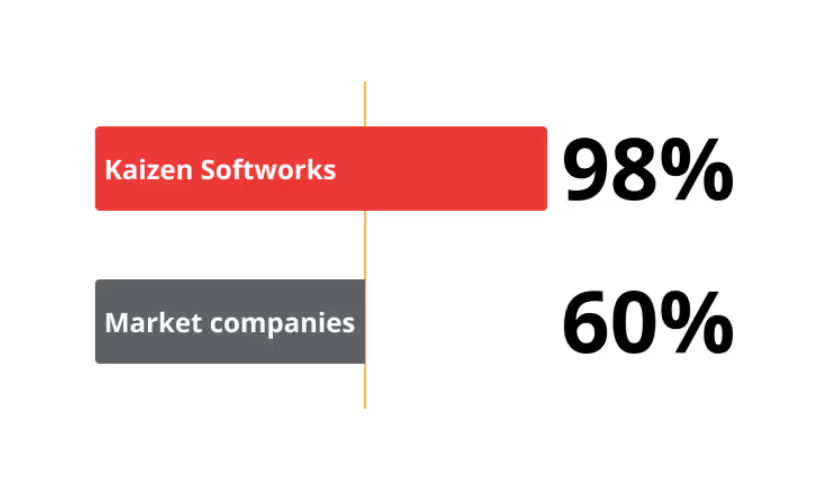
According to the results of the Trust Index©, 98% of Kaizen Softworks team members say this is a Great Place to Work, all things considered, compared to 60% of employees at market companies.
Here are our most notable outcomes:

Creating and sustaining a positive workplace culture is essential for fostering a productive and happy workforce. One of the critical factors in achieving this at Kaizen is open communication and inclusivity in decision-making.
Encouraging a culture of transparency and feedback helps us foster a sense of community, trust, and accountability. Providing opportunities for team members to give and receive feedback helps us to identify areas for improvement and recognize individual and team achievements.
One great example of this is our recent office move, being one of the most mentioned aspects in the Trust Index© Survey to improve our company. The entire process of finding and selecting a new office was organized and executed by the interested members of our team. This allowed for a collaborative and inclusive approach that ensured everyone's needs and opinions were heard and considered. By valuing and implementing a consent process, we were able to choose our new office making everyone part of the decision.
On March 16th, the Club de Golf del Uruguay hosted a ceremony to celebrate the 2023 Ranking of Great Places to Work in Uruguay.
Being recognized as a Great Place to Work™ in Uruguay is a great achievement that speaks to our dedication to creating a positive and supportive workplace culture at Kaizen. Our commitment to open communication, inclusivity, and transparency has been key to building a strong sense of community and trust within our team.
By creating a culture where everyone's voice is heard and valued, we can foster an environment where our team feels empowered and motivated to contribute to our shared goals. We will continue to prioritize our people and invest in creating a workplace culture that is truly “For All”.

About Us
·
Feb 6, 2023
Our team grew, so our space had to change too. Here’s what we built.
12 read time
For anyone who hasn't been following along, this year we took part in the Great Place to Work certification process and then used it as an opportunity to improve ourselves as a company. One of the aspects most mentioned by our team mates was the idea of looking for a new office where we can focus, collaborate, learn, and socialize. The desks and barbecue space seemed to be getting smaller by the day as our team grew bigger, so we listened to our needs and put hands on work.
To do this in an inclusive way, a self-managed and voluntary commission of Kaizen’s team members was formed with the goal of creating the best possible proposal to move to a new office. This was fully organized by the people who wanted to take part in this initiative, without intervention of management.
The commission was in charge of creating a backlog to tackle the proposal, establishing an evaluation criteria, broadcasting the advancements and periodically submitting decisions into a consent process with the whole company, and lastly presenting the agreed proposal to the Board for a final approval.
The criteria for evaluation of our new office was created based on the feedback gathered from the whole team. Some of the most valued aspects that made up the agreed criteria were:
Once the evaluation criteria was agreed, the commission began to look for options and make a comparison between all of them to see the strengths and weaknesses of each one.
One of the options shined above them all. To make the strongest start possible, the proposal was presented to all the collaborators and their input was again requested.
Through a consent process, people provided their opinion qualifying from a range of Veto (meaning they don’t approve at all) to Whole-hearted Endorsement. In order to move forward with the proposal, it was necessary to reach a minimum of 90% participation of all Kaizen collaborators and 80% of approval.
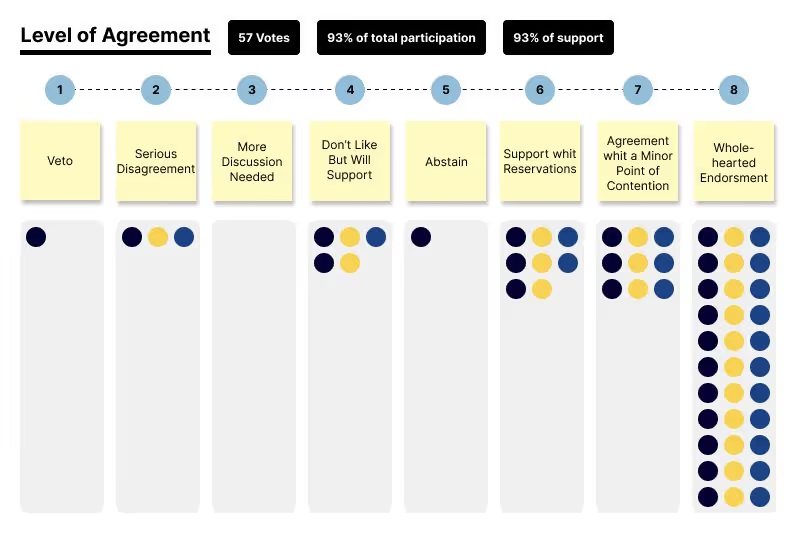
During this process, those opinions that were furthest from approval were reviewed to investigate the reasons behind them and be able to provide solutions to their concerns. After some revisions and improvements were made based on the feedback collected, we achieved 93% of participation and 93% of approval to be able to choose this beautiful place.
Leading our business through a successful office relocation is a huge accomplishment and we are proud to say that this initiative was fully managed and carried out by all of us who are part of Kaizen.
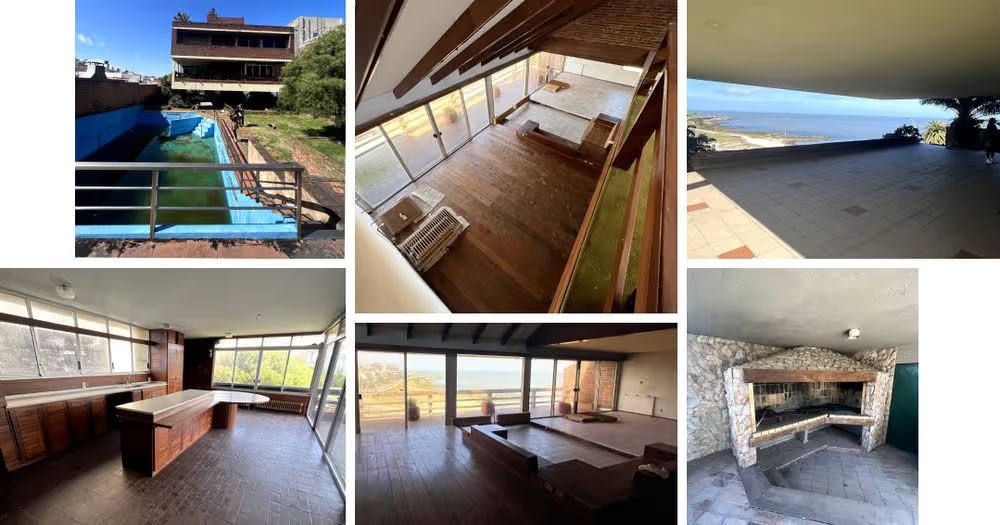
As a next step, our office space will be beautifully designed and decorated according to our vision and culture. At Kaizen, we want to enjoy our work environments for being more engaged, productive, happy, and healthy. Finishing this project might take a while, but we trust on setting a workplace with a collaborative atmosphere that has tonnes of coffee + a BIG barbecue!

About Us
12 read time
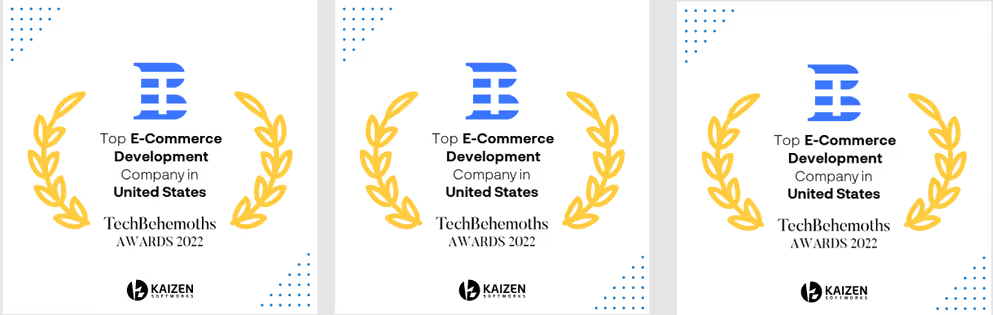
We are so happy to announce that we have been recognized as an award-winning company in the United States by TechBehemoths, for our expertise in Custom Software Development, Mobile App Development and eCommerce Development.
Established in 2019, TechBehemoths serves as an international connection point for software development firms and clients. With a focus on two key groups, the platform is designed to cater to the needs of both reputable, trustworthy, and experienced IT service providers seeking increased visibility, as well as individuals, organizations, and companies looking to find reliable IT firms for their project needs.
TechBehemoths recognizes exceptional achievement, hard work, and customer satisfaction through its awards program. Each company that receives an award in 2022 is acknowledged for its outstanding performance for its services and scalability.
It has been a privilege to serve our partners and help them achieve their goals since the beginning of our journey nine years ago. Our mission has always been to understand the needs and aspirations of our partners and strive to exceed their expectations.
We are deeply grateful to every member of our team, who have made this achievement possible through their talents, hard work, and unwavering commitment.
As we reflect on this remarkable milestone, we are not only grateful for the recognition but also for the incredible journey that brought us here. Over the years, we've had the honor of collaborating with diverse clients and witnessing their visions transform into reality through the power of technology.
This journey has been marked by innovation, resilience, and a shared commitment to excellence. We look forward to the future with even greater enthusiasm, continuing to push the boundaries of what's possible in the world of custom software development. Our team remains dedicated to delivering exceptional solutions and exceeding the expectations of our valued partners.
Thank you for your continued trust in us, and we're excited to embark on the next chapter of this incredible journey together.
Check our profile in TechBehemoths
UX Design
·
Dec 27, 2022
We ran another Design Thinking workshop. Here’s what changed this time.
12 read time
After a successful pilot of our Design Thinking Workshop in August, we knew we had to come back for more.
We had an incredible full attendance from across the company, and Pablo Manzoni, leader of our UI/UX design team, did a fantastic job leading the workshop.
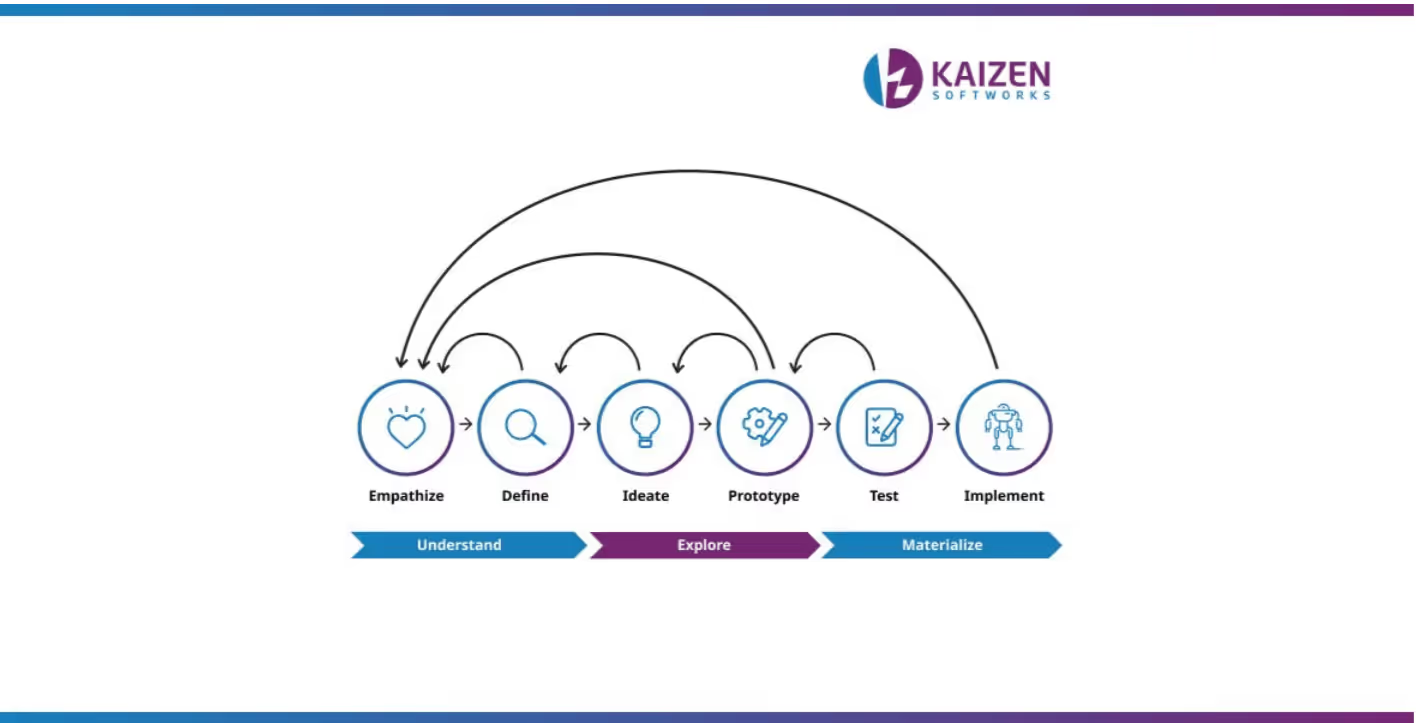
Design Thinking is all about taking a step back from the problem at hand, rethinking it from a different perspective, and looking at it as if it were an experience rather than just another project. It’s about understanding the problem before trying to solve it.
It all starts with a user-centered mindset. You have to understand the user and their needs, and then you can start discovering how you can create solutions that matter. In short, if you understand the problem you have half of the solution!
Design Thinking is a flexible and iterative process that encourages you to experiment and be playful with your ideas. It's not just a linear process, so don't worry if you try something new and it doesn't work! Keep trying until you find something that does work for your project or problem.
That’s why we decided to create a space for our collaborators for reflection and dialogue as a team. We wanted them to learn how to tackle challenges by approaching them creatively.
This was a great opportunity for our team to connect with each other and learn more about how we can collaborate effectively in our day-to-day work. Kaizen is an open environment where all ideas are welcome, and events like these help us stay connected as a team.
Want to learn more about the stages of this process? Check our related read to discover how it works in practice.
No blogs matched this category, try applying different filters.