






.avif)
.avif)

How We Make Decisions Without Managers
We don’t have traditional managers. This is how we make decisions and keep things moving.

12 min read
Read more

![Illustration of expert content creation for the [Your Company Name] blog, featuring articles on software development and technology insights.](https://cdn.prod.website-files.com/6846d4fc5449e72dcdad7d99/6883e43726396202465e6dce_IMG.svg)

No blogs matched this category, try applying different filters.

Insights, stories, and experiments from our team.

About Us
We don’t have traditional managers. This is how we make decisions and keep things moving.

·

Mar 13, 2026
·
12 min read

There's a myth that in flat organizations, everyone decides on everything.
That's not how it works. At least not at Kaizen.
When people hear "no managers," they often picture one of two extremes: either total chaos where nobody is accountable, or endless meetings where 80 people vote on which coffee to buy. The reality is neither.
Not everyone decides on everything. Not everyone votes. What we do have is a clear set of decision-making methods that we choose based on context.
Before choosing how to decide, we ask ourselves a few questions:
These dimensions help us pick the right method. Not every decision deserves the same process.
Over the years, we've landed on a few methods that we use depending on the situation:
Some decisions belong to a specific role. If someone owns a responsibility, say, office logistics or hiring for a team, they decide within that domain. No committee needed. The key is that roles are transparent: everyone knows who owns what, and the scope of each role's authority is clear.
When a decision doesn't clearly belong to one role, or when it crosses boundaries, we use the advice process. Here's how it works:
The decision-maker is not a committee. It's one person (or a small group) who takes responsibility. But they don't decide in isolation, they bring in the perspectives that matter.
We sometimes call this "Team Advice" when a working group forms around an issue that doesn't naturally fall into anyone's area, and "Area Advice" when a team opens up a topic that exceeds their own scope.
Consent is not "everyone agrees." Consent means "no one has a strong enough objection to block this." We do use a poll, but not to count votes — we use a 1-to-5 scale to measure the level of agreement and surface objections, not to let the majority rule.
We use it in two flavors:
Not everything needs participation. When a decision has already been made through a legitimate process, the right move is to inform, not to fake-consult. One of the fastest ways to kill self-management is to ask for feedback and then ignore it. If you're not going to change course based on input, don't ask for it, just be transparent about the decision and the reasons behind it.
We didn't adopt these methods because they're trendy. We adopted them because they solve real problems:
Transparency is the foundation. Every method we use, from role-based decisions to high-participation consent, works because information flows openly. People know what's being decided, who's deciding it, and how they can participate.
Horizontal doesn't mean structureless. It means fewer hierarchical levels, clearer roles, and intentional decision-making processes that match the weight of each decision.
Not everyone decides on everything. But everyone knows how things get decided.
About Us
We don’t have traditional managers. This is how we make decisions and keep things moving.
12 min read
AI
Events

·
Jun 6, 2025
At IoT Tech Expo 2025, a few trends kept coming up. These are the ones that stuck with us.
12 read time
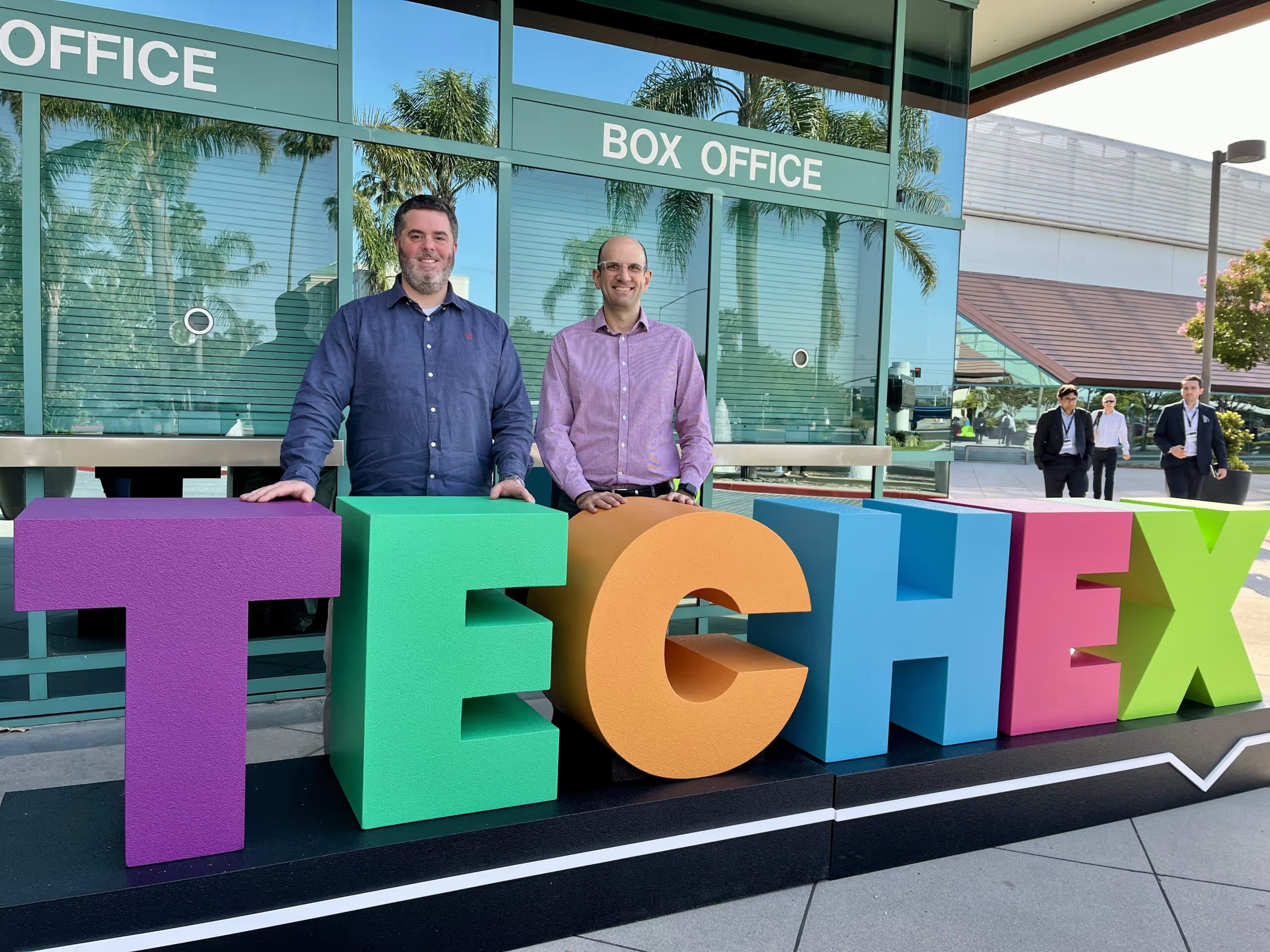
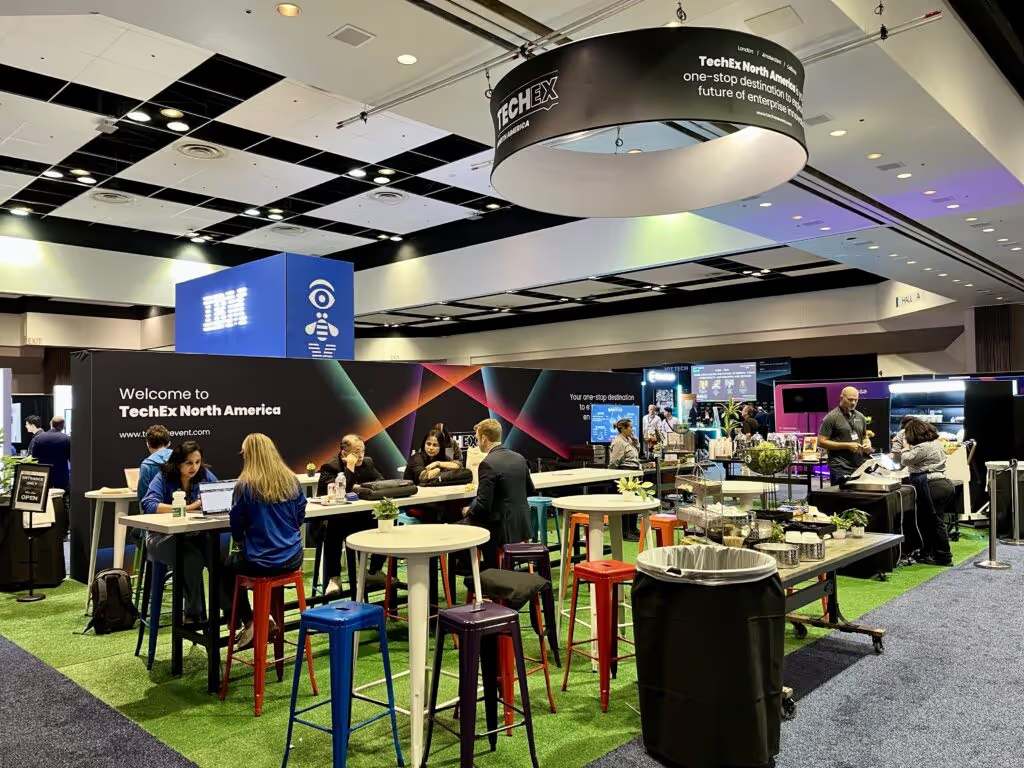
Reporting from Santa Clara, the IoT Tech Expo North America returned on June 4–5, 2025, at the Convention Center, bringing together a rich mix of IoT, AI, Big Data, Cybersecurity, Edge Computing, and Digital Transformation under one big roof. While organizers projected over 8,000 attendees, I’d estimate it was closer to 5,000–6,000.
Walking the expansive expo floor, you could clearly see the four key pillars of IoT represented across hundreds of booths:
We focused heavily on the Industrial IoT & Industry 4.0 track. Sustainability, automation, and smart factories dominated the discussion.
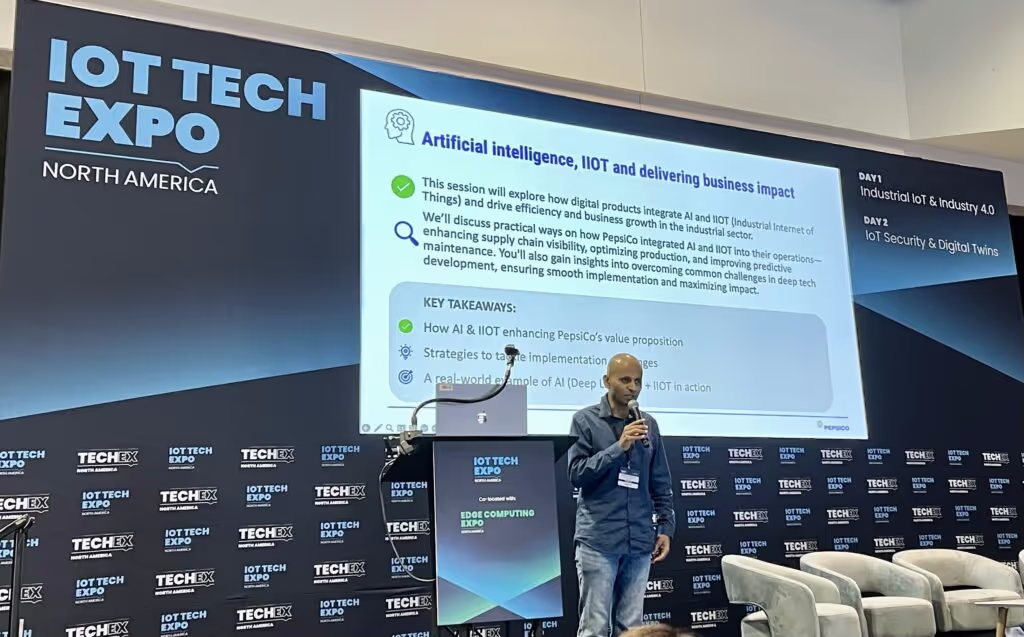
In a standout session titled "AI, IIoT and Delivering Business Impact," Prashanth Srinivasan, Head of Architecture at PepsiCo, gave a deep-dive into how they applied IoT and AI to increase chip packaging throughput by 7% at their Vallejo, Mexico plant.
It was a highly technical talk, but the business takeaway was crystal clear: when done right, AI + IoT = real operational impact.
In this session led by Prashanth Srinivasan, Head of Architect at PepsiCo, called "AI, IIoT and Delivering Business Impact." He walked us through a highly technical, yet incredibly relatable, case study. He detailed how PepsiCo leveraged AI + IoT to increase chip packaging throughput by a remarkable 7% at their Vallejo, Mexico facility. It was a concrete example of how these technologies translate directly into tangible business impact.
Another standout presentation came from Tom Clements, VP of Sales, in “Powering the Connected World in IoT.” He emphasized the critical need for IoT Best Practice Building Blocks, stressing that successful IoT solutions must be:
Another session that stuck with me featured Martin Whitlock, CTO of Telenor IoT, hosted by Sudha Jamthe, tech futurist and Principal at the Business School of AI. They made a compelling case for AIoT, the intersection of AI and IoT, as the future of connected systems.
Their core insight:
IoT produces the data; AI gives it meaning. Together, they’re reshaping everything from predictive maintenance to supply chain optimization.
AI

·
Jun 3, 2025
Getting good results from AI tools depends on context. This is how we approach it with Windsurf.
12 read time
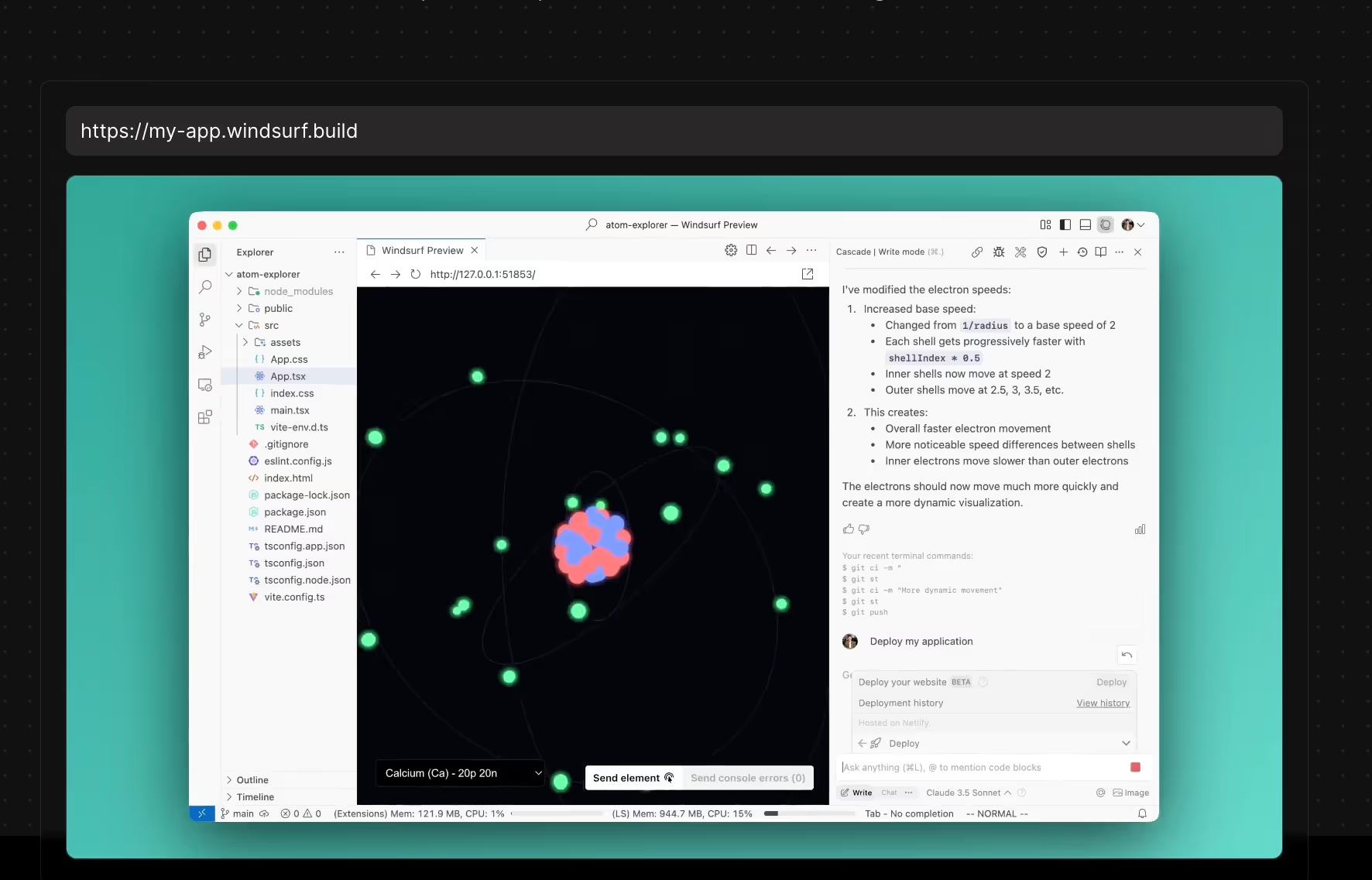
Windsurf is an AI coding assistant that generates code based on the context you provide. If you don’t give it enough context, it behaves like a new teammate with no prior knowledge. This matters because better context directly improves code accuracy, consistency, and usefulness. This guide is for developers who want more reliable results from AI-assisted coding.
Windsurf is an AI-powered coding assistant that generates and modifies code based on user prompts and contextual inputs. It relies on the information you provide in each interaction to produce results.
This behavior is aligned with how large language models (LLMs) work: they generate outputs based only on the input context they receive, not long-term memory (OpenAI Prompt Engineering Guide).
Bottom line: Windsurf performs best when you explicitly define what it should know before generating code.
Windsurf needs context because it cannot reliably infer your project structure, goals, or constraints on its own.
Without context:
Research on generative AI systems shows that models perform better when given explicit instructions and relevant examples (Google Cloud Prompt Design Guide).
With proper context:
Conclusion: Context acts as the “memory layer” that makes AI outputs usable in real projects.
Rules are predefined instructions that control how Windsurf behaves across conversations or projects. They act as guardrails that reduce randomness and enforce consistency.
Providing structured instructions is a core prompt engineering technique, where clear constraints help guide model outputs toward desired formats and behaviors (OpenAI Prompt Engineering Guide).
Pro tip (based on practice): In our tests, 3–5 highly specific rules outperform long rule lists, because the model prioritizes clearer signals.
Bottom line: Use fewer, clearer rules to guide consistent outputs.
Memories are stored pieces of context that Windsurf uses to remember important project information over time.
They function similarly to persistent notes about your project.
“This app is a SaaS dashboard for managing subscriptions.”
Use Memories when:
Avoid overusing Memories when:
Important limitation: Memories can become outdated if your project evolves, so you must review and update them regularly.
Conclusion: Memories reduce repetition but require maintenance to stay accurate.
@mentions allow you to reference specific files, code, or documentation directly in your prompt.
This reflects a key prompt engineering principle: providing grounded context (real data or documents) reduces hallucinations and improves accuracy (OpenAI Prompt Engineering Guide).
@README → Loads project overview@server.js → References backend logic@/components/Button.tsx → Targets a specific UI fileWhy this works:
You eliminate guesswork by forcing the model to use real project data instead of assumptions.
Bottom line: @mentions are the fastest way to inject precise, relevant context.
Impersonation is a technique where Windsurf adopts a specific role or persona to guide its outputs.
This is similar to role-based prompting, a widely used technique where assigning a role improves output relevance and tone (OpenAI Prompt Engineering Guide).
This is useful for tasks that require a particular perspective, such as design, QA, or architecture.
“Impersonate a senior UX designer focused on usability.”
You can create reusable profiles (e.g., @luna.md) that define:
Then use: “Impersonate @luna”
Impersonation narrows the model’s decision space by:
Real-world workflow tip: In practice, teams use impersonation to:
Conclusion: Impersonation adds focus and expertise to AI outputs.
Use this checklist before prompting:
Fix: Always provide explicit, structured context.
To get better results from Windsurf, you need to control its context.
Use rules for consistency, memories for persistence, @mentions for precision, and impersonation for focus.
The clearer your context, the better your code.
AI
Technology
·
May 5, 2025
A practical guide to using Windsurf to move from prompt to prototype faster, while keeping context, code quality, and human review in the loop.
12 read time
If you're curious about where AI is headed in software development, it's time to pay attention to Windsurf: an IDE powered by artificial intelligence that feels less like a tool and more like a copilot.
In our previous blog post, we went over the basics of what’s Windsurf and how it works. Now, let’s walk through a simple, step-by-step guide to help you get started.
Before you jump into coding, take a step back and plan. This is where ChatGPT (or another conversational model) can shine. Use it to brainstorm ideas, organize your thoughts, and shape your prompt.
Let’s say you want to build a chatbot. You can ask ChatGPT to help you structure a well-defined prompt tailored for Windsurf.
🔍 Pro tip: The more complex or abstract your prompt is, the higher the chance of messy or overly generic code. If long-term maintainability matters, spend time writing a thoughtful prompt.
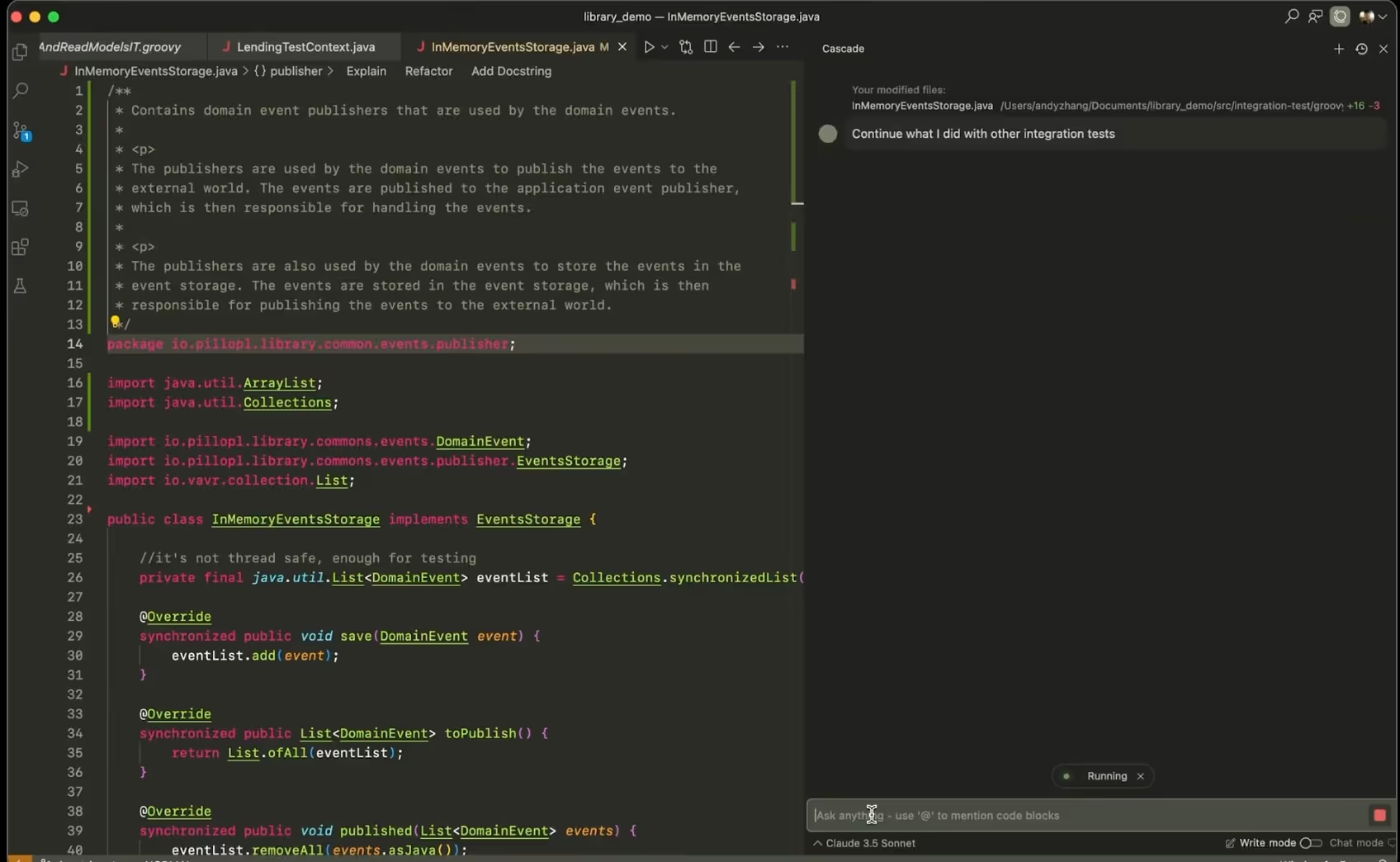
On the right side of the Windsurf interface, you’ll find Cascade, your AI copilot. Cascade can tap into several powerful foundation models:
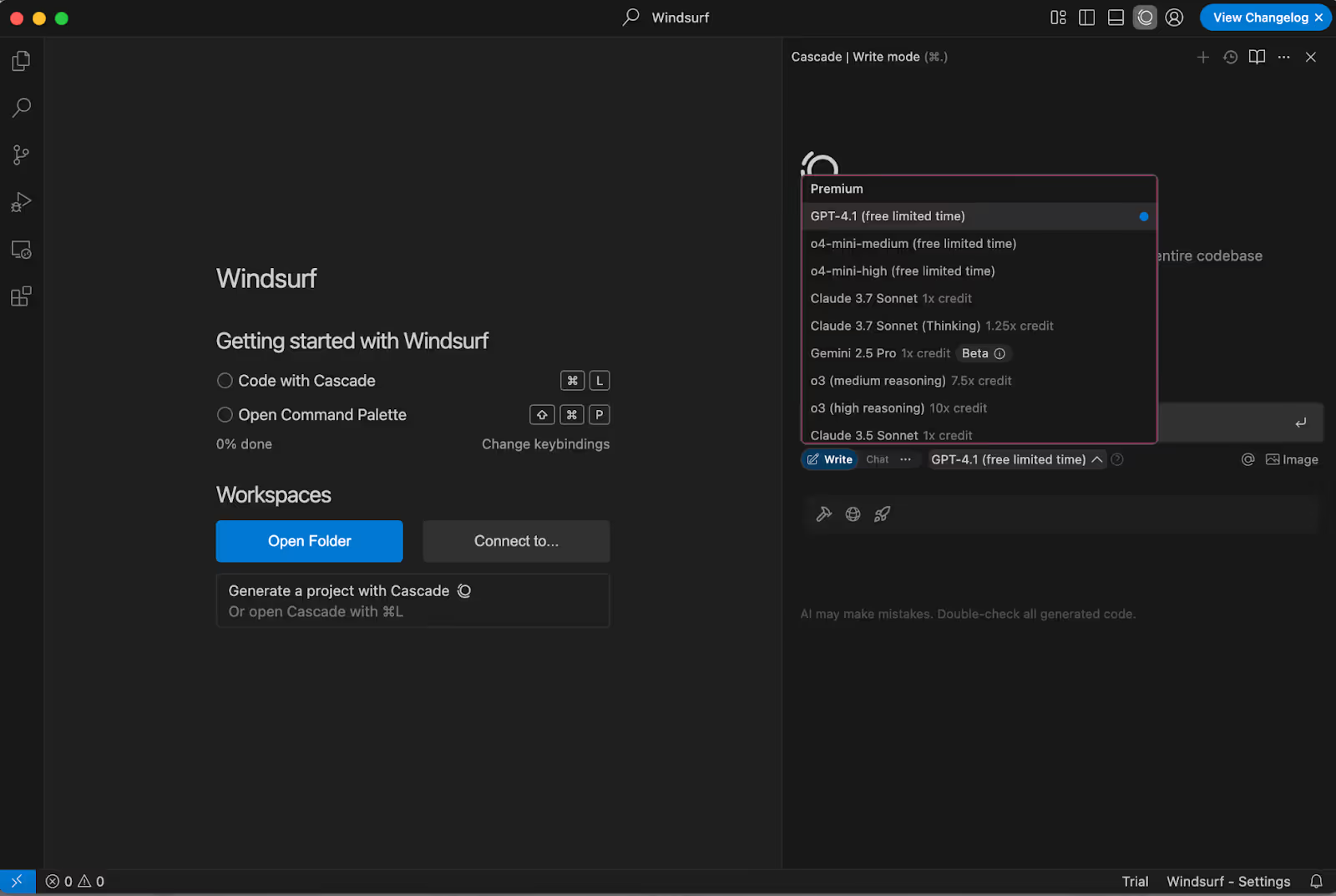
Each of these models brings its own strengths, and you can choose which one to use based on your goals or the task complexity.
Some models, like Sonnet 3.7 (Thinking), use internal reasoning steps before generating final output. You’ll see the model “think out loud,” iterating on your prompt in real time. These “thinking” models are more resource-intensive and slightly slower, but they’re better at solving complex problems.
However, they can sometimes overcomplicate things or drift off-track. A helpful strategy is to use them for ideation and problem-solving, then switch to a faster, more direct model for implementation.
🧠 Is one model better than the others? Sometimes. But results are non-deterministic. The best way to find what works is to experiment with models and prompt variations.
Windsurf starts every session with a clean slate. This means it doesn’t remember anything you’ve said in past conversations.
Just like you would explain things to a new teammate, you’ll need to provide all the relevant information upfront before asking it to write code. For example:
If you're building a chatbot, you might begin by asking Windsurf to read a README file so it understands the system’s specs and expected behavior.
Context is everything. Without it, Windsurf can’t generate helpful code. Here’s how to provide the right context:
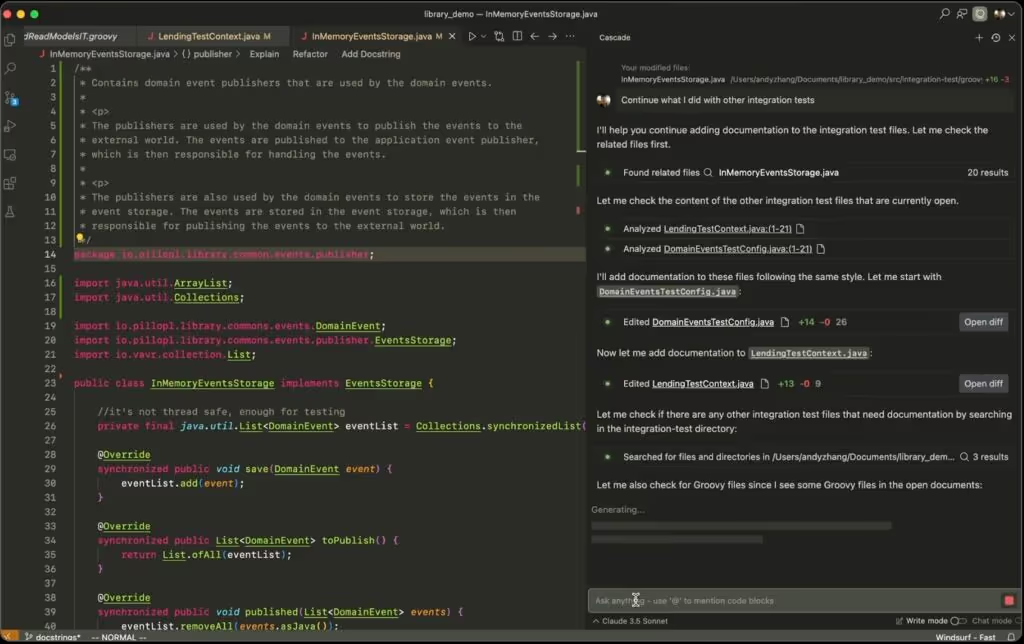
⚠️ Reminder: Windsurf doesn’t retain information between sessions unless you explicitly use memory or rule features. Be intentional and include all necessary context up front.
Want to go deeper? Check out our dedicated blog post on giving Windsurf proper context.
Once you’ve set the context, paste your prompt into the same conversation thread. From here, Windsurf takes over, picking the right tools, building your code step by step, and shows you its thinking along the way.
Before making any changes to the code, always present the plan and ask for confirmation.” That way, we can review it, and models don’t go ahead and make changes on their own. So that’s a rule we should always stick to.
You can ask for edits, improvements, or further explanations as you go.
One of Windsurf’s most powerful features is its ability to generate full-stack applications (frontend and backend) in just minutes. It can:
One Shot = one solid prompt → full app prototype
This is fantastic for prototyping and fast iteration. But it’s not a replacement for good software engineering practices.
💡 Important: One Shot outputs aren’t production-ready. Always review the code. AI can take you far, but great software still needs great developers behind it.
Windsurf extends beyond the chat interface by offering intelligent autocompletion within the code editor, providing contextually relevant suggestions as you type.
Plus, there's this cool shortcut: Command + L. By selecting a portion of code and using this command, you can then enter instructions such as "comment this function," and Windsurf will propose the corresponding modification.
For every change Windsurf suggests, a little window will show up where you can check out the proposed code edits and either click "Accept" or "Decline".
Now, here's the deal: If you don't like what Windsurf makes and you just keep telling it to change stuff over and over, it can start adding a bunch of extra, messy code. It will keep adding new styles without getting rid of the old ones. It can get into this weird loop where it just keeps piling on code, and you won't even know what's being used and what's just junk.
Think about it this way: when you come back to your project tomorrow, Windsurf won't remember any of your previous chats. So, it'll use its search tool, find some old style that's not even being used, and try to change that instead. Then, nothing works, and you're wondering what's going on.
Remember, Windsurf's memory is short. It's like saying "hi" and having to introduce yourself again the next time. That's why writing clean, organized code makes it way easier for Windsurf's search tools to do their job right.
So, one of the best ways to handle this is to go back a step. You can literally tell Windsurf, "Forget that," using the "truncate conversation" feature. It's pretty sweet because you can hit "Revert this step," confirm it, and Windsurf will not only forget what it just did but also undo the code changes.
Bottom line: It's usually better to tweak your original prompt and go back than to keep asking Windsurf to fix something you didn't like in the first place.
Start small. Test different models. And most importantly, don’t skip the human touch. Even with powerful AI, great software still depends on great developers.
👉 Next up: We'll walk through the best ways to give Windsurf context so you can get even more of its potential.
AI
Technology
·
Apr 30, 2025
We tried Windsurf, an AI-first IDE. Here’s what stood out.
12 read time
If you’re a software developer, you’ve probably used an Integrated Development Environment (IDE) like Visual Studio Code to write, test, and debug code.
Now imagine that same workspace, but with an intelligent assistant that does some of the work for you. That, in essence, is Windsurf. Let’s go over the essentials of this new AI tool.
To give you a quick idea, Windsurf is like a Visual Studio Code pumped up with AI on steroids. Technically, it's a fork of VS Code, which means it takes the solid, open-source foundation of VS Code and adds new AI-powered functionalities.
Windsurf’s standout feature is its autonomous AI agent, called Cascade, that can understand natural language, perform complex coding tasks, and interact with your project. Think about having a virtual programming buddy you can talk to and ask to do things.
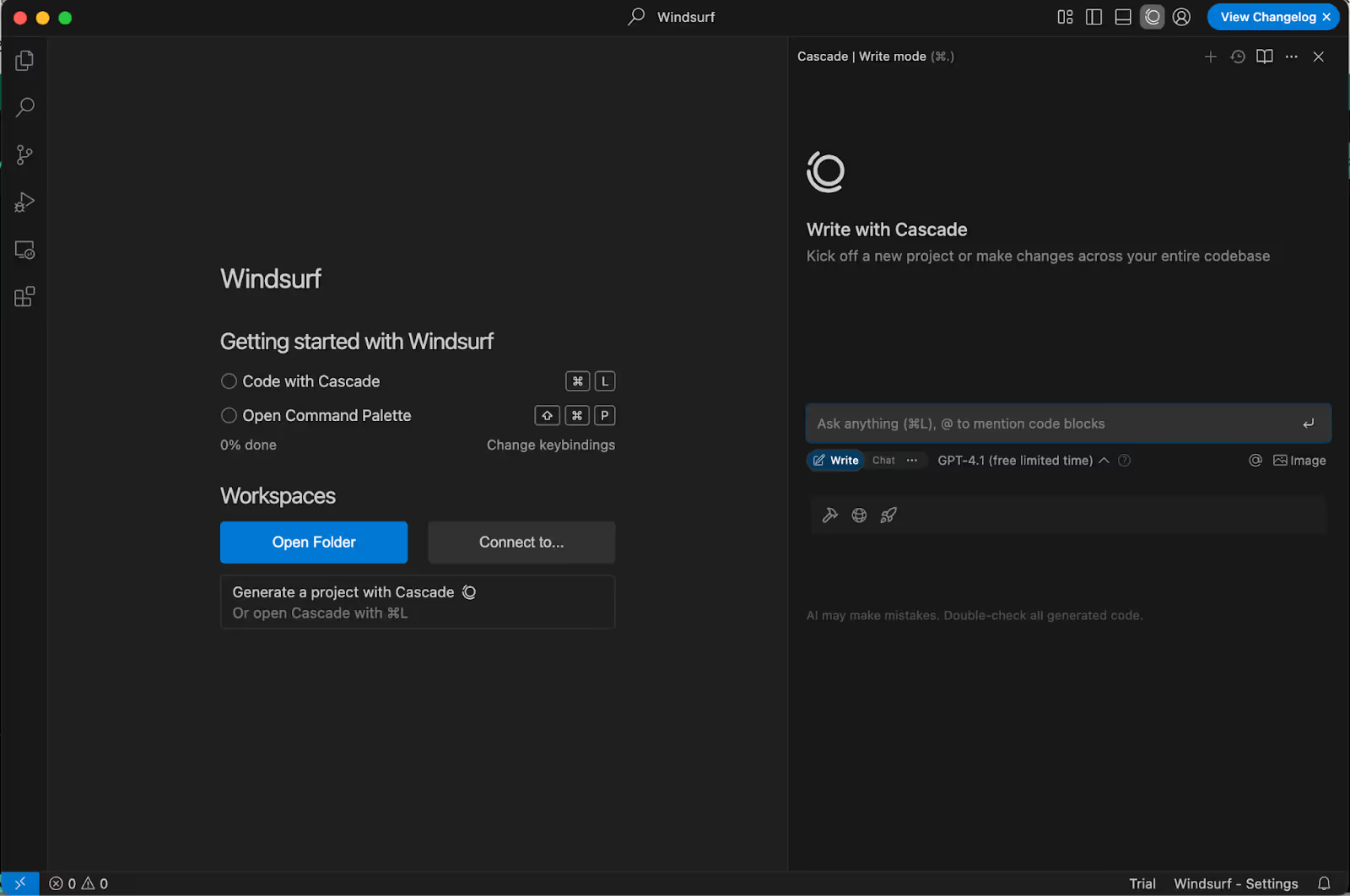
This agent not only understands your commands but is also capable of chaining together several complex actions to achieve your goals, like:
💡This autonomous agent isn't here to replace you as a programmer. Instead, it aims for an intelligent collaboration. You NEED to give them the context and instructions, MUST review its suggestions, and HAVE TO accept or decline the results.
To carry out these complex tasks, Windsurf provides its autonomous agent with a series of specialized tools:
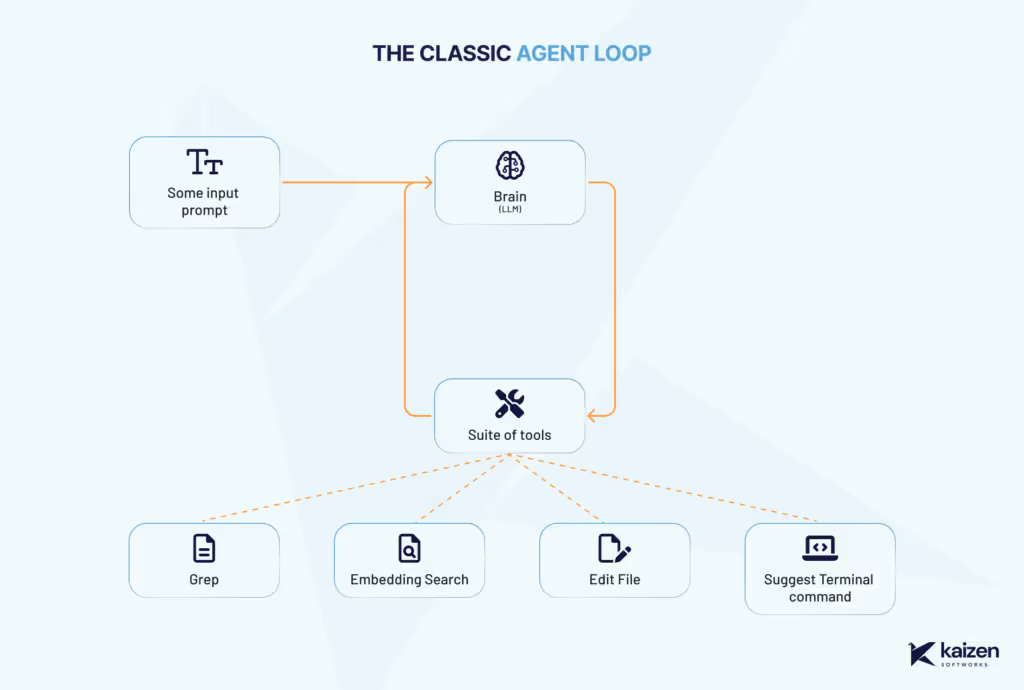
Windsurf’s workflow has three key parts:
It's important to understand that LLMs are probabilistic, meaning that given the same instruction, they won't always generate the same response.
In the context of programming, where we seek precise results, this highlights the importance of clear human guidance and careful review of what the agent proposes. If your instruction is ambiguous, the result could be either useful or completely wrong.
Windsurf runs on different large language models (LLMs), like the ones behind ChatGPT or Gemini. These are foundational models trained on massive amounts of data, giving them broad general knowledge.
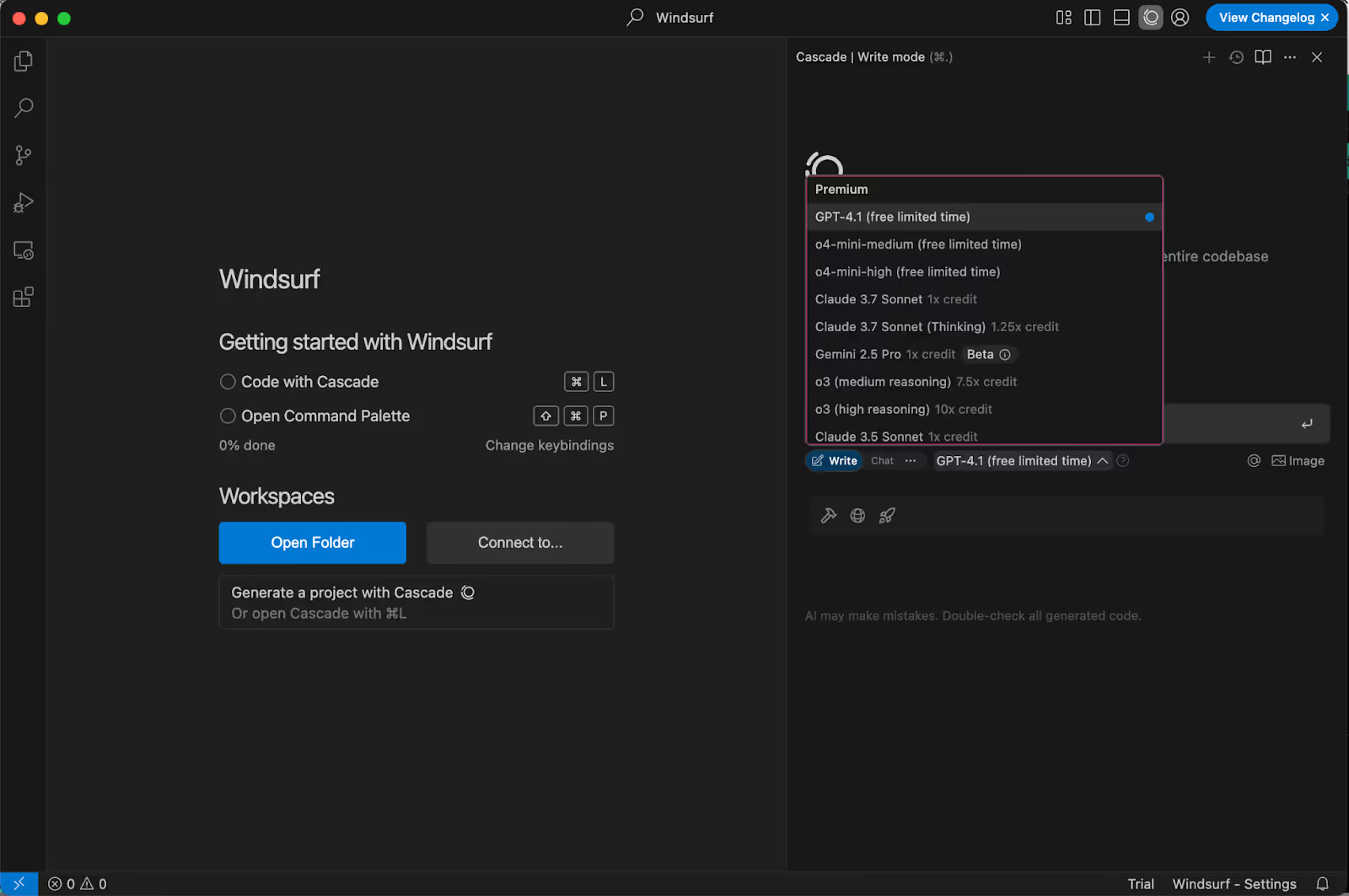
Each prompt uses "credits" that get renowned each month if you have a pro or enterprise plan. Be careful as more advanced models are more expensive and cost more credits per prompt.
However, they don’t know everything. If something wasn’t part of the training data, or if it happened after the model’s cutoff date (e.g., June 2024), the model won’t know it unless you tell it. This means it wont be able to use the latest version of some libraries so always ask the model "what’s the latest version of x" to double check.
Also, no AI model fully understands the current state of your code or documents out of the box. That’s why Windsurf uses the tools mentioned above to explore your project and understand it, just like a developer would.
Windsurf relies heavily on context, meaning what you've asked before, what files it has seen, and any information you’ve shared in the session. But it doesn't "learn" new information permanently. For example, if you send it a link, it might use that content during the current conversation, but it won’t remember it afterward. It treats that as temporary context, not long-term memory.
Being among the first IDEs to fully integrate an autonomous AI agent, Windsurf offers a unique approach to coding. Used well, it can help you stay in flow, reduce context-switching, and explore solutions faster.
Ready to start programming with Windsurf? Check out our step-by-step guide and tips here.
Events
·
Apr 11, 2025
Key takeaways from TIA Capital Ideas 2025 on AI adoption, freight fraud, cybersecurity, and the tech shifts shaping logistics.
12 read time
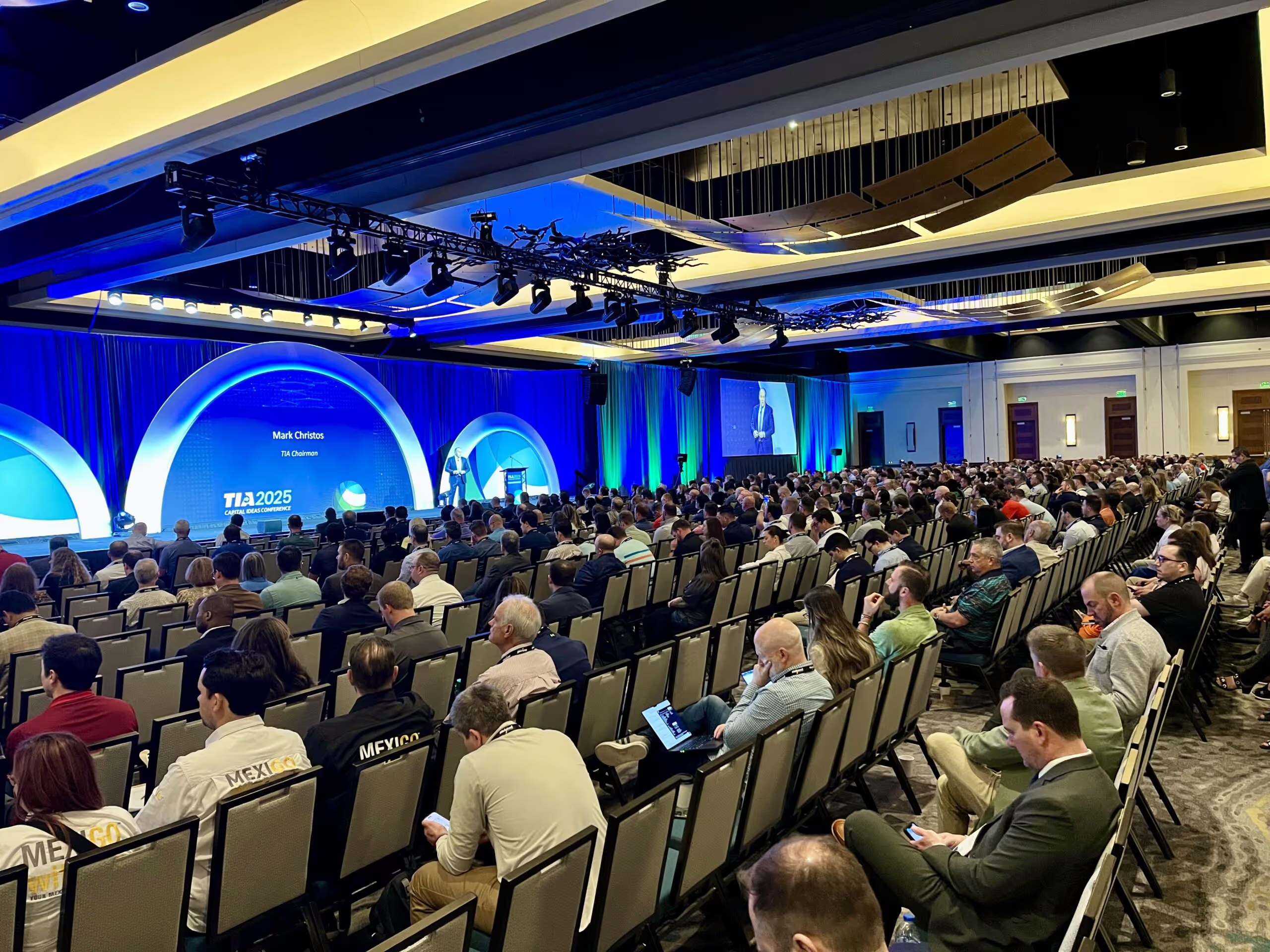
The 2025 TIA Capital Ideas Conference kicked off with powerful messages, sharp insights, and clear calls to action for the logistics industry. With over 1,500 attendees gathered, Day 1 delivered impact and inspiration, especially in a time when freight fraud, cybersecurity, and tech adoption are reshaping how 3PLs and carriers operate.
Here’s what stood out, what we’re still thinking about, and what it means for the future of freight.
TIA Chairman Mark Christos opened the event with a warm welcome, celebrating the organization’s 40+ year legacy. With over 3,500 CTB (Certified Transportation Broker) professionals certified, TIA continues to invest in education and elevate industry standards.
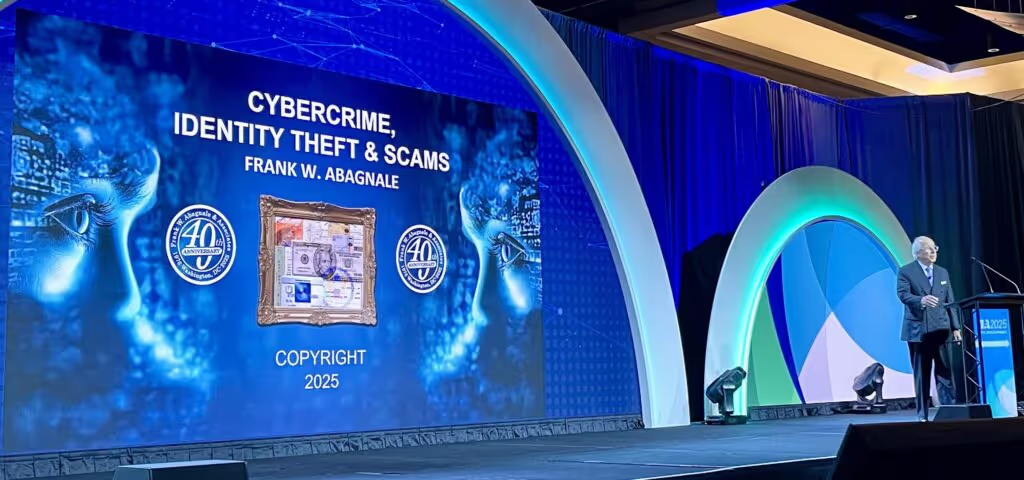
Frank Abagnale, the real-life inspiration behind Catch Me If You Can, opened the conference with a sobering keynote on cybercrime, identity theft, and scams. A bestselling author and FBI educator for over 40 years, Abagnale’s formula was simple but urgent:
Prevention. Verification. Education.
He left the room with alarming stats:
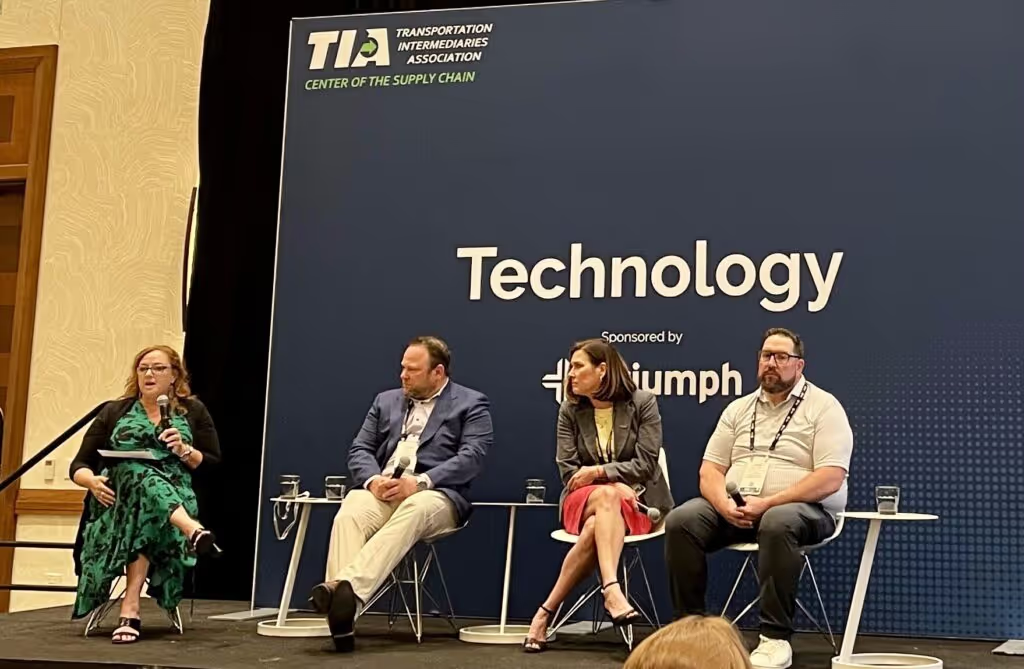
Moderated by Dawn Salvucci-Favier (CEO, Greenscreens), the panel brought together Kevin Sendre, Julia Hoult, and Greg Finnerty to tackle the real-life challenges of implementing AI in freight.
Key takeaways:
“AI is your teammate. It’s the cost of doing business—your competitors are already using it.”
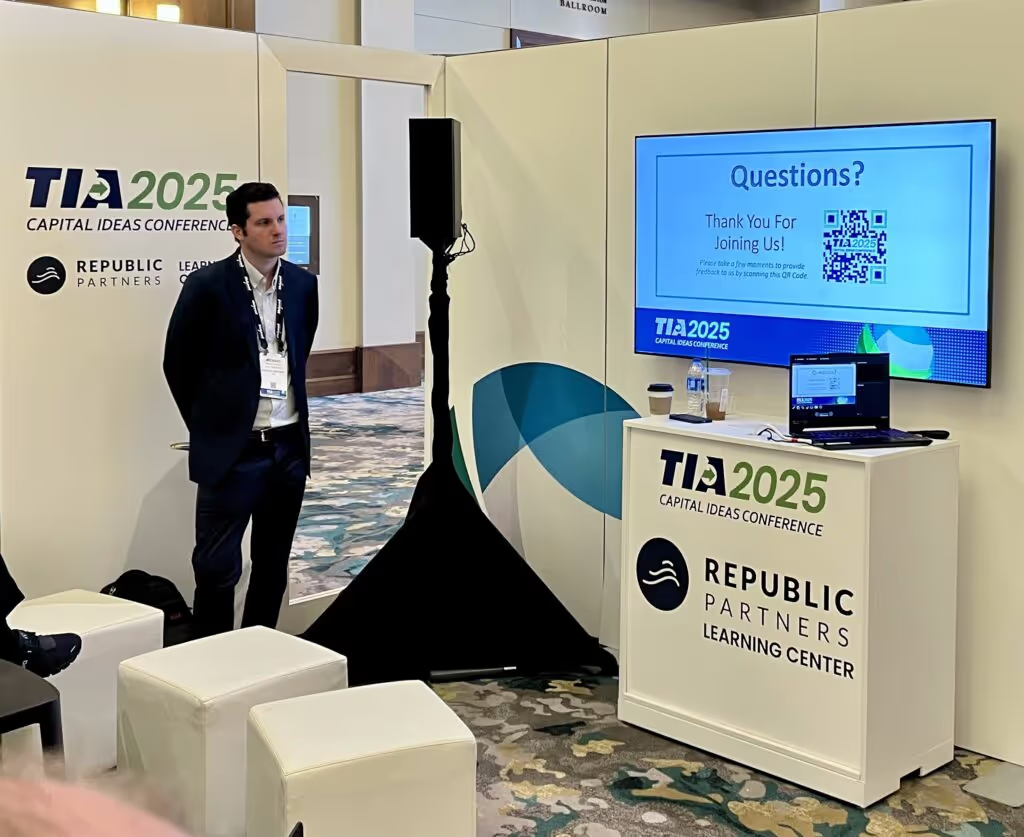
Michael Nolan from Republic Partners shared valuable insight into M&A trends in logistics—especially for family-owned firms.
Highlights:
Open questions we’re still reflecting on:
In a heated political panel, Scott Jennings (CNN), Seth Clevenger (Transport Topics), and other experts unpacked the future of global trade and domestic manufacturing.
Main takeaways:
"This is a restructuring of the world trade order that works for working Americans."
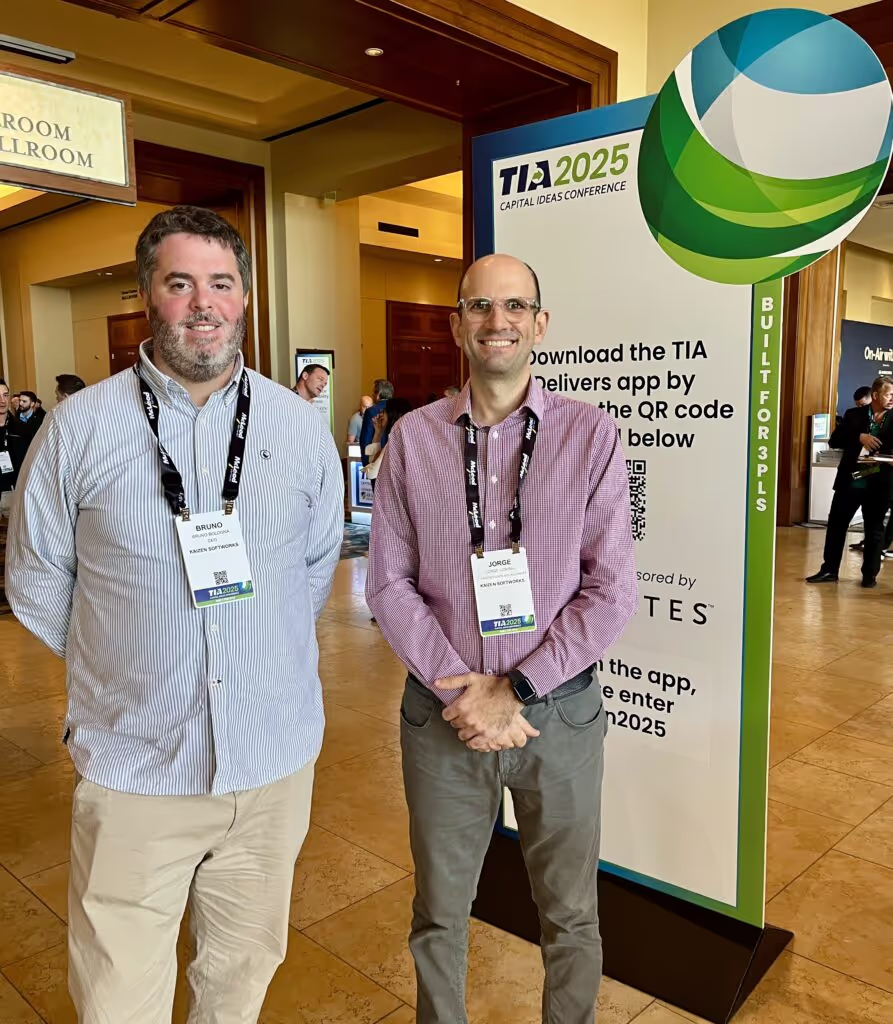
Day 1 of the TIA Capital Ideas Conference set the stage for big conversations in logistics—from cybercrime to AI, M&A to political strategy. Whether you’re a broker, a carrier, or somewhere in between, one thing is clear:
The future of logistics will be shaped by how well we adapt, protect, and innovate—together.
Technology
·
Mar 31, 2025
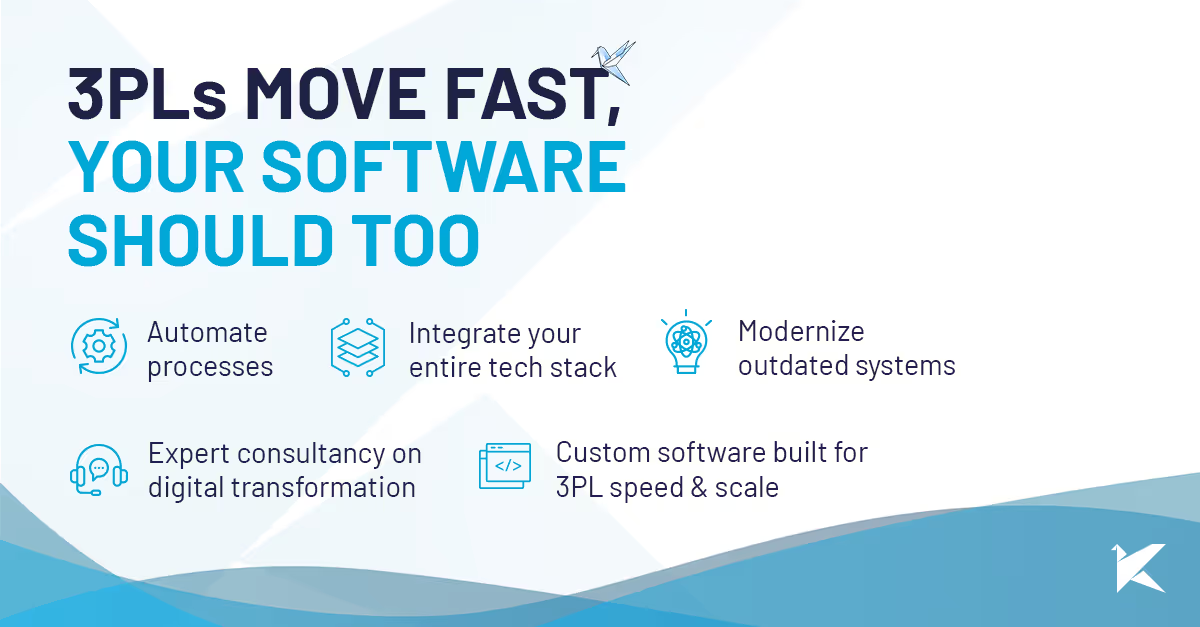
If your logistics ops feel messy, your software might be the problem.
12 read time
If you’re still dealing with disconnected systems, outdated tech, and manual workarounds, you already know the pain. Missed deadlines, frustrated customers, and unnecessary costs stack up fast. What you might not know? There’s a better way.
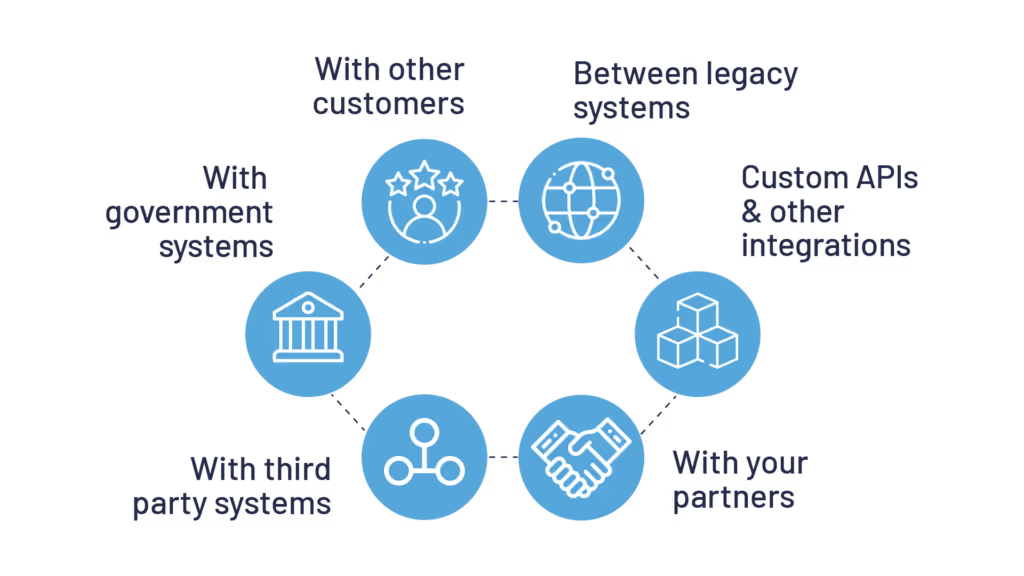
Jumping between platforms, copying and pasting data, dealing with errors, it’s a nightmare. Your WMS, TMS, CRM, and ERP should work together, not fight against each other. When systems don’t communicate, shipments get delayed, customer inquiries take longer to resolve, and decision-making suffers.
We integrate your systems so your data flows automatically. No more repetitive tasks, no more hunting for the right information. Just real-time visibility, and faster decisions, so you can stay ahead of demand and keep your customers happy.
Repetitive tasks like data entry, tracking shipments, or fixing billing issues waste time and cause errors. They also keep your team from focusing on real priorities—optimizing operations and improving customer relationships.
We automate processes that slow you down. From AI-powered customer service bots that handle routine inquiries to cost optimization models that continuously adjust for the best setup, we build solutions that deliver real impact.
Faster workflows, fewer mistakes, and no wasted time. Your team focuses on what matters. Customers get accurate updates without the back-and-forth.
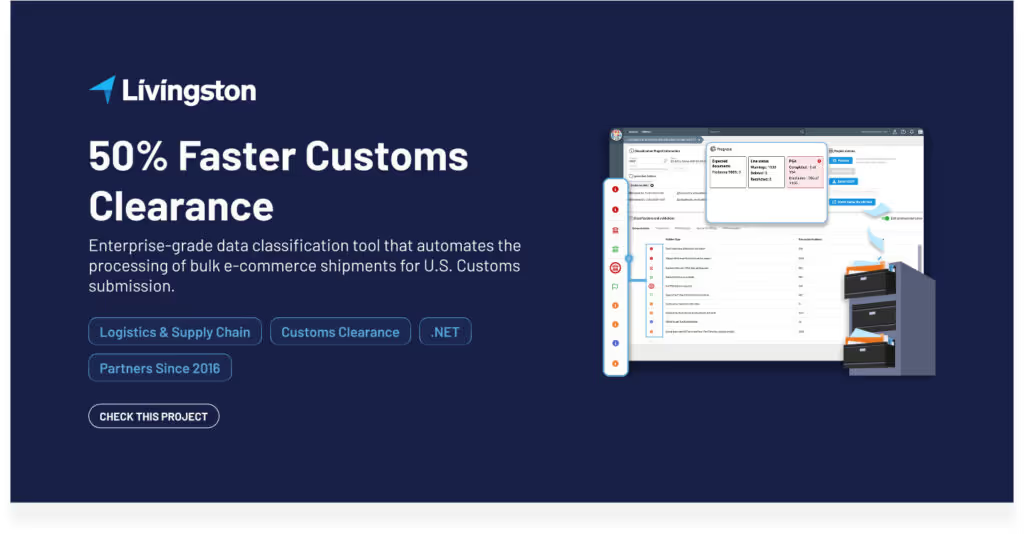
Generic software can be too rigid or too broad, and may not support the specific workflows or integrations that your operations require. Adapting to rigid systems often means clunky workarounds, inefficiencies, and missed opportunities.
We take the time to understand how you operate before building anything. Our free, no-commitment assessment includes three consultation calls:
Legacy systems are slow, expensive to maintain, and full of security risks. They limit your ability to scale, increase operational costs, and put you at risk of compliance violations. Meanwhile, your competitors are upgrading, innovating, and pulling ahead.
We help you migrate to modern, secure, cost-efficient technology. That means:
At Kaizen Softworks, we’ve been partnering with logistics companies, guiding them through digital transformations.
Not sure if your software is helping or holding you back? We’ll give you an honest, expert assessment before you spend a dime.
Let’s make your logistics operation work for you, not against you.

AI

·
Mar 26, 2025
Adopting GenAI isn’t trivial. Here’s how we approach it with clients.
12 read time
Seeing the benefits of GenAI in software development without actively exploring how to implement them in our processes feels like ignoring the obvious.

For this reason, starting this year, Kaizen is investing in developing this competency and understanding how we can apply GenAI in our day-to-day operations and leverage its benefits within software development.
We see two key ways GenAI impacts our discipline:
In short we want to:
To be clear: This exploration focuses specifically on GenAI, excluding other areas like Machine Learning, Computer Vision, Natural Language Processing, and Robotics.
This is not a post about the benefits of GenAI applied to software development, so I won't delve into that. I'll take it as obvious that the impact is expected to be massive and inevitable.
Faced with this large-scale transformation, it's natural that both the people who make up our teams and our clients feel curious, question its scope, and actively seek ways to incorporate this technology into their daily work.
This drive has two key engines: on one hand, the sheer magnitude of the technological disruption we are witnessing and, on the other, people's innate curiosity to explore its potential. We want to channel this energy in a structured way, ensuring that the adoption of generative AI is carried out with an organized and sustainable long-term approach within Kaizen.
Our commitment is to guide this revolution responsibly, protecting the privacy of data and the security of our clients and collaborators. The key is not just to integrate the technology, but to do so in a way that enhances human capabilities and generates a real and positive impact in our industry.
One challenge in adopting this technology is that its process is completely different from cloud solutions, specific frameworks, or programming paradigm changes that we are already familiar with.
A priori, the difference mainly lies in that:
Therefore, we understand that adopting GenAI cannot be done in a deterministic way. Instead, it's better to see it as a wicked problem (complex problem, without a clear or definitive solution), because there is no clear process for achieving adoption and we don't know what needs to happen or should have happened to affirm that we have adopted GenAI and that we are using it in an appropriate and productive way.
To carry out this adoption process in an organized and effective way, we are leveraging a company area called Innovation Hub. In this space, projects are developed and teams are formed to work on different initiatives. The goal of this group is to help us expand our offerings, support the technical pre-sales team, take advantage of opportunities to improve the company's administrative and operational efficiency, and simultaneously acquire knowledge about new technologies.
This group seeks elasticity, where different people from various teams can work on a common project. It proactively encourages participation from different people, which promotes cross-pollination and a culture of innovation.
Additionally, to address the AI adoption project given the characteristics of this technology, inspiration was drawn from Henrik Kniberg's book "Generative AI in a Nutshell", especially the chapter referring to "Leading the Change."
We found in this approach a mechanism that tackles the complexity of adopting something as disruptive as AI, promotes experimentation, responsible use, and is quite compatible with our culture and organizational structure. A key characteristic is that it is bottom-up and top-down approach, seeking to viralize adoption through demonstrations of what can be done while making formal mechanisms available to make time and tools available to learn how to use it.
Generative artificial intelligence is transforming the software industry, and at Kaizen we are not passive spectators: we are actively exploring how to apply it in concrete, useful, and responsible ways.
As a client, this means that:
We will create spaces for dialogue to discover together how GenAI can bring real value to your business. The future is inevitable, but we can choose how to build it. And at Kaizen, we want to build it together with you.
Events
·
Feb 14, 2025
Manifest 2025 showed how AI, automation, resilience, and sustainability are shaping the next stage of logistics and supply chain.
12 read time
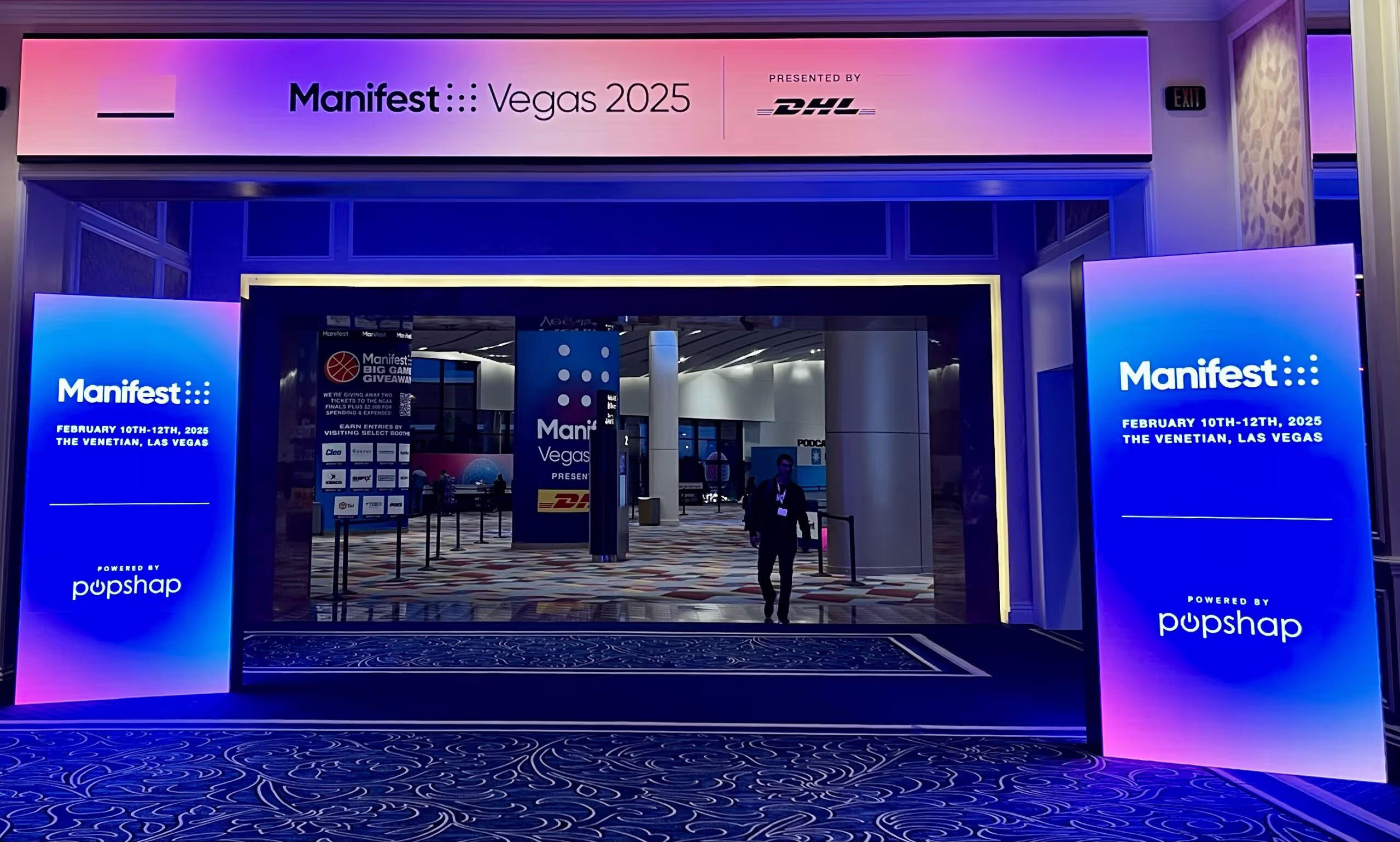
Manifest 2025 by DHL brought together over 7,000 industry leaders from top logistics, technology, and retail companies, solidifying its status as one of the most influential supply chain events of the year. Held at The Venetian in Las Vegas over two days, the conference featured insightful keynotes, expert panels, and hands-on tech showcases, addressing the most pressing challenges and innovations shaping the industry.
The message was loud and clear: AI and automation are now a necessity, not a luxury. Companies that fail to integrate AI-driven analytics, robotics, and automated workflows risk falling behind.
The past few years have proven that supply chains must be prepared for disruptions—whether from pandemics, geopolitical tensions, or climate events. The most resilient companies are focusing on:
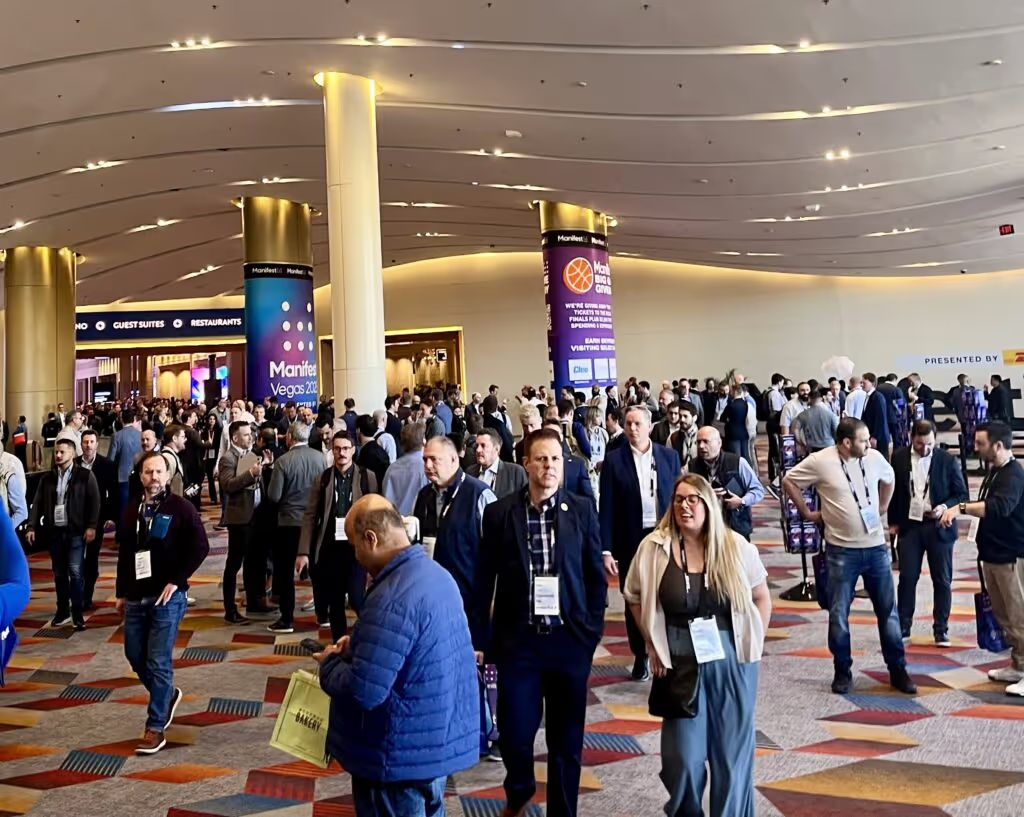
Sustainability is no longer just a corporate responsibility—it’s a business imperative. Customers and regulators are demanding greener solutions, and companies that take action are gaining a competitive edge.
Real-time data and analytics are empowering businesses to make smarter, faster decisions across the entire supply chain.
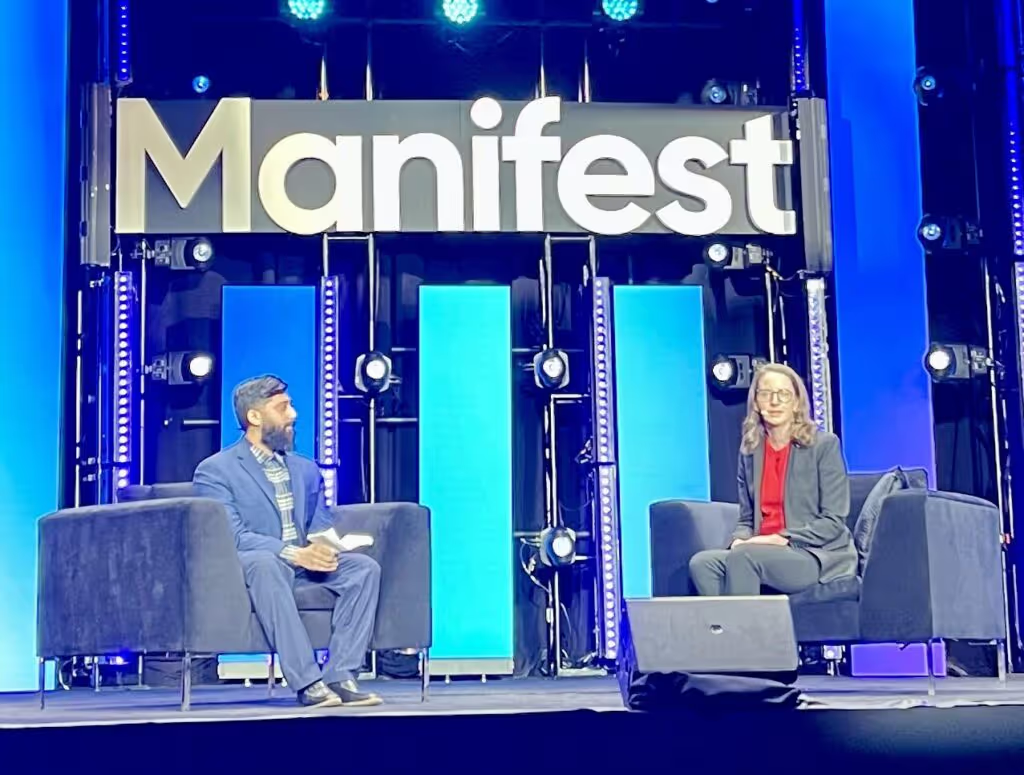
Despite rapid technological advancements, human expertise remains critical. Workforce training, change management, and leadership in digital transformation were recurring themes at the event.
Manifest 2025 made it clear: the future of logistics and supply chain is tech-driven, resilient, sustainable, and data-powered. Companies that embrace these trends will lead the industry forward.
Want to know exactly how software can help in logistics? Check out our projects to see how we're driving innovation in the industry.
Events
·
Feb 1, 2025
We looked into JumpStart 2025. Here’s what to expect from this logistics-focused event.
12 read time
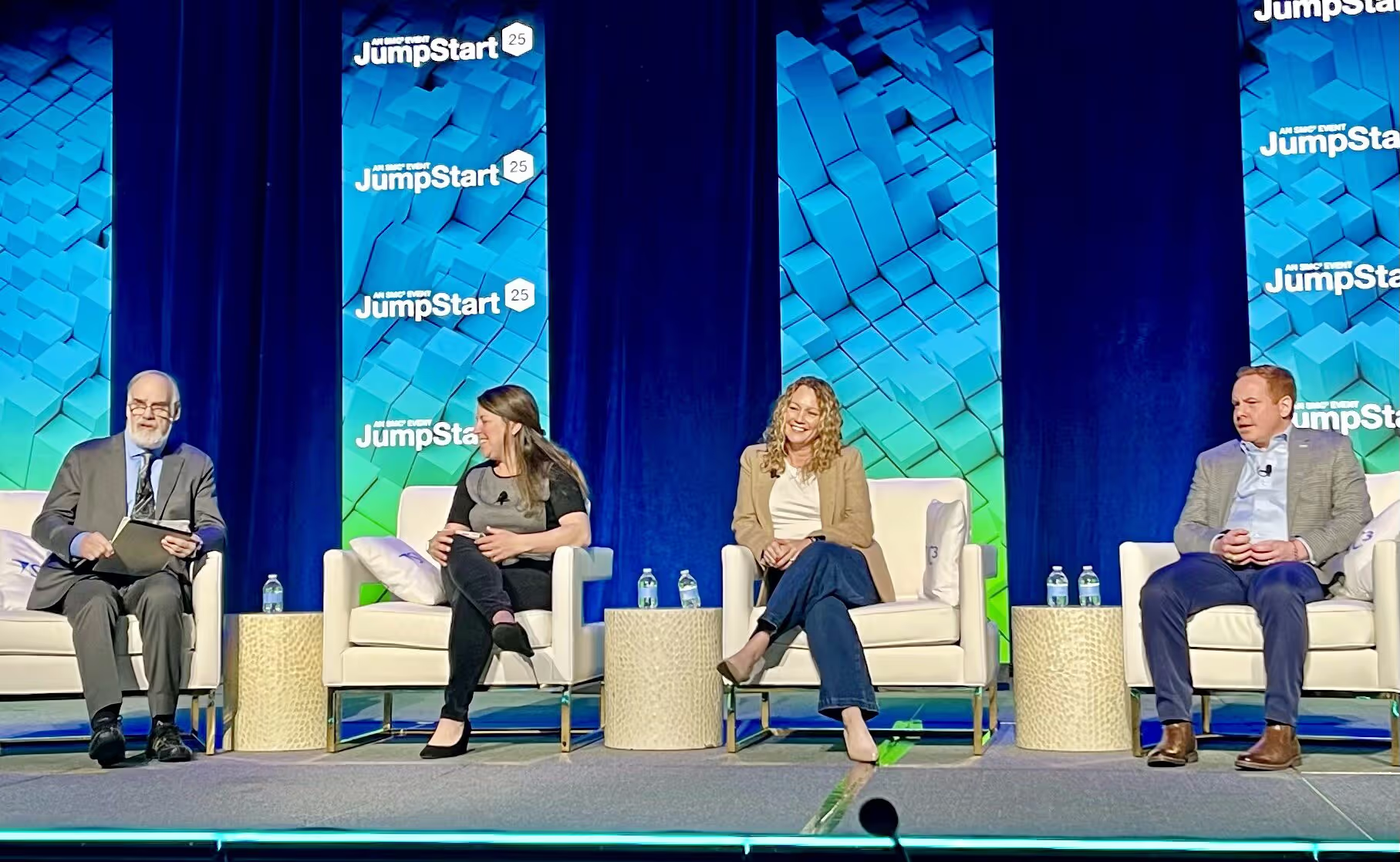
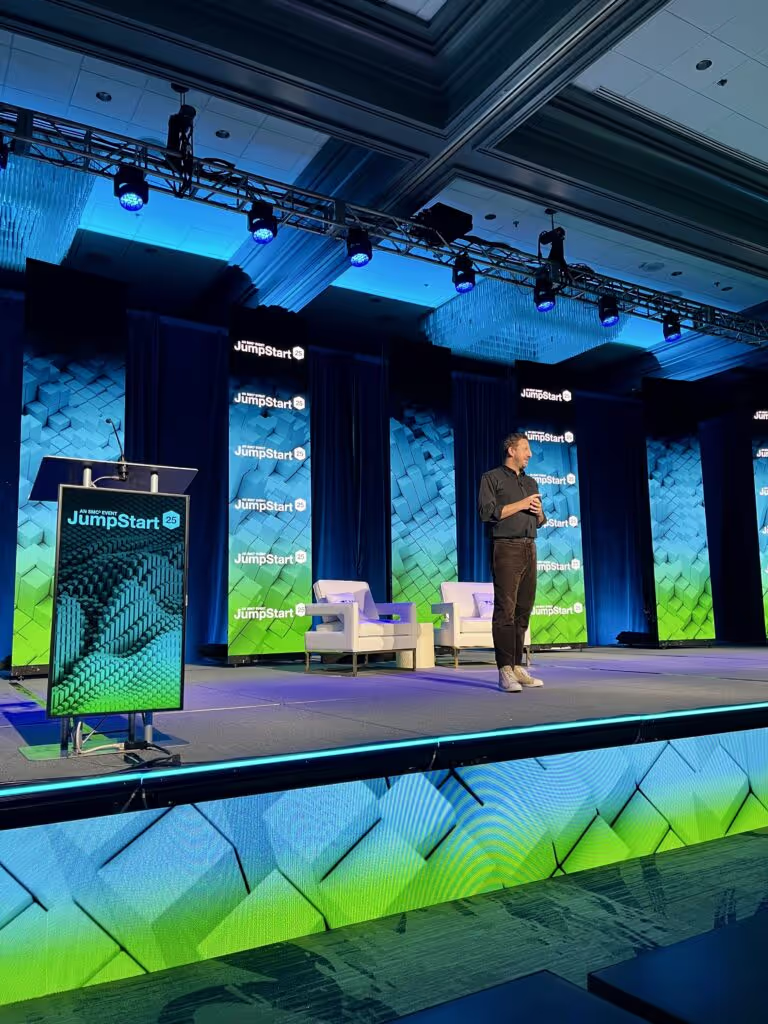
I had the chance to attend JumpStart 2025, organized by SMC³, in Atlanta from January 27-29. It was an amazing event that brought together professionals from all parts of the supply chain—carriers, shippers, logistics service providers, and tech innovators. I wanted to share a few key insights from the event that really stood out to me.
A major theme at the event was the growing role of AI and automation in the industry. The keynote by Zack Kass, an AI futurist and former Head of Go-To-Market for OpenAI, highlighted how artificial intelligence is transforming supply chains. And it wasn’t just in the keynote; this topic came up in several other sessions.
What I found particularly interesting is that AI and automation aren’t being used to cut jobs—they’re being used to free up employees so they can focus on higher-value tasks. The cost savings from these technologies are being reinvested into improving processes and creating new opportunities for people.
One cool example I saw was how companies are using AI to turn unstructured data, like emails, into structured data. This really helps businesses manage the huge amounts of information they deal with on a daily basis.
It was also clear that AI is no longer just used externally (like chatbots talking to customers). Companies are now applying AI internally, too.
For example, some are using it to speed up onboarding for new salespeople by analyzing past customer interactions. Others are using AI for route optimization or forecasting shipment volumes, and these systems continuously learn and improve over time.
I also noticed a shift in the way 3PL (third-party logistics) clients view their service providers. Everyone’s using a TMS (Transport Management System) these days, so it’s no longer a differentiator. What clients are really looking for now is a more consultative approach—a service provider who can offer strategic insights and solutions beyond just the basic operational needs.

In the past, there’s been some tension between 3PLs and carriers, but that’s starting to change. Now, both sides are learning to collaborate more effectively. One panelist even mentioned that 3PLs now represent a third of a carrier’s transport bookings, showing just how much the relationship has evolved.
When it comes to the top concerns of shippers, it hasn’t changed much: it’s all about making sure goods arrive on time and in one piece. Despite all the advancements in tech, reliability and service quality are still at the forefront of everyone’s minds.
One of the most valuable insights from the event was the reminder that you need to understand and optimize your processes before implementing new technology. A speaker made a point that really hit home: if you automate a broken process, all you’re doing is making mistakes faster. Technology needs to be integrated thoughtfully to improve workflows, not just speed them up.
The LTL (Less Than Truckload) sector is making progress with digitalization, but there’s still a long way to go. For example, one major carrier shared that they only receive about one-third of their Bill of Lading (BOL) documents digitally. But the trend is moving in the right direction, and those who don’t adopt technology will likely face higher costs in the future.

JumpStart 2025 was an incredible event that gave me a deeper understanding of where the logistics and supply chain industry is headed. The discussions around AI, automation, and digital transformation were eye-opening, and it’s clear that major changes are on the horizon. For anyone in the supply chain space, the insights gained from this event are crucial for staying ahead of the curve.
If you want to stay on top of the trends shaping the future of logistics, I’d definitely recommend attending events like JumpStart. It’s a great way to stay informed and connect with others who are driving change in the industry.
No blogs matched this category, try applying different filters.