





.avif)

%20(1).avif)

How We Make Decisions Without Managers
We don’t have traditional managers. This is how we make decisions and keep things moving.

12 min read
Read more

![Illustration of expert content creation for the [Your Company Name] blog, featuring articles on software development and technology insights.](https://cdn.prod.website-files.com/6846d4fc5449e72dcdad7d99/6883e43726396202465e6dce_IMG.svg)

No blogs matched this category, try applying different filters.

Insights, stories, and experiments from our team.
About Us
We don’t have traditional managers. This is how we make decisions and keep things moving.

·

Mar 13, 2026
·
12 min read

There's a myth that in flat organizations, everyone decides on everything.
That's not how it works. At least not at Kaizen.
When people hear "no managers," they often picture one of two extremes: either total chaos where nobody is accountable, or endless meetings where 80 people vote on which coffee to buy. The reality is neither.
Not everyone decides on everything. Not everyone votes. What we do have is a clear set of decision-making methods that we choose based on context.
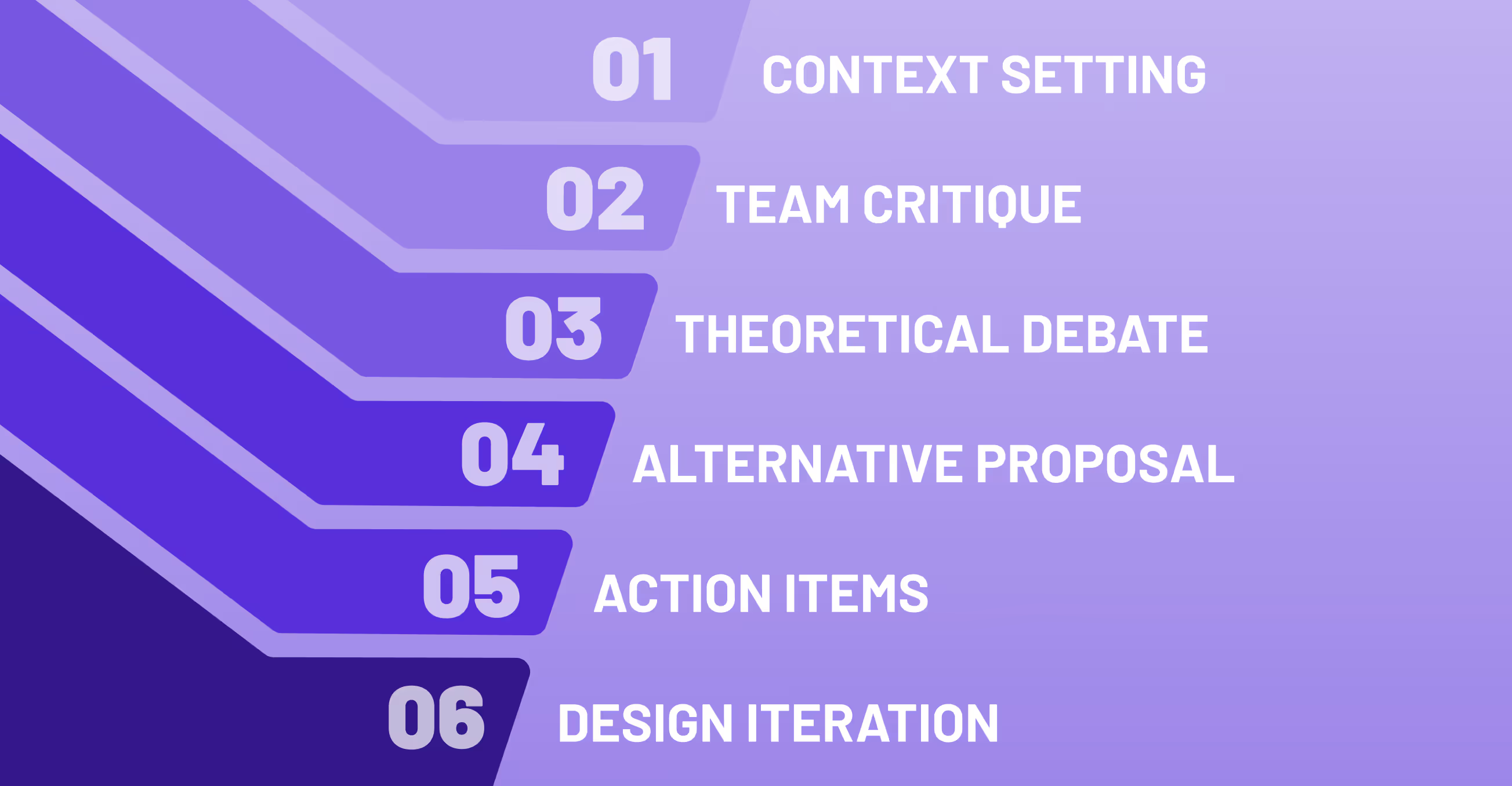
Before choosing how to decide, we ask ourselves a few questions:
These dimensions help us pick the right method. Not every decision deserves the same process.
Over the years, we've landed on a few methods that we use depending on the situation:
Some decisions belong to a specific role. If someone owns a responsibility, say, office logistics or hiring for a team, they decide within that domain. No committee needed. The key is that roles are transparent: everyone knows who owns what, and the scope of each role's authority is clear.
When a decision doesn't clearly belong to one role, or when it crosses boundaries, we use the advice process. Here's how it works:
The decision-maker is not a committee. It's one person (or a small group) who takes responsibility. But they don't decide in isolation, they bring in the perspectives that matter.
We sometimes call this "Team Advice" when a working group forms around an issue that doesn't naturally fall into anyone's area, and "Area Advice" when a team opens up a topic that exceeds their own scope.
Consent is not "everyone agrees." Consent means "no one has a strong enough objection to block this." We do use a poll, but not to count votes — we use a 1-to-5 scale to measure the level of agreement and surface objections, not to let the majority rule.
We use it in two flavors:
Not everything needs participation. When a decision has already been made through a legitimate process, the right move is to inform, not to fake-consult. One of the fastest ways to kill self-management is to ask for feedback and then ignore it. If you're not going to change course based on input, don't ask for it, just be transparent about the decision and the reasons behind it.
We didn't adopt these methods because they're trendy. We adopted them because they solve real problems:
Transparency is the foundation. Every method we use, from role-based decisions to high-participation consent, works because information flows openly. People know what's being decided, who's deciding it, and how they can participate.
Horizontal doesn't mean structureless. It means fewer hierarchical levels, clearer roles, and intentional decision-making processes that match the weight of each decision.
Not everyone decides on everything. But everyone knows how things get decided.
About Us
We don’t have traditional managers. This is how we make decisions and keep things moving.
12 min read
Project Management
UX Design

·
Jan 16, 2025
Design and dev don’t always click. This workshop helped us close that gap and work better together.
12 read time
Keeping product, design, and development teams aligned can be challenging. Even with the best intentions, teams often have different goals, methods, and definitions of success, which can lead to disconnects that ultimately impact the product’s ability to meet user needs.
At Kaizen Softworks, I recently led a Design Thinking workshop focused on improving collaboration among cross-functional teams by aligning their goals and reducing misalignments. We used one of our client’s product teams as a case study to apply Design Thinking. Here’s a breakdown of how we approached each stage, with examples and takeaways.
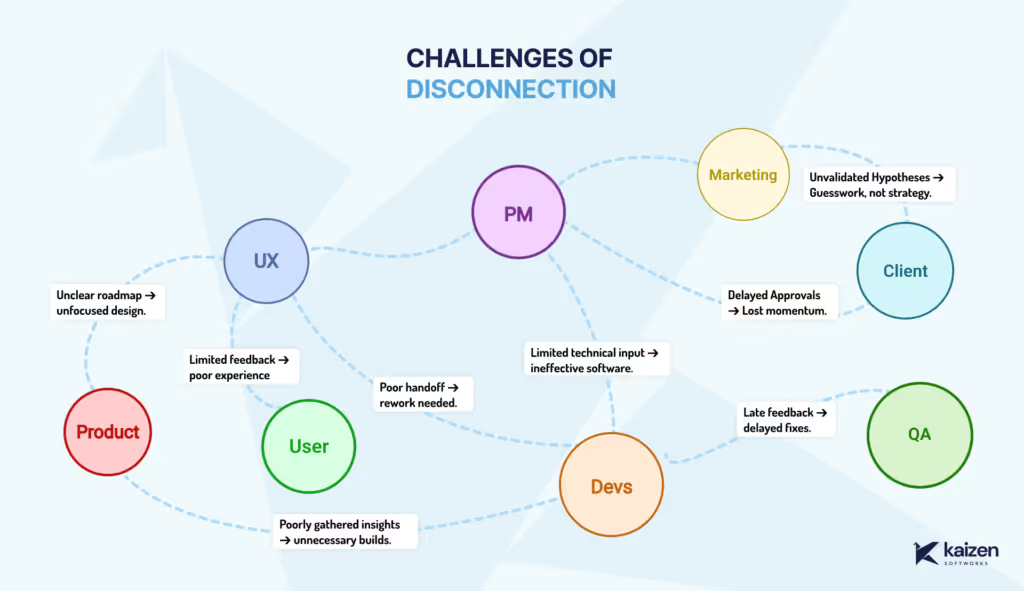
Cross-functional disconnects can arise from unclear roadmaps, limited technical input, and delayed feedback loops. Product may envision one outcome, design may prioritize another, and development faces technical constraints in between. To kick off, we discussed these challenges openly, exploring how they impact alignment, feature quality, and user experience.
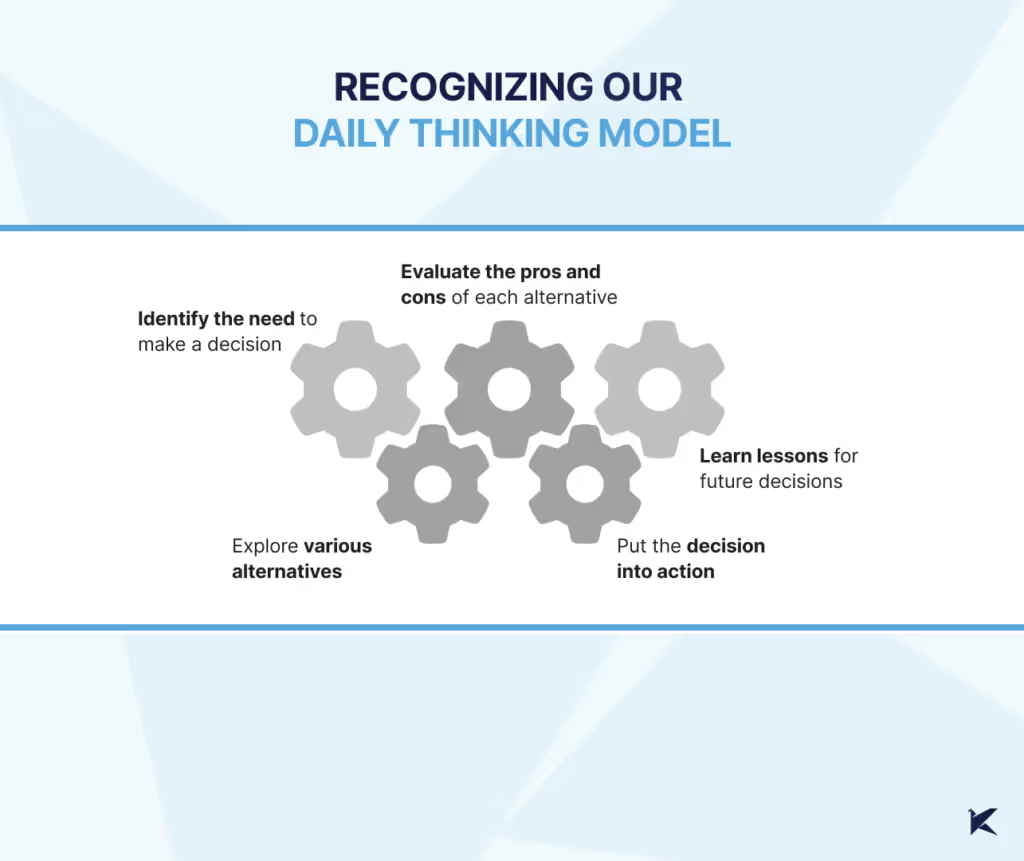
Every team member brings a unique thinking style to the table, shaped by their daily challenges and responsibilities: product might focus strategically, design zeros in on details, and development leans towards solution-oriented thinking. This awareness helps us understand each other’s perspectives
In this workshop, we each shared how we approach decision-making in our roles. This awareness helped us see where our natural modes might cause friction and allowed us to step into each other’s shoes, fostering empathy and a willingness to adapt our thinking for the collective goal.
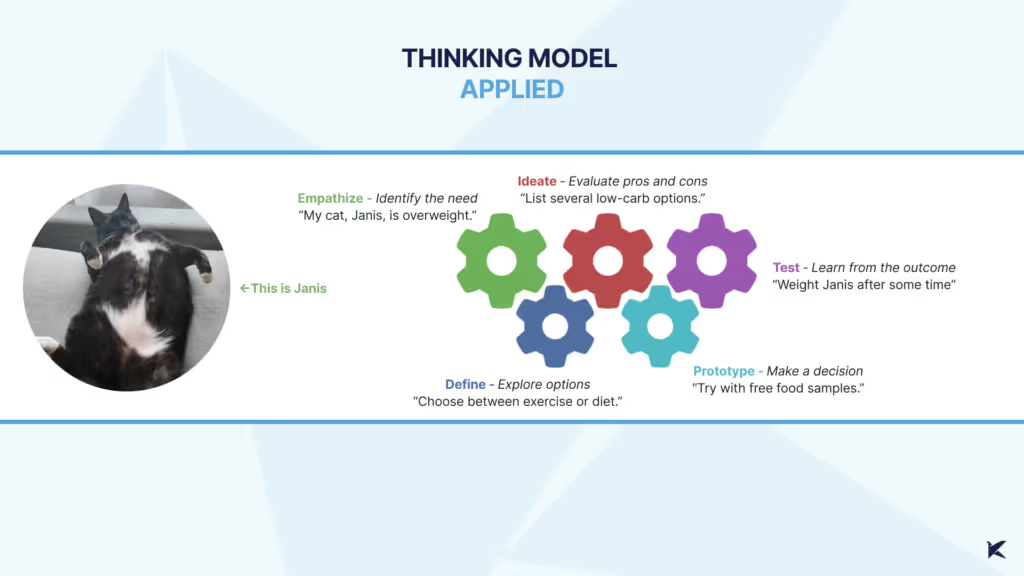
Here’s how each stage played out in our client’s project
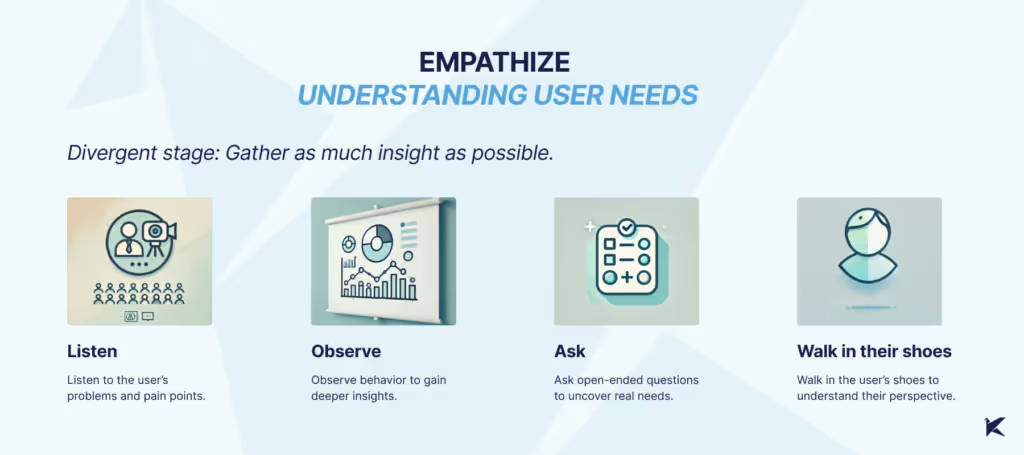
What We Did: We started gathering data on device usage by app users, allowing the UX team to conduct a Design Review. This uncovered issues with the UI on smaller screens, which hadn’t been fully considered. The result? Usability problems and frustration for users who needed to complete tasks on smaller devices.
What Could Have Been Improved: Earlier metric analysis could have highlighted these usability issues sooner, leading to a more user-focused approach from the start.
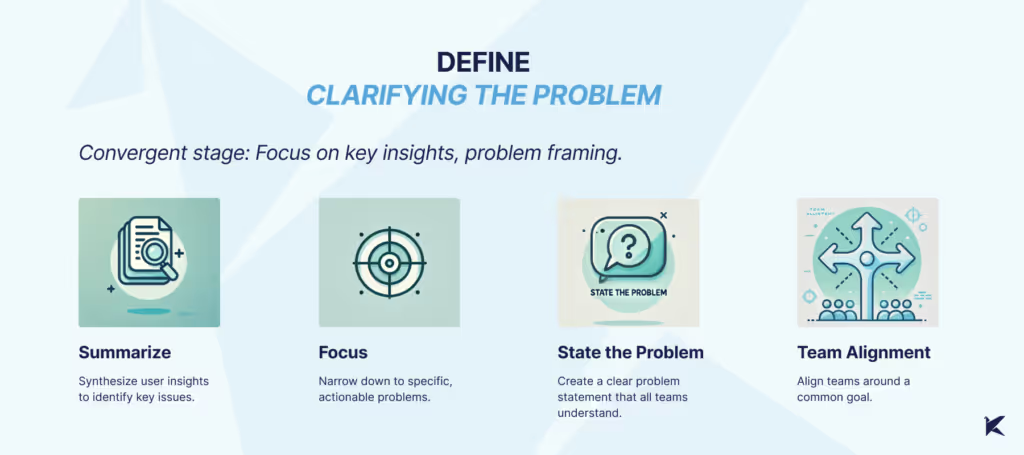
What We Did: With a clearer view of user pain points, we pinpointed specific issues, such as tasks left incomplete on smaller screens, which resulted in penalties and manual fixes. We defined the problem as a need for a feature allowing managers to exclude certain tasks from reports—a clear problem statement that helped all teams align on a common purpose.
What Could Have Been Improved: Better communication across teams could have surfaced this problem earlier, minimizing the need for manual workarounds
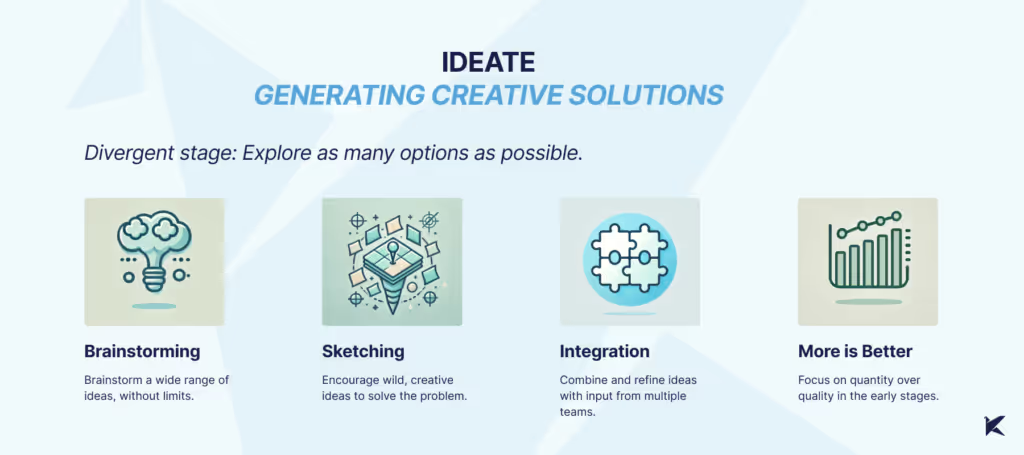
What We Did: We used techniques like Crazy 8s and mind mapping to generate a wide array of ideas, fostering a creative environment where all perspectives were valued. By the end, we had a solid list of potential solutions and a better cross-team understanding.
What Could Have Been Improved: Gathering more user feedback at this stage could have helped us focus on user-centered ideas. Cross-team ideation sessions could have further enriched our perspectives.
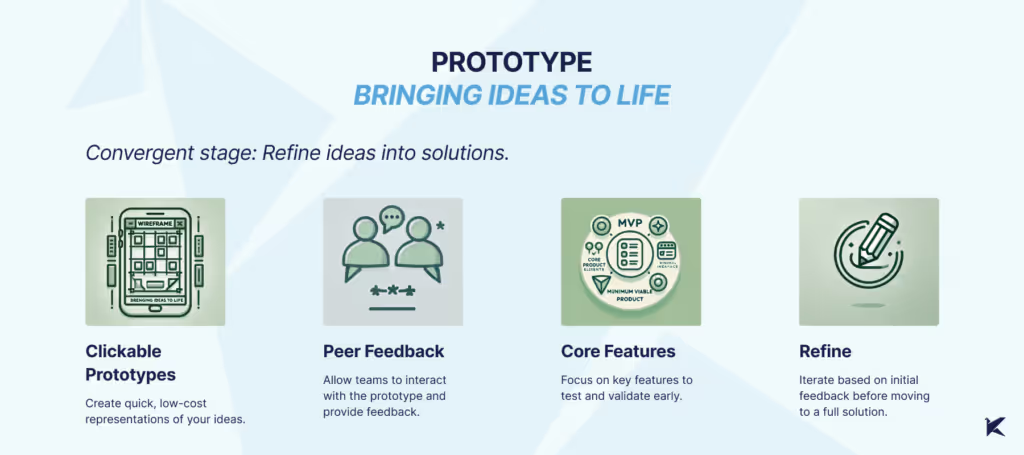
What We Did: Our UX team created low-fidelity prototypes, enabling early testing and feedback without heavy resource commitment. This gave each team a tangible starting point to discuss and refine.
What Could Have Been Improved: Staying in low-fidelity longer could have allowed for more experimentation, helping us catch usability issues before moving to high-fidelity designs.
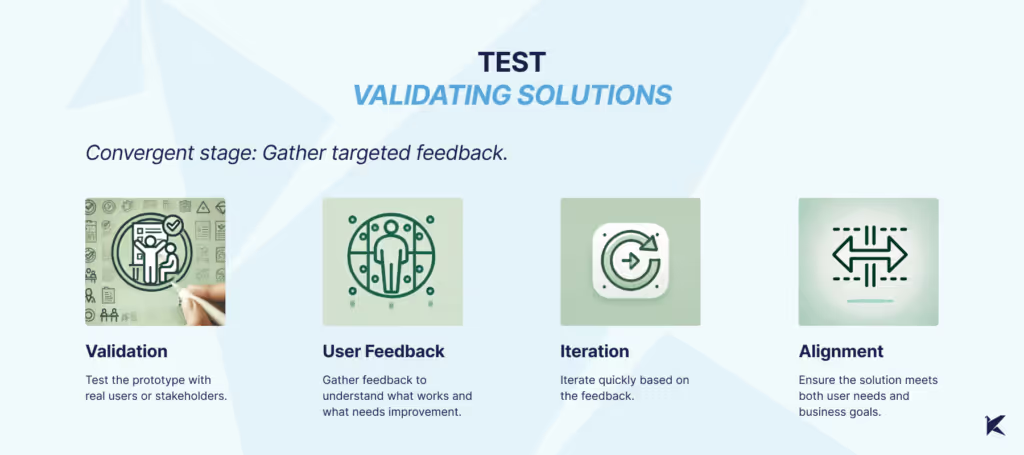
What We Did: Finally, we tested our prototypes with users, which surfaced usability issues on smaller screens that might have otherwise gone unnoticed. This feedback was essential in fine-tuning the design to meet both user and technical requirements.
What Could Have Been Improved: More in-depth testing during the Empathize phase could have brought some of these issues to light earlier, leading to a more robust and user-friendly solution.
The idea behind this workshop wasn’t just to solve a problem—it was to understand the structure of how we think. Thinking often feels automatic, something that happens so quickly we barely notice it. By breaking it down into clear, identifiable stages, we created a way to not only recognize our own thought processes but also align as a team.
Technology
Business

·
Jan 6, 2025
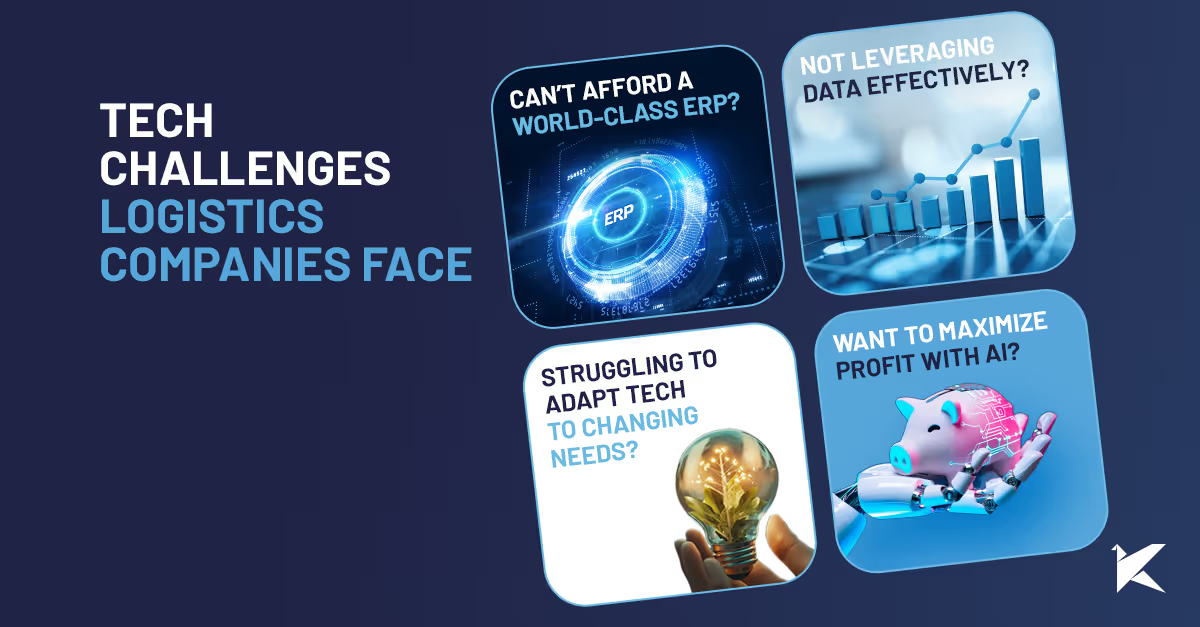
Most small logistics companies run into the same tech issues: these are the ones we keep seeing again and again.
12 read time
Running a logistics business is tough—tight margins, unpredictable demand, and evolving customer expectations make it even harder. Outdated technology only adds to the challenge.
At Kaizen Softworks, we’ve spent years helping logistics leaders like Livingston, Smartborder and SmartSense by Digi tackle these issues. Here are the most common tech pain points and how we can help.
If you’ve ever looked into off-the-shelf software, you know the deal: it’s expensive, bloated with features you’ll never use, or missing the key ones you need most. So, what’s the alternative?
The fix:
Custom software can give you the functionality of a world-class ERP without the hefty price tag.
Outdated systems that don’t talk to each other are more than just frustrating—they hold your business back. You’ve probably seen it: siloed data, manual workarounds, and delays that cost you time and money. And let’s face it, no off-the-shelf solution truly fits your unique and evolving needs.
The fix:
This hybrid approach gives you the stability of your legacy systems while providing the flexibility to adapt and grow.
The logistics industry generates vast amounts of data, and even more with IoT. But many companies struggle to make sense of it, leading to missed opportunities for optimization and cost savings.
The fix:
The right data-driven solutions help you make smarter decisions and boost efficiency.
Every dollar counts in logistics, and your tech investments should be pulling their weight. But are they?
The fix:
The right tech investments pay for themselves by reducing waste and improving efficiency.
When your services are a mix of in-house resources and third-party logistics (3PL) providers, keeping everything running smoothly can feel like a constant uphill battle. How do you ensure seamless communication, transparency, and accountability across different teams and systems?
The fix:
When integration is done right, you’ll feel like your 3PLs are part of your own team—reducing inefficiencies and improving performance.
Staying compliant with environmental regulations, customs requirements, and other industry standards is critical—and complex. Non-compliance can cost you big time in penalties and damage your reputation.
The fix:
Custom solutions can help you manage compliance seamlessly and avoid costly mistakes.
AI and machine learning aren’t just for big companies with endless budgets—they can make a real difference for logistics companies of any size. From predicting demand to optimizing routes, these tools can help you save money and improve customer satisfaction.
The fix:
The result? Smarter decisions, lower costs, and a competitive edge.
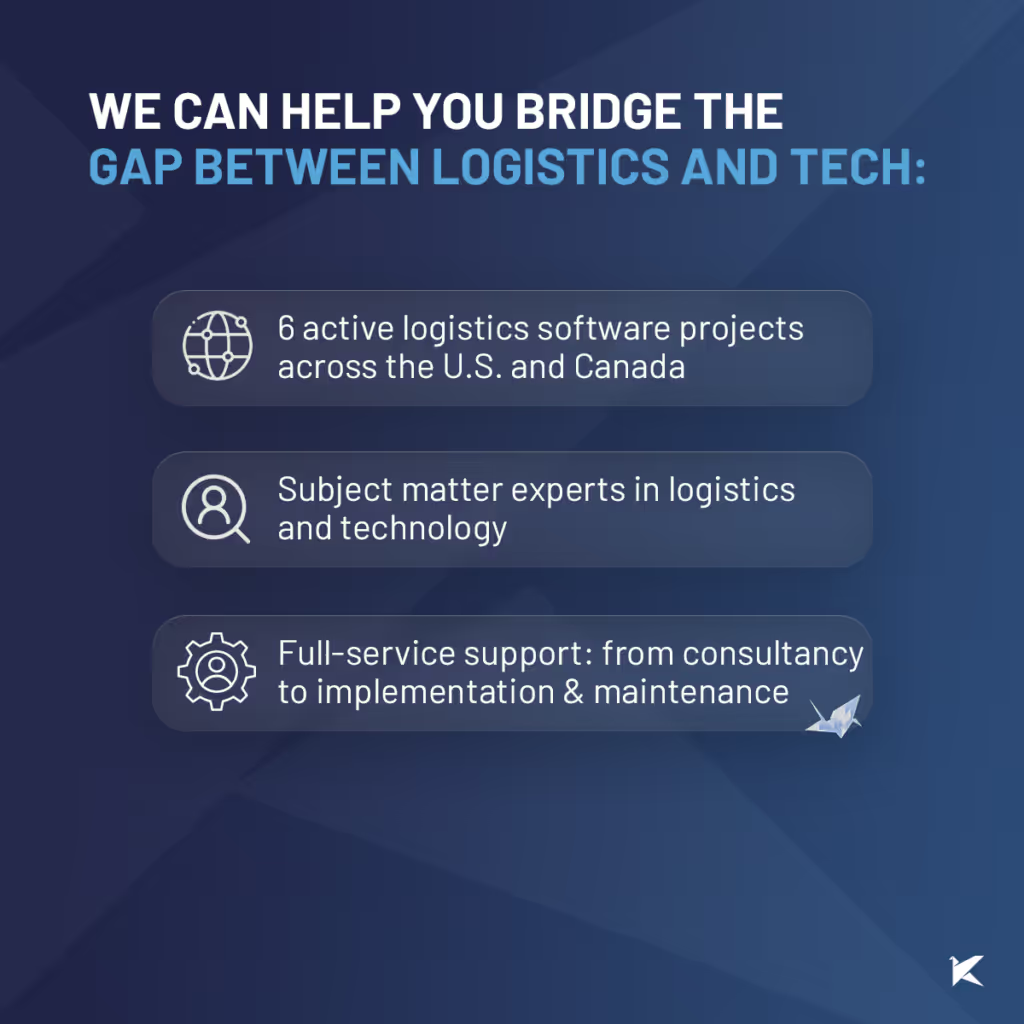
We understand logistics and the tech challenges you face. At Kaizen Softworks, we specialize in custom software solutions that solve your unique problems. Whether it’s integrating 3PLs, modernizing systems, or leveraging AI, we’re here to help you take your logistics operations to the next level.

About Us

·
Dec 19, 2024
10 years in, this is what the journey has really looked like from our side.
12 read time
Last December 1st we celebrated our 10-year anniversary. Reaching a milestone like that is no small feat. It’s a moment to pause, reflect, and celebrate the journey we’ve taken together. Today, I’m honored to share some personal reflections, as I addressed our team during our celebration party.
Today, I want to share some thoughts that came to mind when I was asked to say a few words at this very special event. Ten years don’t come around every day, and I think it’s worth taking a moment to look back.
When I started thinking about these 10 years, so many memories came flooding in—different kinds of memories. From client conversations to the time I got thrown into a pool. And, of course, many anecdotes that are now immortalized on Kaizen’s t-shirts, full of boldness and humor.
I also reflected on how we’ve grown—through crises, the pandemic, and challenging moments—and how we navigated those challenges together.
I won’t dive into every single memory, but I felt the need to categorize them, to see what they tell us.
Through this exercise, I noticed that while our journey has been diverse, certain elements consistently stand out and define us as a company. I grouped them into four categories:

What ties these categories together? It’s not about being better or worse but about reflecting our priorities and how we do things.
If I think about what these categories have in common, the word that comes to mind is different. At Kaizen, we don’t strive to be different just for the sake of it—it’s our priorities and values that naturally lead us in that direction.
This difference is not better or worse, but it’s ours. It’s reflected in how we build relationships, how we think about solutions for our clients, and how we work together.
What do we want to protect at Kaizen? We want to protect our relationships and our ability to make a positive impact.
Our relationships with clients, where trust and respect are our top priorities. And our internal relationships, where we aim to create an environment that allows us to grow as professionals and as people.
This focus on relationships is reflected in their longevity. It’s easy to measure how long a relationship lasts, and we’ve seen and measured this over the years. But longevity isn’t the only thing that matters—it’s also about the depth of those relationships and what they leave behind.
For me, Kaizen has been so much more than a workplace. It’s been a space for learning, challenges, and personal growth. The last 10 years have transformed me not only as a professional but also as a person. And as part of this personal reflection, I invite you to ask yourselves:
What do you take away from Kaizen?
How do you imagine Kaizen 10 years from now?
Where can we go together?
I’m confident that the future we build will be as unique as the journey we’ve taken so far. Thank you for being part of co-creating this story.
And as a small example of what makes us different, would it be possible to sing ‘Happy Birthday’ the Kaizen way?


Project Management

·
Nov 18, 2024
A practical look at how a small AI and automation contest helped one software team share ideas, break routine, and boost engagement.
12 read time
After working with the same software development team for over 5 years, keeping morale high, maintaining motivation, and ensuring commitment can be challenging. If you want to know how a small internal contest on the use of artificial intelligence, automation, and best practices can help revitalize team spirit, I invite you to continue reading this article.

Within the constant search to keep team morale high and break the routine of tasks that a software developer usually does, one day I had the inspiration to organize a contest. But we’re not talking about just any contest; it had to consider the following points:
With these characteristics, the first internal contest for the team on the use of automation and/or artificial intelligence was created, with a prize of USD 100 for the winner.
Carrying out this idea might seem complicated, but in practice, it isn’t. Simply send out a nicely designed announcement with the theme, the prize, the rules, and an invitation to participate.
It’s important to explain the evaluation rules for the contest as well as who will be the jury. For this first case, I was responsible for selecting the winner and established the following criteria:
Each participant has 5 minutes to present. If they have time left, it can be used for questions from the audience. If there is no time left, the event moderator can allow extra time for questions, considering the total time allocated for the presentations.
In our case, we allocated 1 hour and 30 minutes for the presentation day. There were 8 participants in the contest and some additional presentations outside the contest. These out-of-contest presentations can usually be from the jury to show another good practice to the team. But it is important that everyone respects the time limits so that the entire activity can be completed within the total allocated time.
Based on this original idea, small changes can be made to make this activity even more fun. For example, listeners who are not participating in the contest can have a voting sheet similar to the jury to keep track of their favorites. This way, another winner can be added to the contest besides the one selected by the jury. It should be noted that this other winner should also receive a prize
Before diving into this initiative, I recommend talking to your peers and supervisors. They can provide even better ideas and much more reach. But be careful. If you’re doing this for the first time, I suggest conducting a fairly limited proof of concept with your closest team members. After this experience, you can evaluate taking it to other teams or globally within your workplace.
At this point, you’re probably thinking this is great, but you have doubts about how to get sponsorship for the money. However, that’s very simple… you ask your company by showing them this article detailing the benefits of this idea!
And as the cherry on top, I suggest writing an article about the experience and sharing it with the company. Even better, it can be a good article to publish on the company blog to show the rest of the world what is being done internally. This can attract the attention of new developers and also clients who find you through web searches.

Our first contest was a complete success. Everyone enjoyed it and learned a lot. We discovered many tools and ideas that people were using on their own and had not shared. Even customized tools that were very similar and could be combined to achieve something even better.
As for me, I can say that I was more than satisfied with that first trial. The presentations were so good that I had a bittersweet feeling. On one hand, I was happy for the winner, but on the other, I was sad because others also deserved a prize for what they had accomplished.
To conclude, I also want to mention that I was able to secure a bit more money for the winner of the popular vote, so we had at least two winners. But beware, not everything is rosy. I leave some questions to be evaluated:
Good luck, and let me know how it goes.
ScrumJedi, November 2024
Events
Startups
·
Nov 13, 2024
Key takeaways from DC Startup & Tech Week 2024 on startup growth, funding, AI, and the value of building real community connections.
12 read time
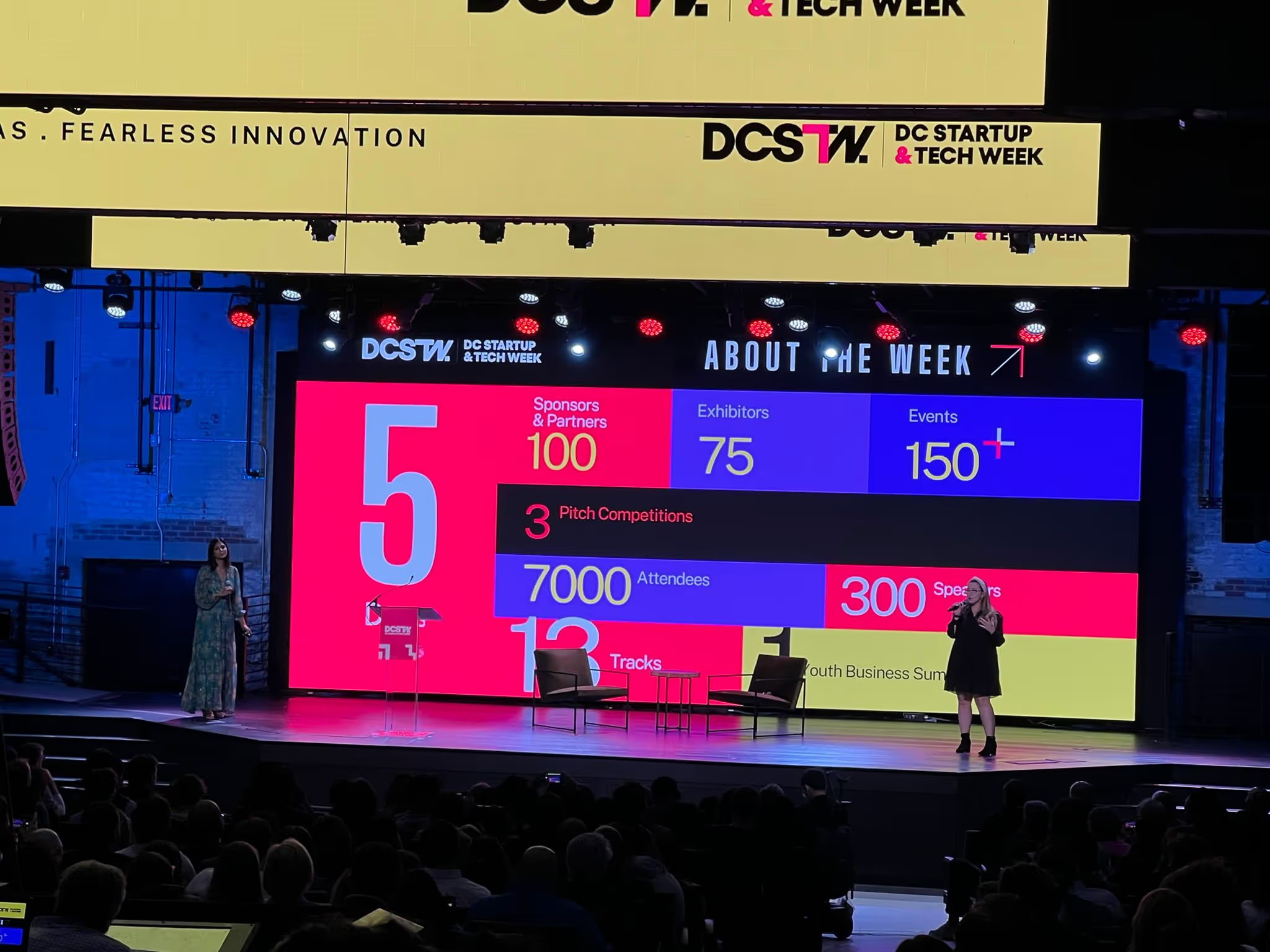
DC Startup & Tech Week (DCSTW) 2024 was a dynamic gathering of over 7,000 participants from across the globe, held from October 21-25, 2024.
This year’s event offered 13 core tracks and specialized sub-tracks, designed for startups at every growth stage—from ideation to growth—providing a prime opportunity to explore trends, sharpen strategic skills, and build connections within the startup ecosystem.
DCSTW 2024 catered to a broad mix of attendees, including founders at all stages, investors, venture capitalists, community organizers, and service providers, along with newcomers keen to dive into tech and startup culture.
Whether just starting out or scaling, the event offered valuable insights and opportunities for startups to interact directly with potential mentors, partners, and clients.
DCSTW 2024 offered a range of ticket options to make the event accessible to different audiences. I purchased the Investor, Resource, and Services Early Bird ticket for $97, which provided access to all public DCSTW events from October 21-25.
This ticket was specifically for non-founder attendees, including investors, service providers, and business development professionals. It covered entry to public sessions, networking events, and the chance to connect with startups and peers across the startup ecosystem.
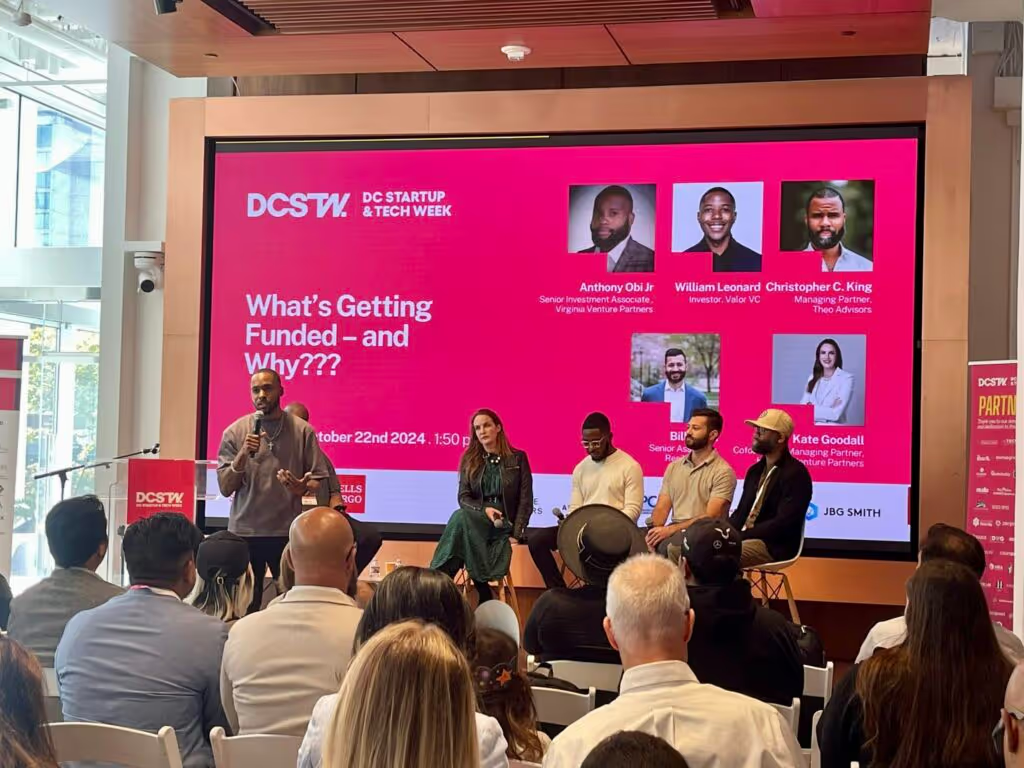
DCSTW was organized around 13 core tracks designed to guide startups at every growth stage:
In addition to the main tracks, DCSTW offered sub-tracks diving into specialized topics, such as:
Life Science Sub-Track
Cannabis Sub-Track
Government & Innovation Sub-Track
Web 3 Sub-Track
Female Founders and Funders Sub-Track
-Mental Health Sub-Track
Climate and Sustainability Sub-Track
Developer Sub-Track
These sub-tracks enriched the core topics, allowing attendees to explore niche areas and connect with experts and entrepreneurs within their specific fields. For further information on sessions and opportunities, you can check the DC Startup & Tech Week Schedule
Pitch competitions were a standout feature of DCSTW, allowing both early-stage and growth-focused startups to present their ideas before expert judges and an engaged audience.
For many founders, these competitions provided valuable feedback, industry exposure, and the possibility of investor interest. Youth innovators and consumer packaged goods (CPG) disruptors were also given the chance to showcase their ideas, adding diversity and energy to the competition.
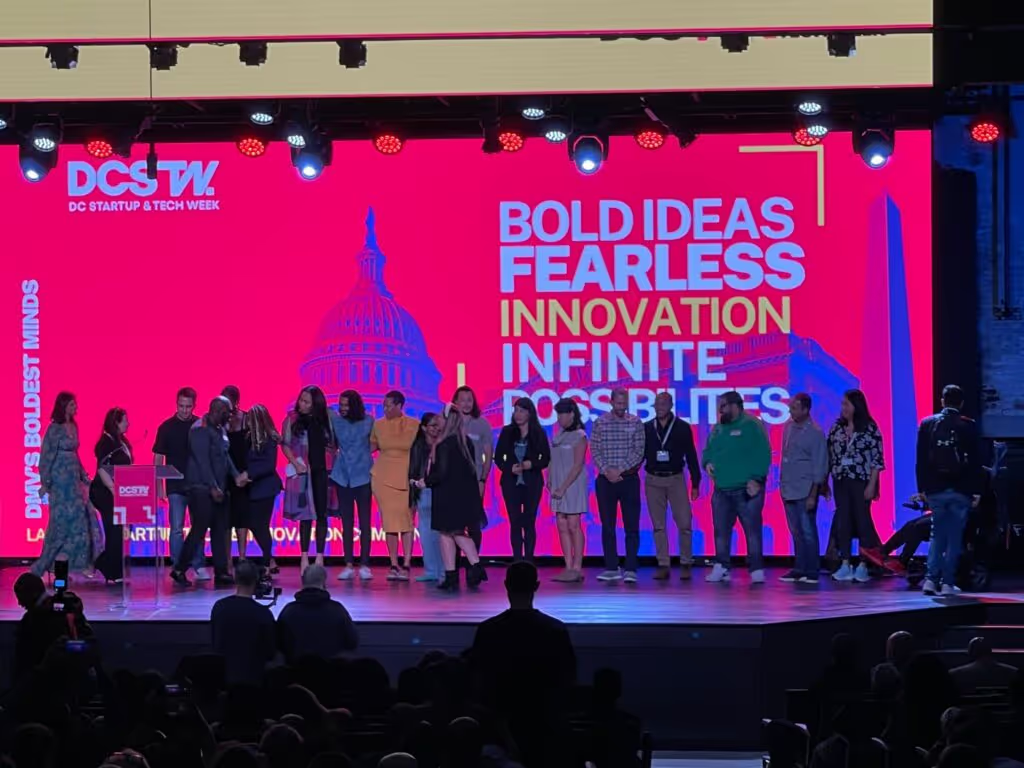
For startups, DCSTW 2024 was a prime opportunity to gain actionable insights, grow networks, and access funding expertise. Key takeaways included:
Funding and Pitch Guidance: Venture capitalists and angel investors shared practical advice on preparing pitches, navigating funding rounds, and understanding the latest investment trends.
Learning from Leaders: Sessions featured strategies from seasoned entrepreneurs on scaling challenges, customer retention, and effective marketing.
Networking with Purpose: Numerous networking sessions, including happy hours and lunch events, created valuable opportunities to form partnerships, seek mentorship, and build relationships essential for scaling a startup.
One of the best parts of DCSTW was connecting with people who are passionately working on all sorts of innovative projects. I met founders building solutions for real estate management, AI-powered lobbying, blockchain-based IP management, a secondary marketplace for golf course tee times, buy-side private equity valuation, IP law, and more.
Each conversation added new perspectives, and I left the event energized by the potential to collaborate and create with such a talented community.
For any startup team or aspiring entrepreneur, it’s definitely an event worth attending for the insights, connections, and inspiration it provides.
Project Management

·
Oct 23, 2024
A simple guide to product discovery and how it helps startups validate ideas, reduce risk, and build what users actually need.
12 read time
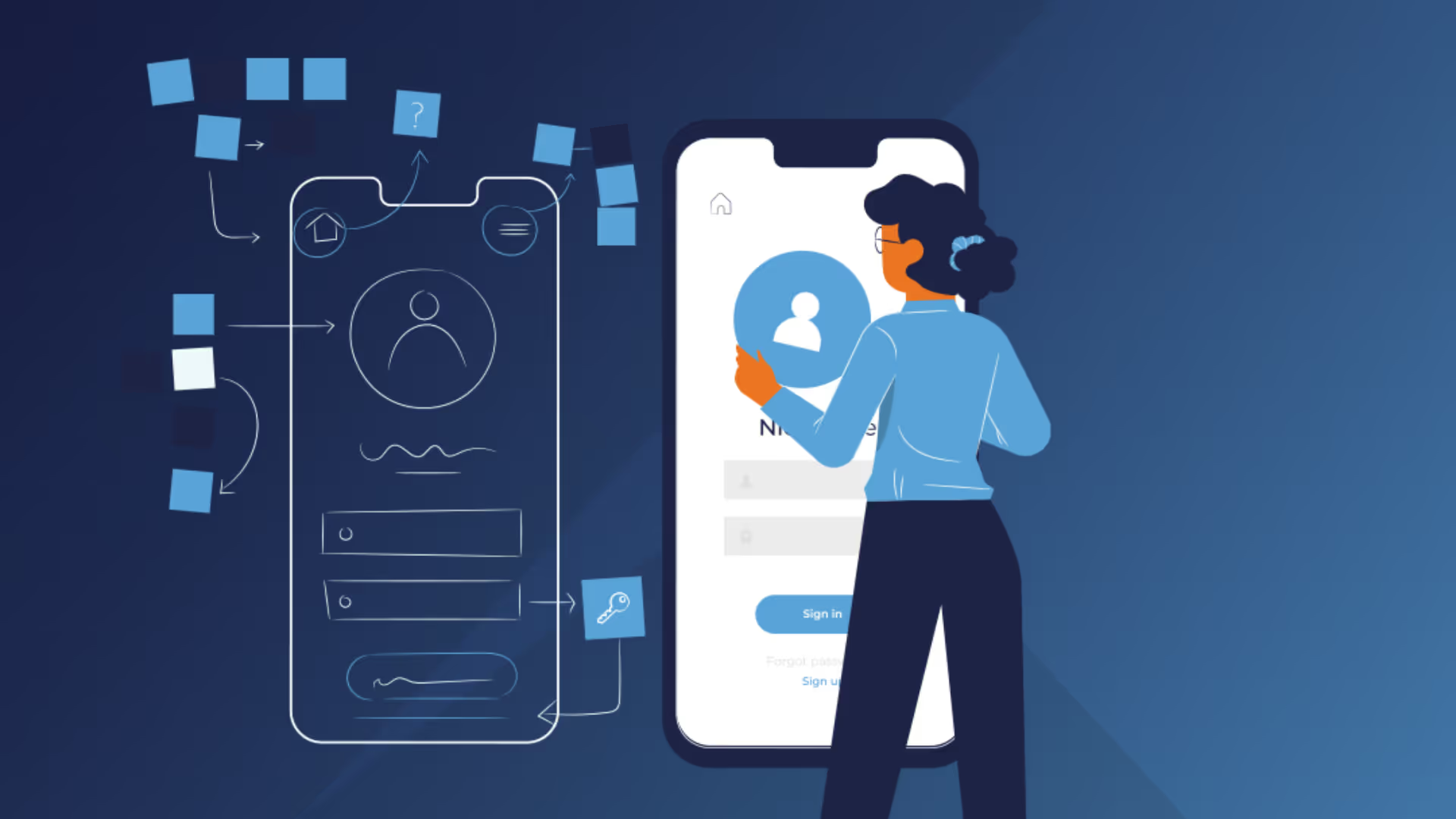
Bringing a software product to market—or taking an existing product to the next level—can be a thrilling adventure filled with opportunities and challenges. Whether you’re launching something new or refining a current offering, there’s a critical question every startup must ask: Are we building the right thing, or improving in the right way?
Success isn’t about gut instincts or chasing the latest trends—it comes from truly understanding the problem you’re solving for your users. That’s where product discovery becomes a game-changer. This process helps startups—both new and established—build or improve products that resonate with users and address real needs.
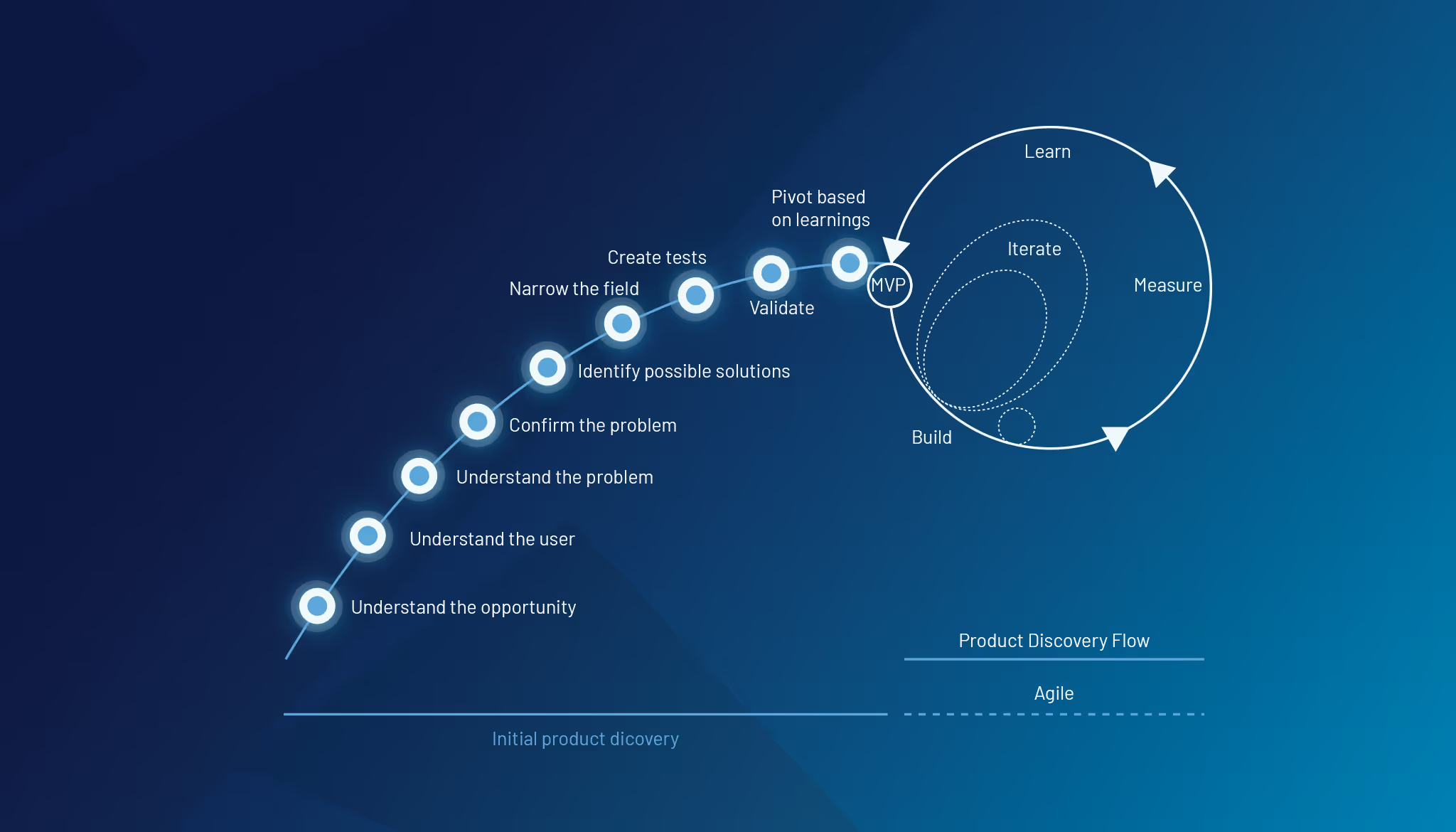
Product discovery is an iterative process of validating ideas, deeply understanding user needs, and defining a clear path for development or improvement. It ensures that whether you’re building from scratch or refining an existing product, you’re solving the right problem in the right way.
A common pitfall for startup founders is falling in love with the solution they’ve envisioned rather than the problem they set out to solve. This mindset can blind you to new opportunities for growth or make you resistant to necessary changes. Product discovery shifts your focus back to the problem, allowing you to adapt and pivot as needed.
For startups looking to grow, this is especially crucial—your product must evolve with your users. Falling in love with the problem means staying flexible and constantly evaluating whether you’re still addressing your users’ biggest pain points.
Dig deeper into the problem through user research. Use qualitative and quantitative methods to gather insights about users’ behaviors, needs, and frustrations. Tools like user interviews, observation, and empathy maps help you understand their context.
Remember, understanding your users is the foundation of effective product discovery.
Clarify your business objectives and define what success looks like. This can involve setting clear goals for your product and determining how to measure the impact. These metrics will guide the rest of the discovery process and keep you focused on what truly matters.
Once you understand the problem, gather your team to brainstorm possible solutions. Encourage creative thinking and diverse perspectives to ensure a broad set of ideas. Keep an open mind and explore various approaches, remembering that collaboration can spark innovative ideas.
Out of the many ideas generated, prioritize them based on feasibility, user value, and business impact. This step helps you focus on the most promising solutions to prototype or test, ensuring that your resources are spent wisely.
Develop low-fidelity prototypes or mockups of the most viable solution ideas. Test these prototypes with real users to gather feedback. The goal is to validate the solution early before investing significant resources in development. This step can save you time and money down the line.
Use the feedback from testing to refine the solution. Iterate multiple times, improving the product idea with each round of user insights. This helps ensure you’re solving the right problem in the best possible way.
Once the solution is validated, map out the steps for bringing it to life. This includes defining the key features, timelines, and milestones needed to develop, launch, and continuously improve the product. A clear roadmap will guide your team and keep everyone aligned.
At Kaizen Softworks, we understand the journey of building or refining a product can feel overwhelming. That’s why we specialize in guiding startups through the product discovery process.
Let’s connect and talk about how we can help turn your vision into reality.
Project Management
Startups
UX Design
·
Sep 22, 2024
A practical guide to UX audits and heuristic evaluations, and how they help teams find usability issues before they hurt growth.
12 read time
Building a product that stands out in the market isn't just about features or innovation—it’s about delivering a seamless, user-friendly experience. But how do you ensure your product is intuitive, usable, and enjoyable for your users? This is where UX audits and usability heuristic evaluations come into play.
A UX audit focuses on assessing the strengths and weaknesses of your product’s user experience (UX). It’s about identifying what's working well in your interface and what may cause frustration or confusion for your users. Ultimately, the process provides actionable insights to improve usability.
By taking an objective look at areas like interaction design, navigation, and visual consistency, you gain a clearer understanding of how user-friendly your product really is.
At Kaizen Softworks, we use industry-recognized principles like Jakob Nielsen’s 10 Usability Heuristics to evaluate your product systematically and objectively.
We know how hectic startup life can be—juggling timelines, investor expectations, and ensuring your product stands out. Here’s why UX audits and heuristic evaluations are crucial, especially for startups:
A heuristic evaluation benchmarks your design against established usability principles (heuristics). It involves analyzing how well your system aligns with widely accepted usability standards, helping to pinpoint areas for improvement.
Let’s break down 10 usability principles (heuristics) that we apply in our designs reviews, and how they can highlight opportunities for improvement in your product:
Once we’ve identified strengths and weaknesses in your product’s design, the next step is to create a prioritized list of improvements using a framework like RICE (Reach, Impact, Confidence, Effort). This allows your team to focus on the most critical changes that can make the biggest difference for users.
After implementing these changes, validating the improvements through user testing or feedback loops ensures your modifications truly enhance the user experience.
At Kaizen Softworks, we specialize in helping startups and product teams enhance their product’s user experience through expert UX Audits. They can typically take anywhere from a few hours to a full day, depending on the complexity and scope of your product.
Let’s talk about how a usability review can help your product be the best it can— intuitive, efficient and built for long-term success.
Project Management

·
Aug 26, 2024
12 read time
Did you know that 84% of developers in distributed teams struggle with communication? As software development teams grow and become more distributed, maintaining effective communication and role clarity becomes increasingly challenging.
In this blog post, we explore how one of our partners’ projects, which we have been collaborating on since 2016, successfully scaled communication as our team expanded from a small group to a large, distributed team of developers. These strategies offer valuable lessons for any software team navigating similar growth.
Our collaboration with this client started as a modest project with just a few developers from our team. Communication was straightforward, and roles were flexible. However, as the software gained traction, our team expanded from 2 developers to over 25, bringing new challenges, particularly in maintaining effective communication and defining clear roles within a growing, geographically dispersed team.
A recent report by GitLab shows that 84% of software developers believe clear communication is crucial for team success in a distributed environment. Our experience in the project reflects this, as the sudden increase in team size made it difficult to keep everyone aligned and informed.
To address these challenges, our team rolled out some key strategies to scale communication effectively:
We set up new Slack channels to streamline discussions by topic and urgency. This helped team members focus on relevant conversations and avoid information overload.
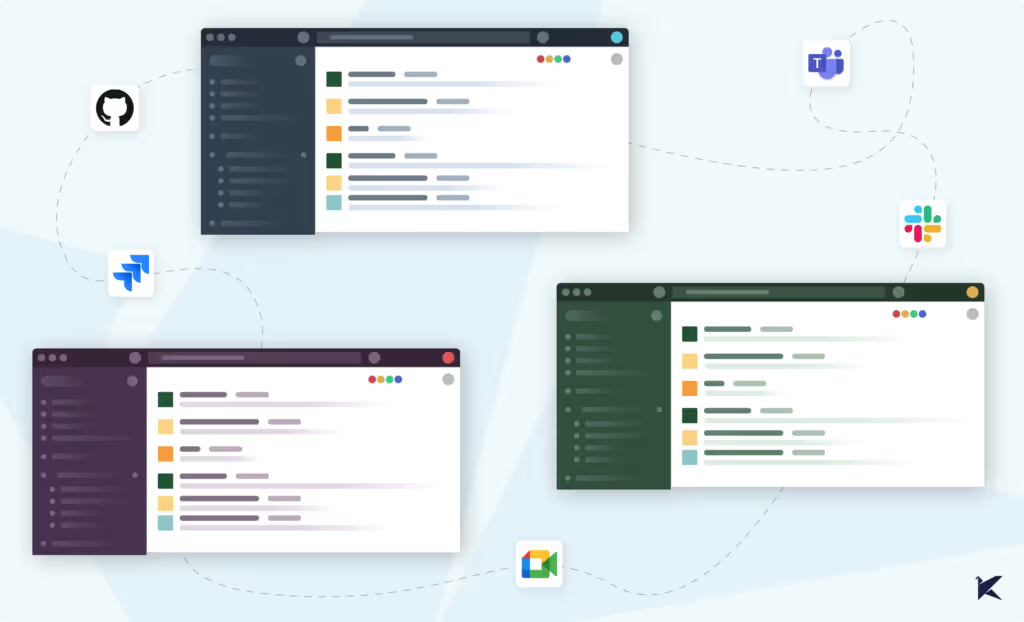
We refined our daily stand-ups to deliver quick, high-level updates, ensuring the whole team stayed informed. For critical tasks, we formed smaller, cross-functional groups that met regularly to dive deeper into the project’s most important aspects.
To keep these meetings efficient, we introduced the role of a facilitator—someone responsible for keeping discussions on track, making sure everyone has a chance to contribute, and clearly define follow-up actions. This approach was essential in keeping the team productive and communication flowing smoothly.
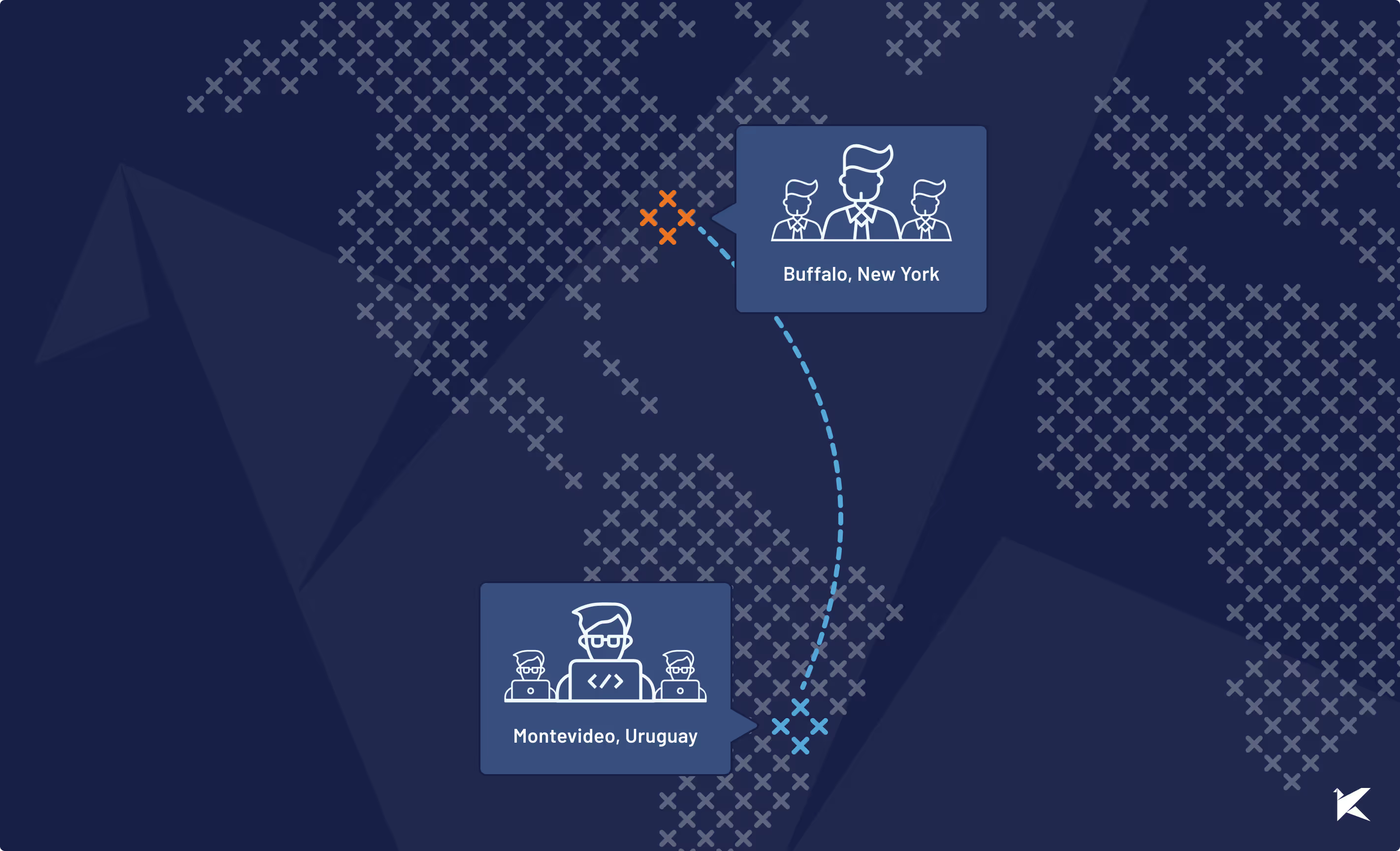
Recognizing that nothing beats face-to-face interaction, we made it a priority to meet our partner and their team in person. We traveled to the United States to start our partnership in a healthy way, having the chance to dive deeper into their needs and aligning on project goals.
But it wasn’t all work and no play. These trips gave us the chance to bond after hours, sharing good times that helped build a strong team spirit rooted in trust. By closing the physical gap, we not only ensured a more productive collaboration but also made the process more enjoyable for everyone involved. After all, a team that works well together and has fun together is unstoppable!
As the team grew, it became clear that the informal role distribution that had worked in the past was no longer sufficient. New responsibilities emerged, and specialized roles were necessary to handle them. However, assigning these roles and ensuring that team members were prepared for their new responsibilities required careful planning.
Roles on this project weren’t rigidly assigned. Instead, as new needs emerged, team members who showed both interest and aptitude naturally stepped into these roles. A key figure in this process was the Jedi Master, one of our principal engineers, who had been with the project since the beginning. The Jedi Master played a crucial role in mentoring team members, guiding them through their transitions, and ensuring they felt supported as they took on new responsibilities.
Under the Jedi Master’s guidance, team members gradually took on new roles. As they gained experience, Jedi’s involvement decreased, allowing the new leaders to fully embrace their responsibilities.
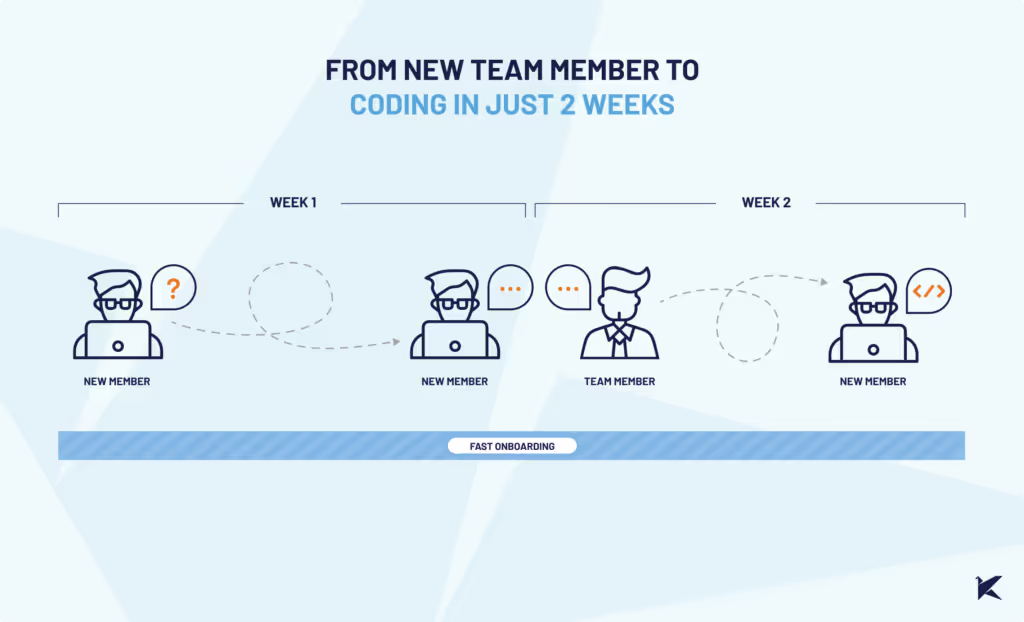
We implemented a comprehensive onboarding process for new team members, including a set of courses and tasks tailored to the project’s needs. Continuous feedback and opportunities for new members to suggest improvements helped them integrate smoothly and contribute effectively from the start.
The strategies implemented at this project resulted in a well-coordinated, efficient team capable of handling the complexities of a large-scale software project. Communication became more streamlined, roles were clearly defined, and team members were well-prepared to meet the demands of their positions.
This approach not only maintained the quality of the codebase but also strengthened our team’s relationship with our partner. The quality of the product remained high, with functionalities behaving as expected, thanks to the effective communication and role management strategies in place.
This experience highlights several key takeaways for managing a growing software development team:
Scaling a software development team is challenging, but with the right strategies in place, it’s possible to manage growth without sacrificing quality. Our experience with this project demonstrates the importance of evolving communication, defining roles carefully, and investing in team development to ensure long-term success.
Technology
UX Design
12 read time
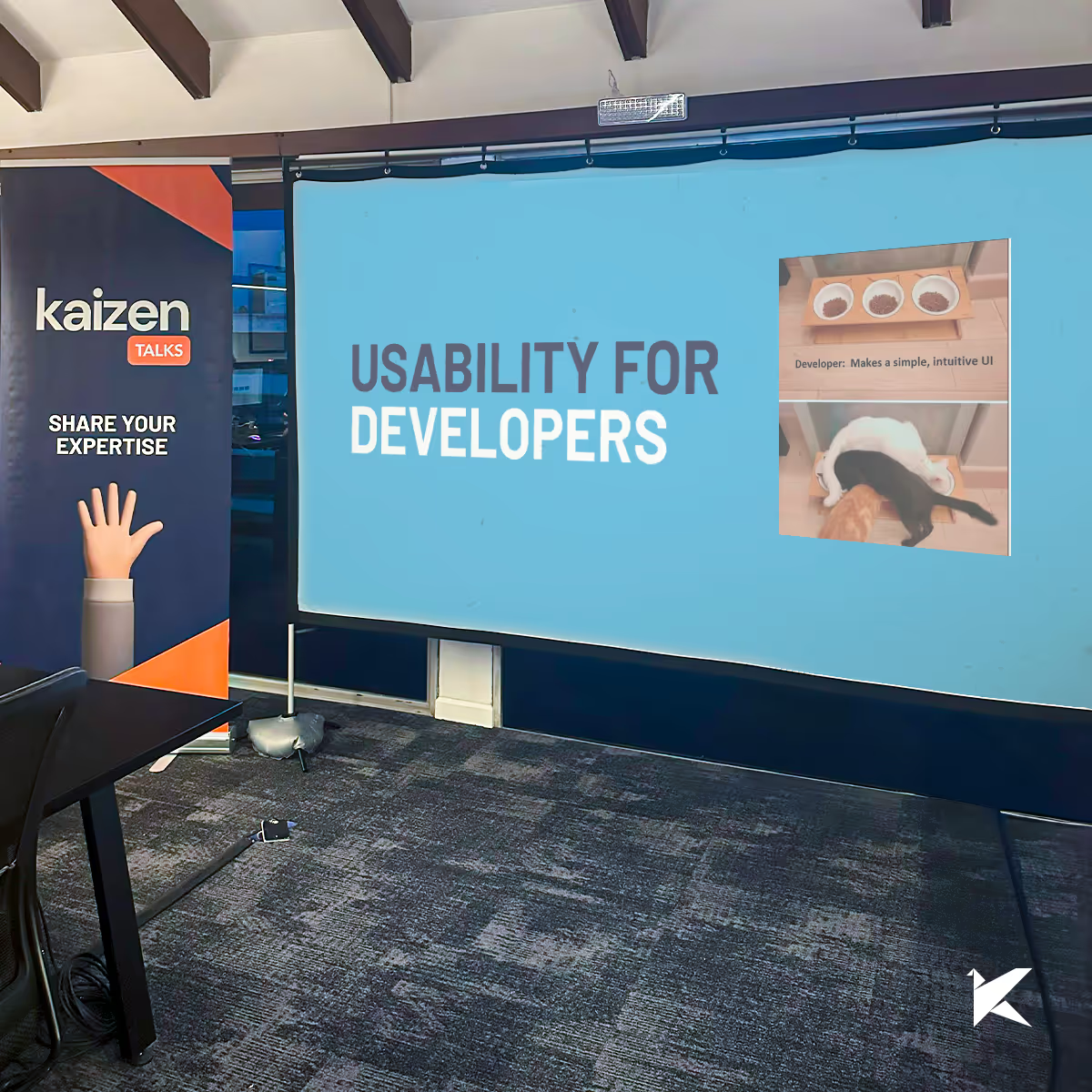
Usability isn't just a designer's jergon. For developers, understanding usability can make a big difference. It makes it easier to work independently and effectively collaborate with designers and users. This understanding cuts down on the back-and-forth between design, development, and product owners, saving you time.
In this blog post, we'll show you how to understand, evaluate, and prioritize usability using practical tools. These tips will empower you to work more independently and improve your development process.
First, we should start by defining usability. Usability is all about making it easy for users to interact with a product and achieve their goals efficiently and effectively. It’s not just a vague concept—there are universal rules and guidelines we can follow, and even adapt to our specific product.
When we talk about usability, we focus on three main aspects:
These aspects are measurable. For example, reducing the time it takes a user to complete a task by 20%, not only improves usability but also translates into quantifiable costs savings and user satisfaction.
Usability it's a fundamental part of the development process that can streamline workflows and reduce the need for revisions. Here's why it's essential for developers:
Understanding usability allows developers to connect more effectively with other departments such as user experience (UX) designers, product owners, and users. This common ground promotes better communication and ensures everyone is focused on user-centric goals.
When developers have a good grasp of usability, the transition between design and development becomes smoother. Early involvement in usability discussions can cut down on extensive revisions and ensure features are well-planned from the start.
Planning features with usability in mind prevents costly back-and-forth adjustments after launch. Addressing usability issues early not only guarantees functionality but also improves the user experience of the final product.
Consider usability as a part of the big picture, not just an add-on. This perspective allows developers to anticipate user needs, streamline their development processes, and deliver more efficient solutions.
Usability evaluations equip developers with tangible metrics to identify and prioritize issues effectively. This clarity prevents unnecessary changes based on subjective opinions and focuses efforts on addressing critical user experience challenges.
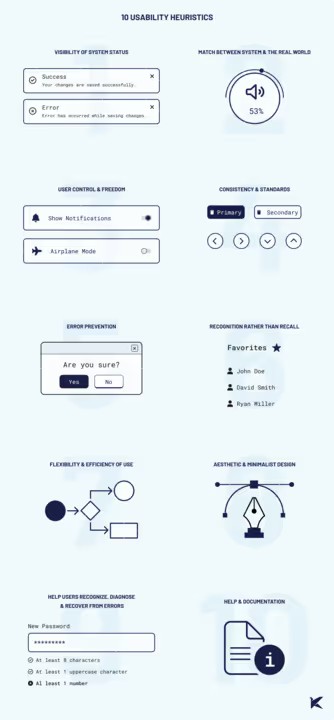
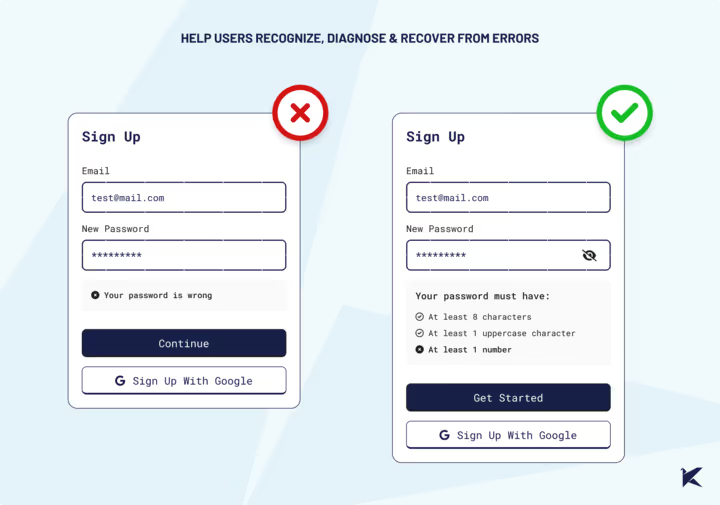
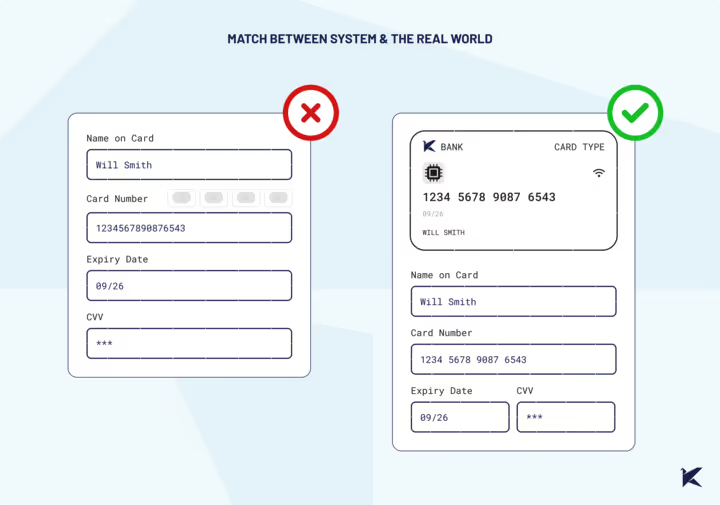
There is no single way to evaluate usability, and there’s no definitive rulebook that applies to every single situation. That said, in this article we’ll be focusing on different heuristic lists. These lists provide general rules or guidelines for identifying usability problems in user interface design.
Some common examples include Nielsen's Usability Heuristics, Gerhardt-Powals' Cognitive Engineering Principles, Shneiderman's Eight Golden Rules of Interface Design, Bastien and Scapin's Ergonomic Criteria, Don Norman's Design Principles, and the ISO 9241-110 Dialogue Principles.
The great thing about these lists is that they’re not set in stone. You can adapt them to fit your unique business needs. For example, if you’re in the business of selling light switches, the height and position of the switch would be pretty crucial parameters in terms of usability.
So, grab a list, understand it, and start evaluating whether you’re meeting usability standards. Remember, customizing the list to your own specific situation and business context is a must.
When prioritizing usability issues, it's important to have a systematic approach to ensure that we address the most critical problems first. One effective method is to use formulas that assign a specific weight to each issue. These formulas can consider several criteria to determine the priority level.
For example, we can rate the business impact on a scale from 1 to 5.
We can also categorize the criticality of the usability problem, ranging from blocker to suggestion, including moderate and serious levels.
Additionally, the duration of the issue's existence can be part of this formula, gaining more weight over time.
It's important not to rush to address the first piece of feedback, especially when it comes from someone influential like a CEO or Product Owner. We often tend to over-prioritize such feedback, but even well-intentioned suggestions can sometimes cause more harm than good.
So, what should we do? We need to learn how to assign a weight to each usability issue to focus on those that will have the most significant impact. By doing so, we ensure that we address the most critical usability issues first, allocate resources effectively, minimize costs, and achieve significant improvements in usability, leading to a higher return on investment.
When generating solutions, it's ideal to have multiple options to bring to the table for discussion. Having various solutions allows us to evaluate different complexities with different levels of effort.
Sometimes, putting a lot of effort into a small problem doesn't make sense, just as solving a big problem with minimal effort might not be effective. By considering multiple solutions, we can weigh the pros and cons of each and choose the most appropriate approach for the situation.
Understanding usability is crucial for developers. It enhances collaboration, reduces rework, and ensures features are user-friendly from the start. By focusing on efficiency, effectiveness, and satisfaction, you can create products that not only function well but also delight users.
Next time you’re planning a feature, think about usability and see the difference it makes.
No blogs matched this category, try applying different filters.