



AI assistant that guides people through complex processes
We tested it inside an insurance form, where it answered questions using the company’s approved documentation.
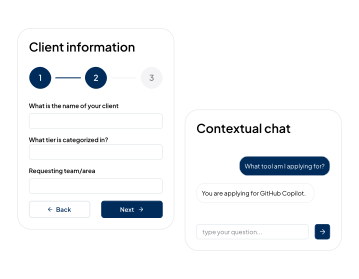

When users get stuck
We worked with a client to test the idea on insurance broker forms. They were a useful test case because they are long, detailed, and governed by specific rules. When users can’t find the information they need, three things tend to happen.
They call support
Support teams spend time answering questions that existing policies, guides, and FAQs already cover.
They leave the process
Users may not understand what a field means or what information they need, so they stop before completing the form.
They push through with errors
This creates additional reviews, delays, and back-and-forth later in the process.
Bring the answers into the process
We built a proof of concept to explore whether an AI assistant could use the company’s existing documentation to guide users while they completed a form. The assistant needed to demonstrate three capabilities:
Answer
It should respond to user questions in plain language using information from the form, company documentation, and files provided by the user.
Understand
It should follow the user’s progress, interpret their responses, identify missing or inconsistent information, and explain how to fix it.
Delegate
When a question requires human judgment or the available documentation is not enough, it should notify a team member with the relevant context.
An AI assistant inside the form
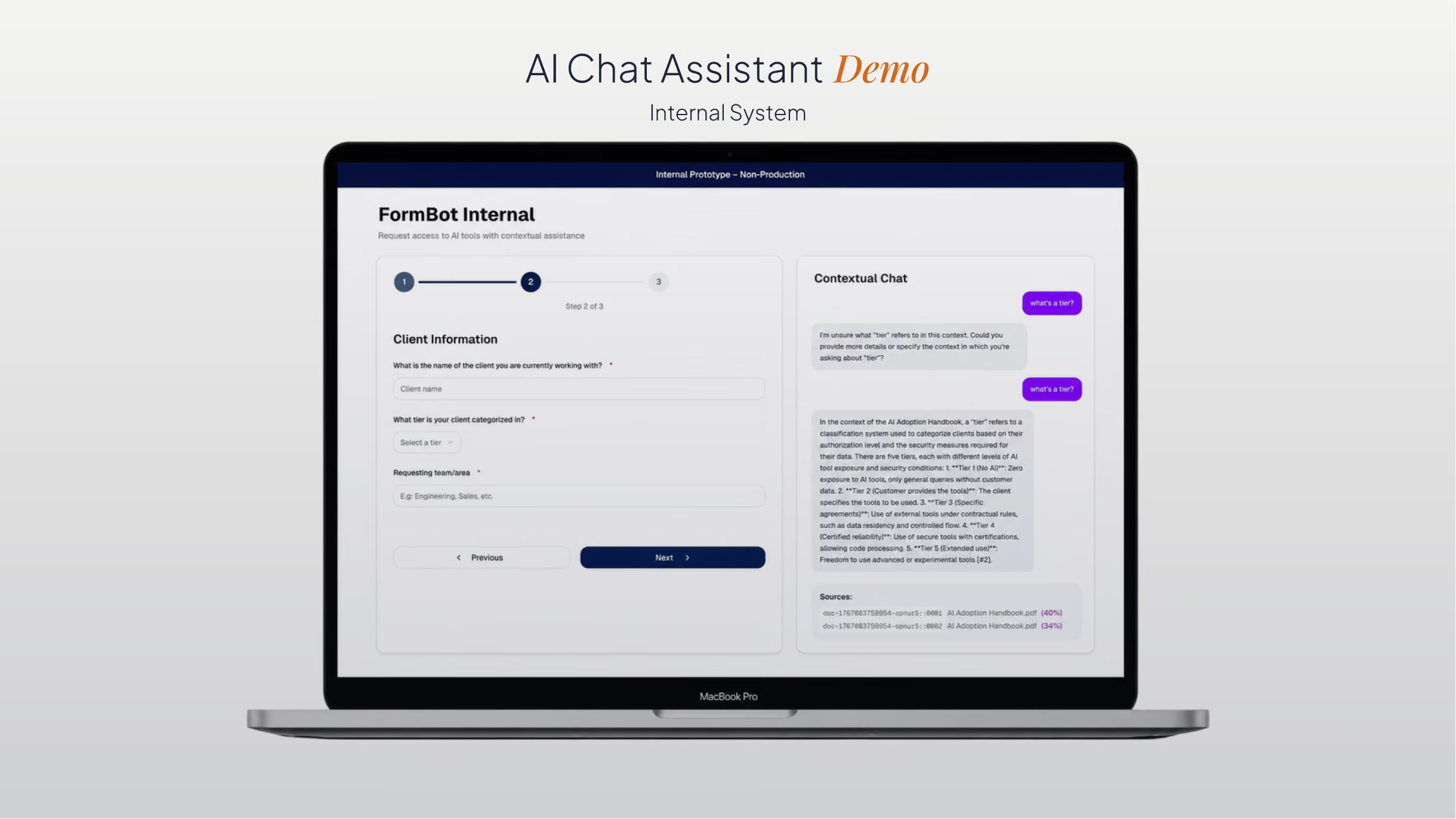

The prototype confirmed the capabilities
It answered using the available documentation
Every answer came from the form’s documentation or the user’s uploaded files, with the exact fragments it used.
It followed the user’s progress
As users filled out the form, the assistant interpreted each response and considered the surrounding fields and requirements.
It knew when to involve a person
When the documentation did not contain enough information, or a decision required human validation, the assistant notified a team member.
Answers from documents, data kept separate
Where the answers come from
It pulls the most relevant passages from the source documents, giving the assistant the context to answer and cite its sources, through RAG.
Keeping each user’s data separate
Each user has a private, identity-based space in the vector database, keeping their knowledge separate.

OpenAI GPT-4 · AI
Reasoning and language.

JavaScript · Language
End to end across the prototype.

Pinecone · Vector database
Chosen for native namespace isolation.

AWS · Infrastructure
Deployment and hosting of the services.

LangChain · RAG framework
Orchestrating ingestion, retrieval, and response generation.
The form was the test case. The pattern is much broader.
This approach can support any documented process where people need help understanding requirements, providing information, or deciding what to do next.
Help users move forward without leaving the process
Start a conversation